Your Childhood Video Games May Explain Why Millennials Grind and Gen Z Burns Out Faster
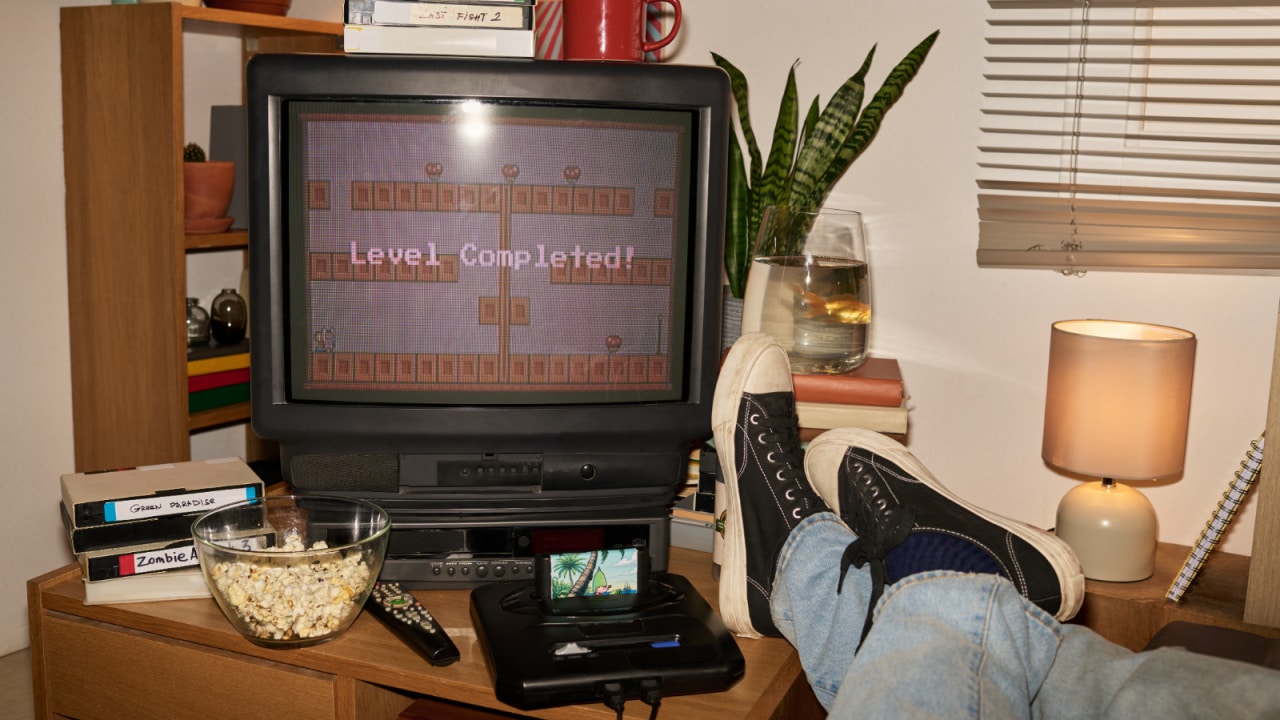
If you grew up screaming at a tube TV because you died on the last boss and had to start over from level one, this is for you. Millennial childhood meant cartridges, memory cards, and the very real possibility of losing all your progress because your cousin tripped over the console cable.
Now we joke that our generation has “resilience” and a tiny bit of masochism. But new research suggests those ’90s and early 2000s video games did something very real to our brains. And the way Gen Z and Gen Alpha game today might be wiring theirs in a totally different way.
So yes, the Rainbow Road trauma might live in your nervous system for a reason.
Did 90s video games secretly train Millennial brains for resilience?
In a recent Newsweek piece, family and parenting reporter Daniella Gray spoke with mental health professionals who grew up with ’90s games and now treat kids raised on today’s always-on gaming economy.
Veronica Lichtenstein, a licensed mental health counselor and former teacher, remembered the deep satisfaction of beating a cartridge-era game.
“You fought through levels, memorized patterns, and finally saw the ending,” Lichtenstein told Newsweek. “It felt like you accomplished something. Your brain gave you this solid, lasting dose of satisfaction, like finishing a tough project.”
Those games usually had a clear beginning and end. You either got good or you started over. There were natural stopping points. You turned the console off, went outside, and touched grass.
Melissa Gallagher, a licensed clinical social worker and executive director of Victory Bay, described 90s titles as “bounded entertainment experiences” with clear limits and built-in breaks that encouraged kids to step away and do something else.
That structure mirrored real life. Fail, try again, climb slowly, win once, and then rest. It is easy to see how that rhythm could train patience, tolerance for frustration, and Millennial “keep going” energy.
Millennial vs. Gen Z: different video games, different reward systems
Fast-forward to modern gaming, and the whole economy looks different. Lichtenstein told Newsweek that many current games flip the old formula. What looks free often hides layers of microtransactions, from a $5 skin to a $10 shortcut that reduces grind time.
She described systems that create “mild discomfort,” so spending money feels like the natural fix. Many games monitor player behavior and feed it into algorithms that time “special offers” and nudges to keep kids from logging off. “All of this creates a perfect loop for addiction,” she said. “There’s no real ‘end’ so you never get closure.”
Lichtenstein called the effect “junk-food dopamine.” Quick hits that disappear fast. A brain that craves constant novelty instead of slow, earned satisfaction.
Gallagher added that 21st-century design often centers on retention and monetization rather than completion. Ranking systems, performance metrics, and endless seasons train kids to constantly compare themselves. According to her, this pressure can fuel erratic sleep, anxiety, and mental noise that feels hard to shut off.
So while Millennials grew up with games that said “finish this and go outside,” Gen Z often meets games that say “stay, or you might miss something.”
Why retro video games feel like mental comfort food now
If you have noticed Gen Z getting obsessed with retro consoles and pixel aesthetics, you are not imagining it. The Guardian reported that TikTok’s #retrogaming tag has pulled in billions of views, while younger players rediscover cartridges, wired controllers, and weird 90s peripherals through creators who unbox old hardware.
For many Gen Z and Gen Alpha players, those limitations feel cozy. No push notifications or battle pass. No high-stakes ranking system judging every move. In that same Guardian piece, content creators described older games as stable and predictable in a way that stands in contrast to today’s constantly updating tech.
One TikToker compared retro gaming to “comfort food.” You know the soundtrack and the clunky animations. You know the world will not morph into something new overnight. That stability matters for a generation raised through a pandemic, economic chaos, and AI anxiety.
A 2023 Newzoo report on how different generations engage with games found that each younger cohort leans more heavily toward gaming as a primary form of entertainment. The study shows that Gen Z and Gen Alpha treat games as a social space, a hobby, and a default way to unwind. Millennials also game a lot, but often talk about narrative, single-player, and completion in ways that align with their cartridge childhood.
So when a Gen Z player picks up a Game Boy Advance or boots a PlayStation 2 title now, they tap into that older “bounded” style of play. It can feel soothing compared to the infinite scroll of modern online lobbies.
I like to separate Millenials and Gen-Zs by their first video game experiences
byu/delicious_warm_buns ingenerationology
What science actually says about video games and the brain
Beyond nostalgia, there is fundamental neuroscience behind these differences.
BrainFacts, an educational site from the Society for Neuroscience, breaks modern games into broad categories like action and strategy. The site notes that action titles often include “high speed, high perceptual and motor load, unpredictability, and an emphasis on peripheral processing.” Studies in Nature Neuroscience show that these games can improve visual attention and contrast sensitivity, which matters for tasks like night driving.
That same overview also highlights concerns. Short bursts of violent gaming can increase activity in brain regions tied to arousal and anxiety while lowering activity in frontal areas that help with emotion regulation and control.
Strategy games, on the other hand, show mostly positive effects. Research links them to better hand-eye coordination, stronger memory, and increased efficiency in brain regions involved in visuospatial thinking, including the right hippocampus.
A 2022 study from Georgia State University used fMRI to compare frequent gamers to non-gamers. Researchers found that regular players responded faster and more accurately on a task that measured sensorimotor decision-making. The scans showed enhanced activity in brain networks that connect sensation, perception, and action. The authors wrote that “video game playing potentially enhances several of the subprocesses for sensation, perception, and mapping to action to improve decision-making skills.”
The Cleveland Clinic has also reviewed recent data and points to similar patterns. Their specialists say video games can increase gray matter, which helps different brain regions communicate. They also note improvements in visuospatial skills, hand-eye coordination, and task switching.
At the same time, clinicians warn about “internet gaming disorder” and the emotional fallout when gaming becomes the main coping mechanism. According to their summary, red flags include social withdrawal, irritability, anxiety, and explosive reactions when someone asks a child to log off.
So the science does not say “games are good” or “games are bad.” It says games are intense tools that can sharpen skills while also overwhelming kids who lack limits or support.
So did video games build Millennial resilience or just mask stress?
Here is where things get messy for Millennials: Those ’90s games demanded repetition, patience, and problem-solving. You had to fail publicly in front of your cousins and keep going. You had to call a friend or dig through a magazine when you got stuck. There was no instant walkthrough.
That grind probably strengthened attention, pattern recognition, and long-term reward processing. It might also have taught a whole generation to keep pushing through exhaustion and stress because “that is life.”
Gen Z and Gen Alpha face a different set of brain tradeoffs. Always-online titles can boost decision-making speed, reflexes, and social coordination in games. They also blur work and rest. They collapse “hanging out with friends” into the same app that sells skins and seasons.
Newzoo’s generational report frames it clearly. Gaming reaches into every part of younger players’ lives. It shapes how they socialize, relax, and even discover music and fashion. Millennials tend to see gaming as an activity. Gen Z often sees it as an environment.
Neither brain is better. They just developed under different rules.
How to game in a way your nervous system can live with
If you are a Millennial parent raising a Gen Z or Gen Alpha kid, you sit at a weird crossroads. You know games helped you cope. You also know you sometimes escape into them when life gets too loud.
Experts like those at the Cleveland Clinic recommend simple guardrails. Very young kids should have little or no screen time. Older kids can play more, as long as gaming does not wreck sleep, school, friendships, or mood.
Clinicians also encourage parents to treat games like a playground. Know where your kids are. Know who they play with. Jump in sometimes so gaming becomes shared time, not a secret world.
For Millennials and Gen Z adults, the same logic applies. Retro nights with friends. Co-op campaigns that end. Strategy titles that stretch your brain without draining your bank account. Breaks that involve sunlight, food, movement, and actual silence.
Video games did change our brains. 90s cartridges trained one kind of wiring. Modern live service titles train another. The question now is not whether games are rotting anyone’s mind. The question is whether we can use the medium in a way that feeds our curiosity, our joy, and our relationships, rather than just our dopamine.