From Asia to Africa, Here Are Some Unexpected Places With Major Latino Communities
Latinos are everywhere around the world. Over the centuries, mass migration, economic opportunities, wars, and cultural connections have led to diasporas in some unexpected places. From Asia to Africa, Latinos have made their homes in places you might not expect, but there is always a reason for the growing populations. Here are a few unexpected places in the world that boast Latino communities.
Japan is home to a sizable Brazilian population
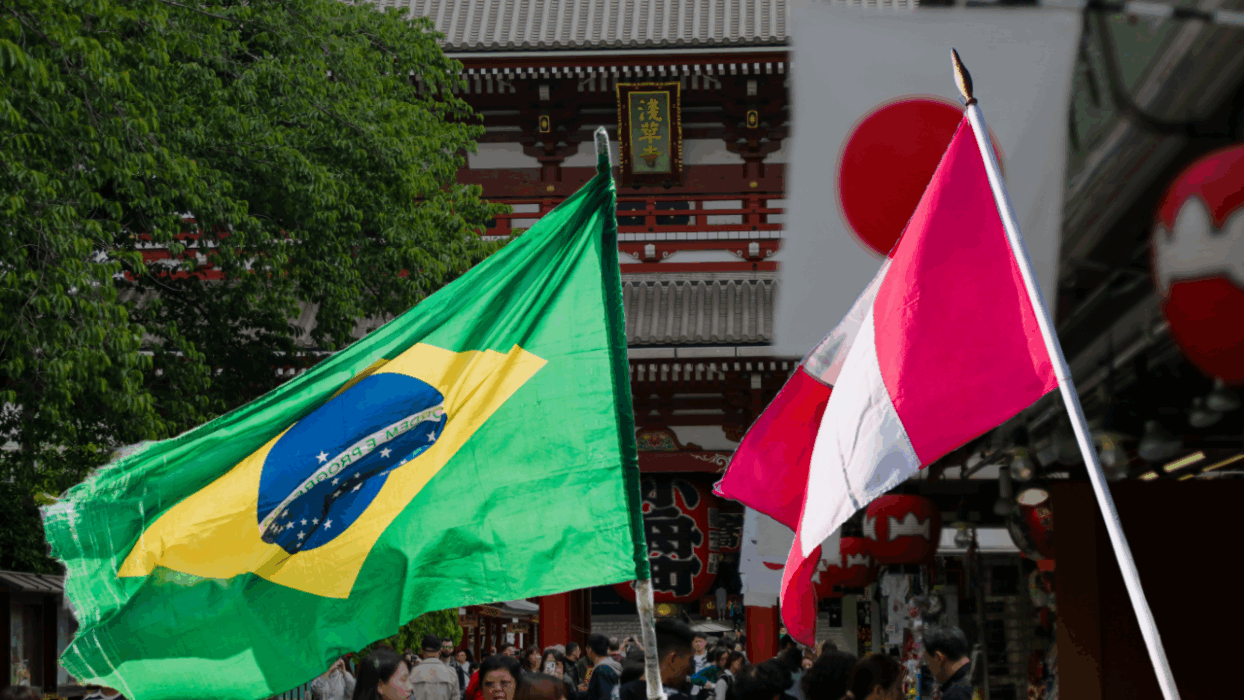
Japan and Brazil have had a long history of mass migration between the two countries. It all started in 1908 when the Japanese government sponsored immigration from Japan to Brazil. The focus was to alleviate rural poverty and overpopulation concerns as the Asian nation struggled economically. At the time, Brazil needed laborers for coffee farming and harvesting. The original migration has led to a population of 2 million people of Japanese descent in Brazil.
In the 1980s and 1990s, the roles reversed. Brazil started to experience economic instability while Japan was enjoying a bubble economy that led to a shortage of blue-collar workers in factories. To ease the strain, Japan revised its immigration laws to allow for second and third-generation Japanese-Brazilians to move back to work. Japan has notoriously hard immigration laws, making citizenship for foreign-born people very difficult to attain.
The wave of Japanese-Brazilians, and their spouses, gave Japan the boost it needed to satisfy its booming economy. The new arrivals with Japanese heritage were called Nikkeijin, which translates to “person of Japanese ancestry.” They settled predominantly in the Aichi and Shizuoka prefectures. The current population, which peaked at 310,000 in 2008, has stabilized at around 212,000 people. It accounts for the fifth-largest minority group in Japan, behind China, Vietnam, South Korea, and the Philippines.
Peruvians have also migrated to Japan in significant numbers. There are 50,000 people of Peruvian descent who call Japan home.
Unexpected Latino communities have been choosing Israel for decades
People of Jewish heritage around Latin America have routinely moved to Israel, but the largest population comes from Argentina. The South American country is no stranger to economic strife, and the routine financial troubles have prompted thousands of Argentines to relocate to Israel. The first mass migration happened in 2001 when Argentina experienced a significant financial downturn. Argentina already has the largest Jewish population in South America, which has ties to Jewish people fleeing Europe during and after the Holocaust.
While Jewish people moving to Israel is the most common form of migration, there is a notable non-Jewish Latin American community. Since the 1980s, in response to instability in their home countries, people from Ecuador and Colombia have made the trip from South America to Israel in pursuit of economic opportunities. Thousands of workers have left their home countries to fill job vacancies in the construction and caregiving sectors.
The Latin American communities that call Israel home are touted as being the most successfully integrated into Israeli society. They have filled roles in every sector of Israel, including academia, the arts, and industry.
The end of slavery in Latin America brought people to Nigeria
The slave trade brought millions of enslaved Africans to the Americas. Brazil was home to one of the largest populations of enslaved people that persisted for centuries. When slavery ended in Brazil and Cuba, freed slaves of Yoruba heritage fled discrimination by migrating back to Nigeria between the 1830s and 1860s. They were referred to as Aguda, which is from the Yoruba word for Catholic.
They settled mainly in Lagos and were given land by the Nigerian government in 1852, known as The Brazilian Quarter on Lagos Island by the Oba of Lagos. Due to the education that many of them received in Brazil and Cuba, British colonizers worked with the freed slaves as mediators. This lifted many of them to elite status as doctors, lawyers, and merchants.
Today, the mass migration back to Nigeria has left visible marks. The freed slaves brought with them culture, food, and architecture not seen in the African nation. For example, some of the freed slaves brought with them the construction knowledge to create two-story Brazilian homes. They also brought with them Catholicism that blended with the local spiritual practices.
Today, Nigeria maintains a strong connection with Brazil and Cuba. In 2025, Nigeria deepened strategic ties with the Latin American countries through collaboration on biotechnology, healthcare, and renewable energy.