So, Is Batman Actually Maya? Well, Kind Of
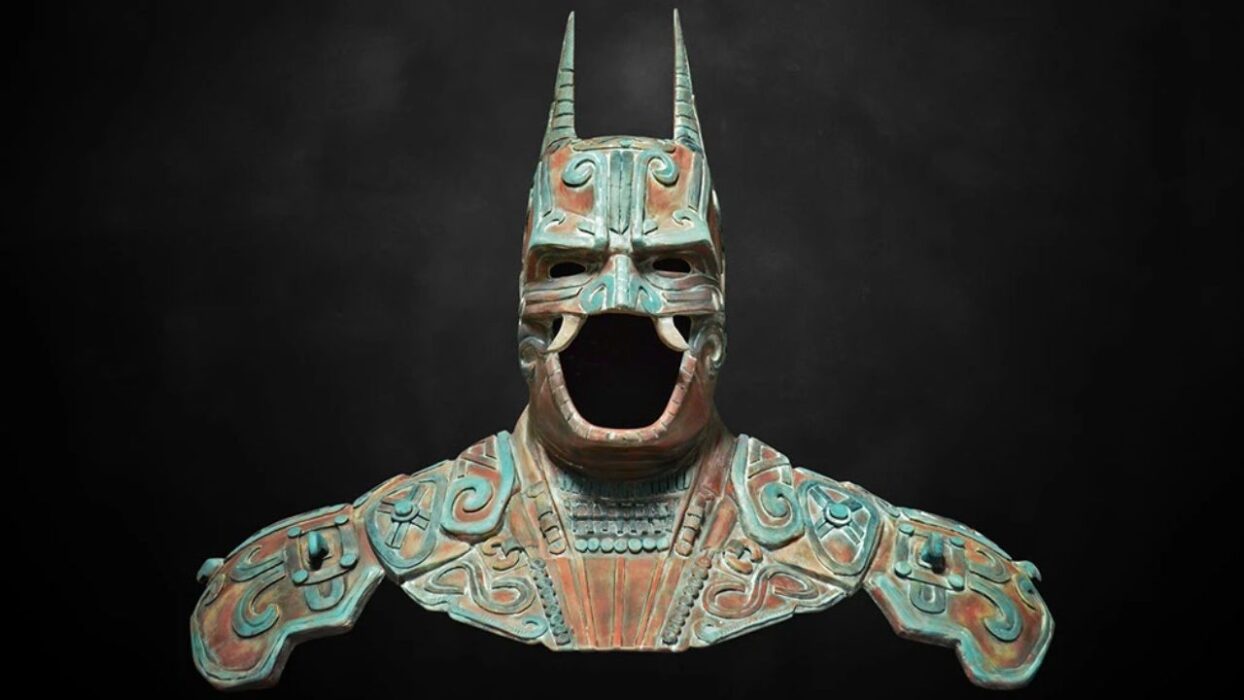
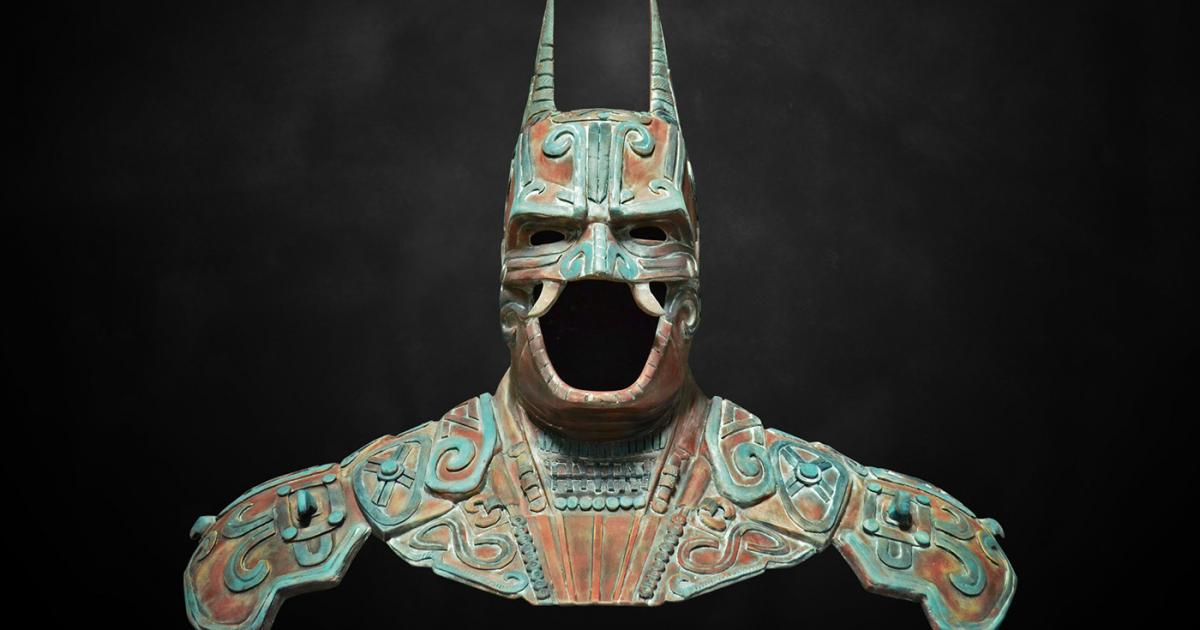
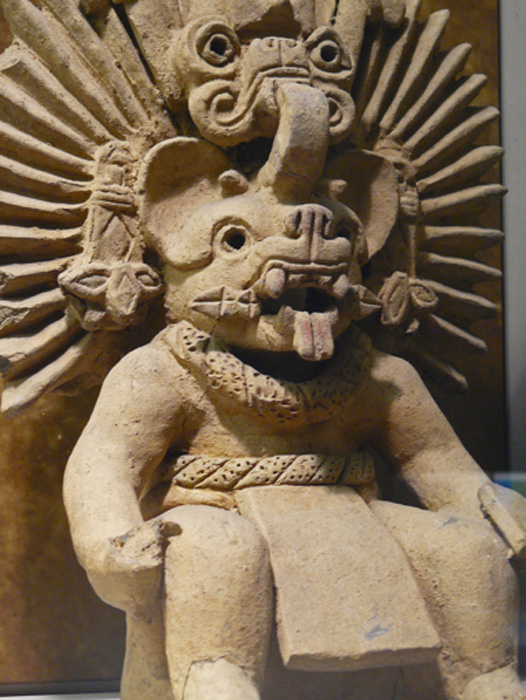
Once you spot the sculpture, it sticks with you. It shows a powerful figure with a bat’s head and what looks like a cape, staring forward with a look that even Bruce Wayne would admire. But this version is covered in Mayan designs and looks like it’s carved from ancient stone. Pictures of it have been shared online for years, often with captions saying it proves Batman was inspired by a real Mesoamerican god.
But the real story is even more interesting than the myth.
That sculpture was actually made in 2014, not thousands of years ago.
To mark Batman’s 75th anniversary in 2014, the Museo Mexicano de Diseño in Mexico City held an exhibition called “Batman a través de la creatividad mexicana” (Batman Through Mexican Creativity). Many artists created their own fiberglass versions of Batman. Christian Pacheco, who created the Mayan-inspired piece, based his design on a real Mesoamerican god. His sculpture is modern art, not an ancient artifact. But, no joke, Pacheco wasn’t making this up. Camazotz, the deity he was referencing, is absolutely real. And the comparison isn’t entirely off base.
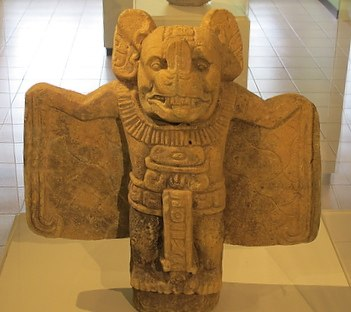
Camazotz was the first bat god.
Way before DC Comics, Mesoamericans had their own winged night creature. The Zapotec people in Oaxaca, Mexico, worshipped a bat god around 100 BCE. They called him Camazotz, a name made from the K’iche’ Mayan words kame (death) and sotz’ (bat), which means “death bat.”
Later, the K’iche’ Maya in Guatemala included this god in their beliefs, and his story was written in the Popol Vuh, the Maya’s sacred book. From there, the legend spread across Mesoamerica and even reached the Aztecs.
“In Mesoamerica generally, the bat is often associated with night, death, and sacrifice,” according to the historical record. But the real meaning is much more complicated.
The Popol Vuh story shows why he was feared.
In the Popol Vuh, the hero twins Hunahpu and Xbalanqué are forced to undergo trials in Xibalba, the underworld. One of these trials is spending the night in the House of Bats—a cave filled with creatures called Camazotz.
To stay safe, the twins hide inside their blowguns. But Hunahpu makes a deadly mistake. As dawn nears and he thinks the sun is up, he sticks his head out to look. Right then, Camazotz, a servant of the underworld lords, swoops down and cuts off his head. The bat takes Hunahpu’s head to the ballcourt to use as a ball in the gods’ game.
It’s a harsh story, but in a way, it fits the modern Batman, doesn’t it?
So what inspired this legend?
This is where things get even more interesting. Some experts think Camazotz was inspired by a real animal: the vampire bat. The common vampire bat (Desmodus rotundus) has a distinctive leaf-shaped nose and feeds on blood.
But there’s another idea. In 1988, scientists found a fossil of a giant vampire bat in Venezuela that was 25% bigger than today’s vampire bats. Called Desmodus draculae, this bat once lived all over South and Central America. Fossils have turned up in the Yucatan, Belize, northern Brazil, and even Argentina.
Scientists also think Desmodus draculae may have lived alongside humans for thousands of years before it went extinct. Some even believe it might still exist, based on a few sightings. Meeting a huge, blood-drinking bat at night would definitely inspire a legend.
But bats meant more than just death.
Now, if you search “Camazotz” in popular culture, you’ll mostly find dark and evil references. In the science fiction novel A Wrinkle in Time by Madeleine L’Engle, Camazotz is a dark planet controlled by an evil force. He also appears as a demon god in Dungeons & Dragons.
Scholars James E. Brady and Jeremy D. Coltman say there are very few images from the Classic Maya period (250–900 CE) that clearly show Camazotz as he appears in the Popol Vuh. But there are many pictures of bat-human hybrids in Maya books, and they don’t all show the same god.
Some bat figures are shown with large genitals, which stand for fertility. Others are pictured with hummingbirds, connecting them to pollination and good harvests. Some seem to represent uays, spiritual beings linked to shamanism, the spirit world, and secret knowledge. Bats were seen as messengers between gods and people. They lived in caves, which the Maya saw as doors to the underworld and places of hidden wisdom.
So, is Batman actually Maya?
Yes and no. When the sculpture went viral online as “ancient Batman,” that wasn’t really true. But it did show something real: Mesoamericans had their own dark, powerful, nighttime protector, inspired by real animals.
After the Spanish conquest, Camazotz’s story was taken over, just like much of Mesoamerican culture.
Centuries later, the real Camazotz wasn’t waiting for Hollywood to find him. Still, it’s a great story, isn’t it?