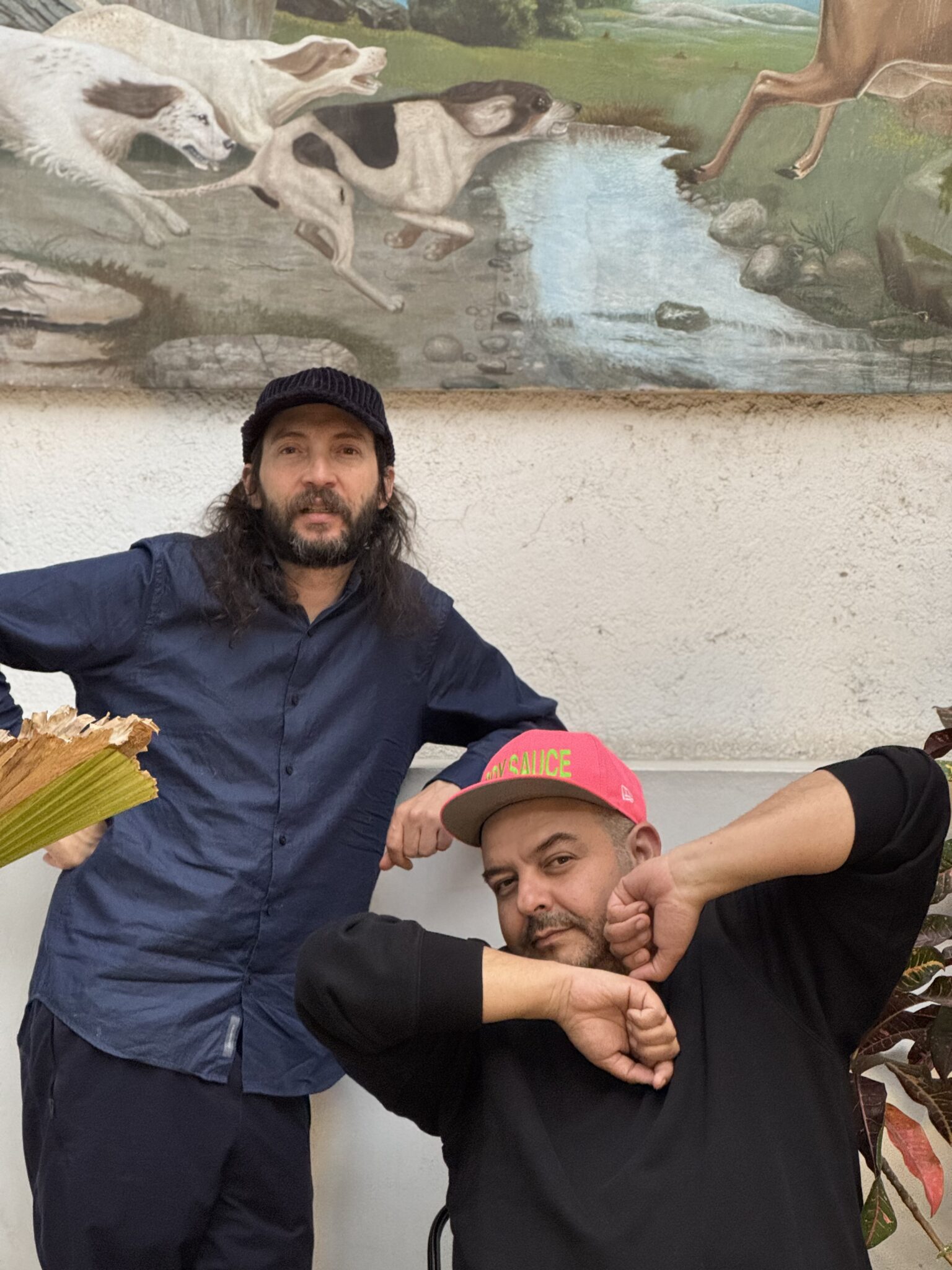
When American indie musician Beck collaborates in the studio with Colombian avant-garde artist Eblis Álvarez and Mexican cultural innovator Camilo Lara, initial expectations might suggest creative friction due to their diverse backgrounds. However, rather than conflict, the collaboration reveals a shared artistic language that transcends geographic and stylistic boundaries.
On May 22, Meridian Brothers and Mexican Institute of Sound will release Ruido Tovar, a collaborative album that explores a transformative period in Mexican tropical music, approximately from 1972 to 1982, when the introduction of synthesizers fundamentally redefined rhythm and groove.
However, labeling the project as merely nostalgic would be inaccurate.
“Eblis and I love Beck music,” Camilo explains. “It has been in our DNA for a long time. After spending some time with him, we realized he sees the world much like we do. We have many things in common. And he gets the music we do.”
This artistic kinship becomes evident when examining the collaborators’ backgrounds.
Camilo Lara, as Mexican Institute of Sound, has spent two decades redefining Mexican music by integrating cumbia, mariachi, and Latin traditions with hip-hop, electronica, and global influences.
The album’s conceptual centerpiece is Rigo Tovar, the Mexican musician who revolutionized cumbia by introducing the Moog synthesizer and, according to legend, drove through Matamoros in a custom pink Ferrari while wearing pleather. Ruido Tovar serves as both homage and deconstruction, engaging in a sonic dialogue with Tovar’s legacy. Importantly, the project does not seek to replicate Rigo Tovar’s work, but rather to interpret and understand the significance of his artistic contributions.
“The magical period of that tropical music created with analog synths was a time when the way to make music was changing,” Camilo says. “People started to use different techniques of recording, fewer musicians, and a whole different workflow at the studio.” He elaborates, “In a way, that is what Eblis and I have been doing throughout our careers. We create tropical music with different resources than most of our fellow tropical artists.”
“There is a misconception that dance music is frivolous,” he states. “My favorite political albums are dance albums. KLF, Sandinista, Exodus—they’re really serious. In this world, full of individualism, it is very political to be communitarian. Dancing is a communal action. Tropical music is most of the time a collective experience. Dancing can destroy totalitarian regimes.”
The album substantiates this perspective. “Ritmo Babilonia,” featuring Beck, is a reinterpretation of Rigo Tovar’s 1981 classic “El Festival De Mi Pueblo,” characterized by energetic rhythms, bilingual verses, and a coda reminiscent of Kool & The Gang. “Cumbia del Lobo” incorporates wolf howls from Camilo’s dogs layered over psychedelic guitar, while “El Concorde” presents an absurdist cha-cha-cha centered on a supersonic airplane. These works are not mere novelty songs; rather, they are thoughtfully composed pieces that maintain artistic seriousness while embracing playfulness.
Notably, Eblis, Camilo, and Beck completed the album within a single week. This accelerated creative process, which might have resulted in disorder or compromise, instead illuminated essential aspects of their collaborative methods. Reflecting on the condensed timeline, Eblis articulates his approach: “I think all of this was handcrafting—it’s a combination of instinct, technique, inspiration, and I hope, any talent. You really cannot stop and think which parameter is being developed at any given moment. Things just happen in the routine of creating something. Sometimes the more time one has, the more stuff tends to get overdone.”
Ultimately, Ruido Tovar asserts a broader thesis: artistic innovation transcends national and cultural boundaries. The collaboration among a Mexican producer, a Colombian composer, and an American indie musician demonstrates that artists can share a common creative language when they collectively interrogate the possibilities of music, the significance of dance, and the interplay between seriousness and playfulness.