
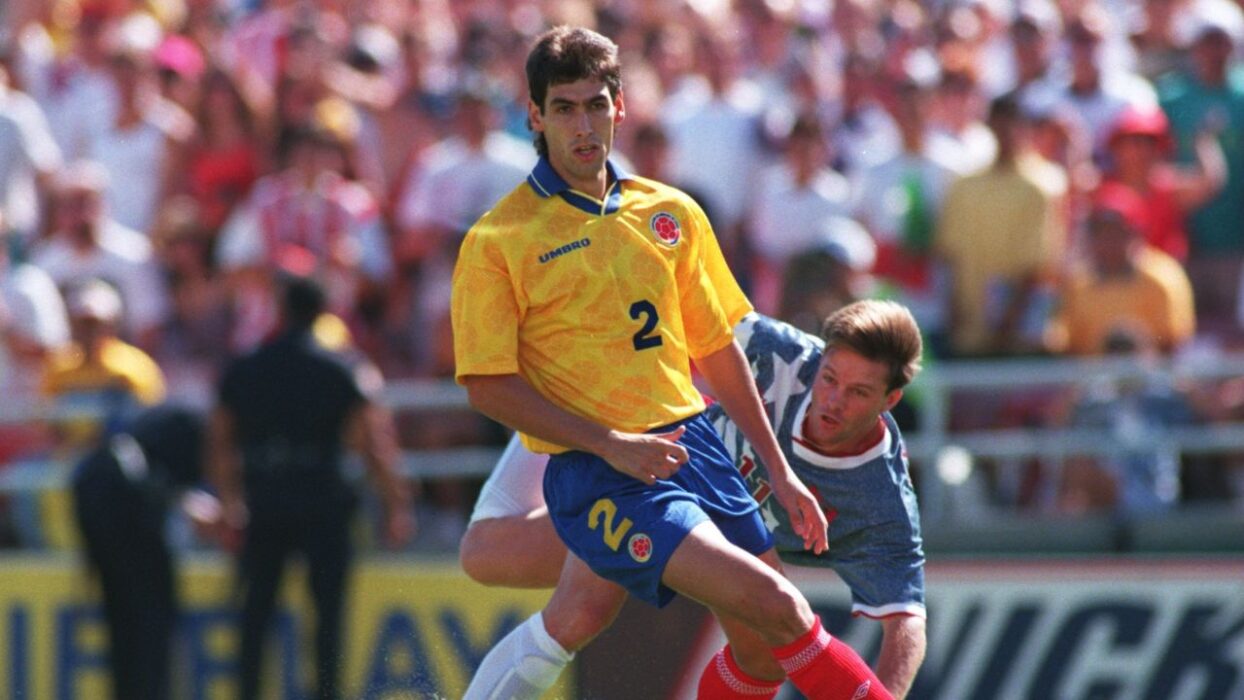
Did You Know a Colombian Footballer Was Killed Over a 1994 Own Goal? Here’s The Story of Andrés Escobar
We’re just over a month away from the World Cup, and obviously, we’re more than ready. In fact, we can’t help but look back on our favorite moments, from the Maracanazo to the Hand of God, all the way to Germany’s painful 7-1 victory over Brazil in 2014.
However, our chat groups are also full of the most bizarre or downright chilling moments. One of them, without a doubt, was what happened to Andrés Escobar in 1994.
A heartbreaking own goal.
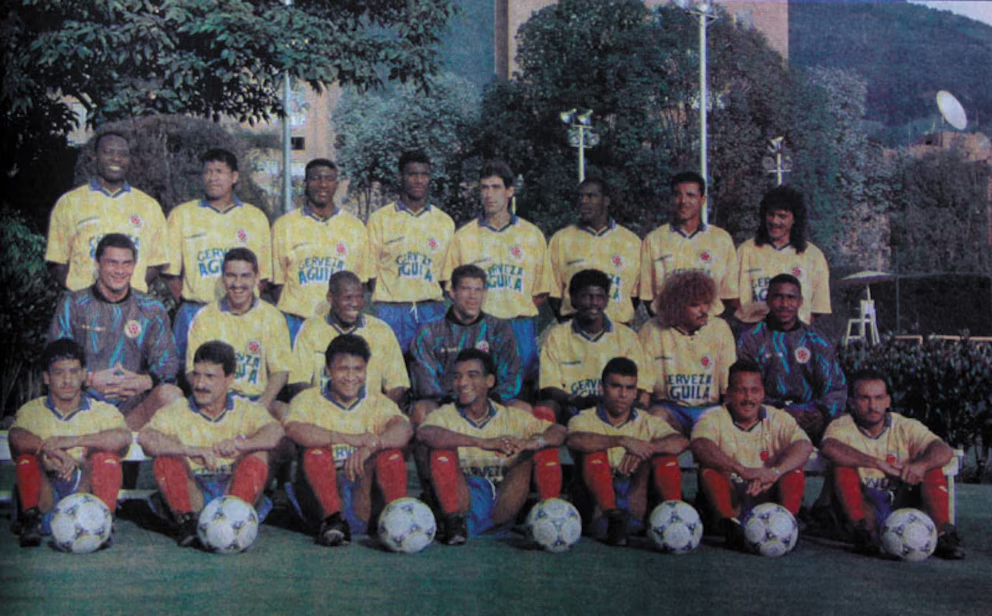
If you’re Latino, your parents still remember the name Andrés Escobar. In the months leading up to the 1994 World Cup in the United States, the Colombian national team was the talk of the town. They had gone 27 games undefeated before the tournament began. The team had thrashed Argentina 5-0 in Buenos Aires and boasted players such as Carlos “El Pibe” Valderrama, Faustino Asprilla, Fredy Rincón, Leonel Álvarez, and Adolfo “El Tren” Valencia. And the new player everyone had their eyes on was Atlético Nacional’s central defender, Andrés Escobar.
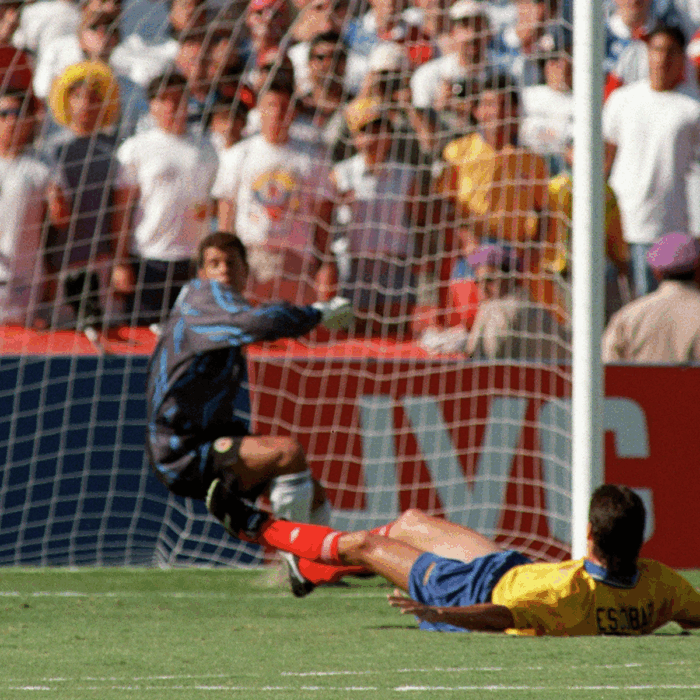
Once the World Cup began, and to everyone’s surprise, came the first defeat in a 3-1 loss to Romania. For the second match, against the United States in Los Angeles, everyone expected an easy victory. But in the 23rd minute, in what many remember now as “the beginning of the end,” Andrés Escobar scored an own goal while trying to cut off a pass from the wing.
The disappointment took its toll on the team, which lost 2-1 and was eliminated from the World Cup.
Ten days later, Andrés Escobar was dead.
Despite his family’s warnings, Andrés Escobar decided to return to Medellín, Colombia, after the national team’s elimination. After leaving the El Indio nightclub, brothers Juan Santiago and Pedro David Gallón Henao—notorious drug traffickers, businessmen, and ranchers linked to paramilitary groups—confronted Escobar.
The brothers insulted the player over the own goal. Escobar demanded respect, and the brothers replied, “You don’t know who you’re messing with.” At that moment, the brothers’ driver and bodyguard, Humberto Muñoz Castro, opened fire, shooting Escobar six times.
Andrés Escobar died 45 minutes after arriving at the hospital.
National pride or illegal gambling?
Although the official version of events stated that Andrés Escobar’s murder was due to national embarrassment, the hypothesis upheld by Colombian oral tradition is different.Many claim that Escobar was the victim of reprisals from illegal betting related to his own goal. After all, the climate of violence in Colombia during the 1990s was at its peak due to the presence of drug trafficking and paramilitary groups.
Andrés Escobar never truly got justice.
Nearly 120,000 people attended Andrés Escobar’s funeral, including his teammates, who had to be escorted by law enforcement. However, following Escobar’s murder, the Gallón and Muñoz Castro brothers began to fabricate an alibi.
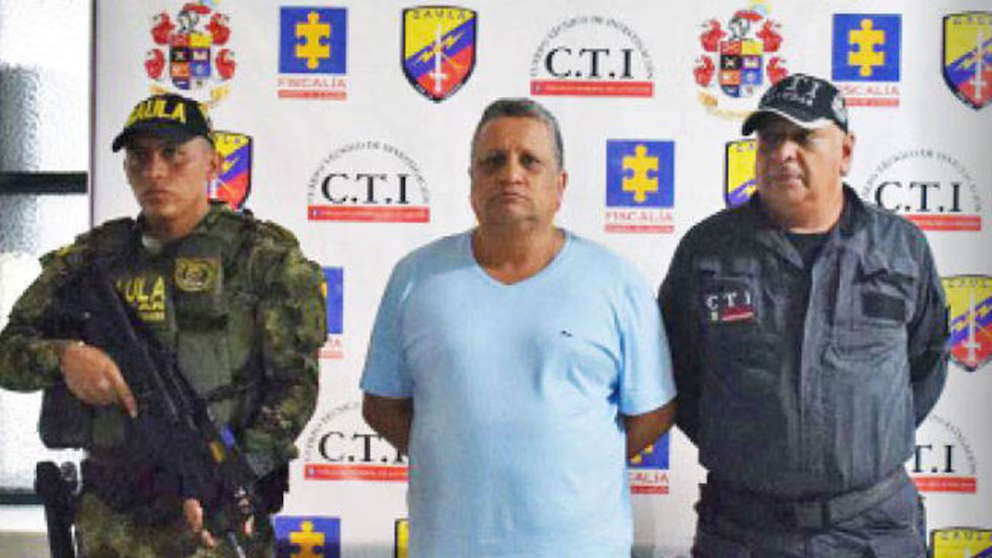
The next day, they reported that someone had stolen the vans they used for transportation. But a witness to the incident described the vehicle’s characteristics to the authorities. From there, it was easy to connect the dots. Hours later, the authorities already knew all the details of the case. No lie from the Gallón brothers or Muñoz was enough to throw them off the trail. The brothers then confessed to their involvement, and the driver confessed to the murder. As a result, the brothers served fifteen months of house arrest for concealing the crime. For his part, Muñoz was sentenced to 43 years in prison, of which he served only eleven. Since 2005, the killer has been free.
In 2009, after a long period of activity in the cattle business, the Gallón brothers were turned over to the authorities for financing paramilitary groups.
This year, the story of Escobar returned to the headlines.
Thirty years after his death, Andrés Escobar returned to the headlines on February 4. His name resurfaced following the murder of one of the Gallón Henao brothers, Juan Santiago, who was also shot as he entered a restaurant.
Over the past few decades, the name Gallón Henao has become forever linked to organized crime. In addition to his conviction for obstruction of justice, authorities identified Gallón Henao as a financier and linked him to drug trafficking and the United Self-Defense Forces of Colombia (AUC).
The Prosecutor’s Office investigated him for providing funds to paramilitary units under the Castaño brothers’ command between 2000 and 2004, an action that affected several municipalities in southwestern Antioquia. For these acts, the First Criminal Court of the Specialized Circuit of Antioquia sentenced him to three years and three months in prison in 2009.
His criminal record includes several cases related to drug trafficking. In 2018, Gallón Henao was arrested in Cúcuta for allegedly being part of a network that transported cocaine hidden in animal feed destined for the United Kingdom and the United States.
However, he was released a year later, in 2019, after a judge ruled that the statute of limitations for the drug trafficking case had expired.