
Before Soccer, There Was Ulama: Mexico’s 3,400-Year-Old Game Gets Its Moment
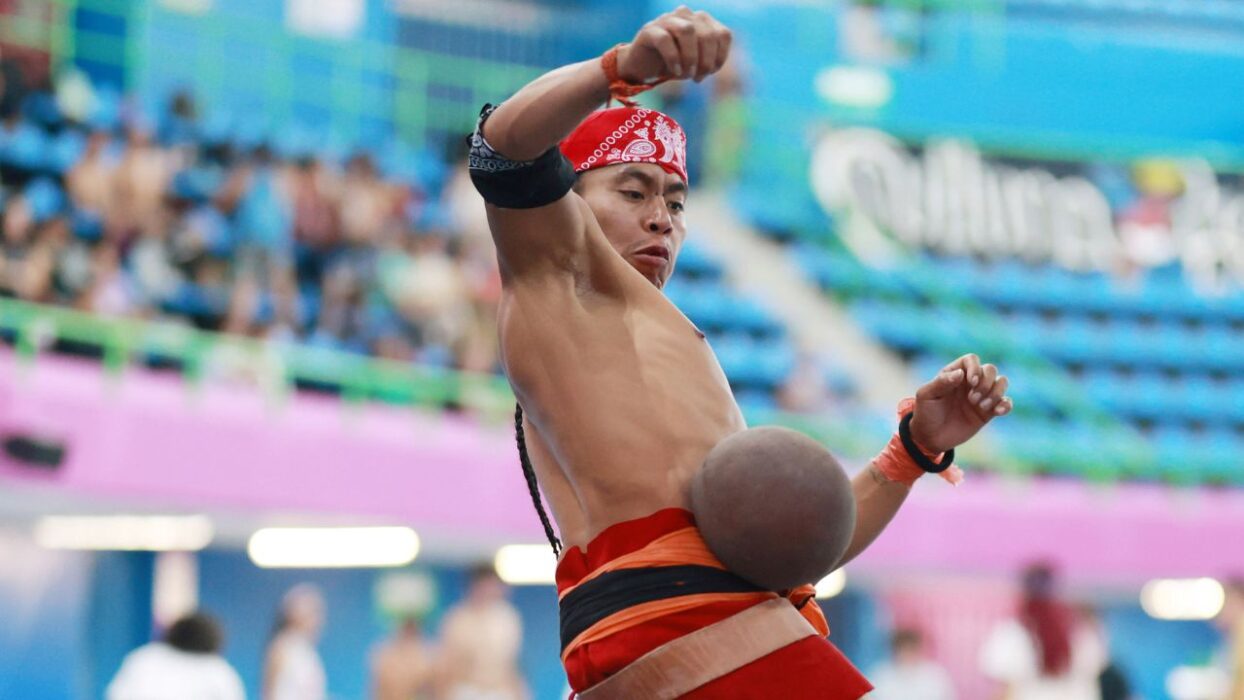
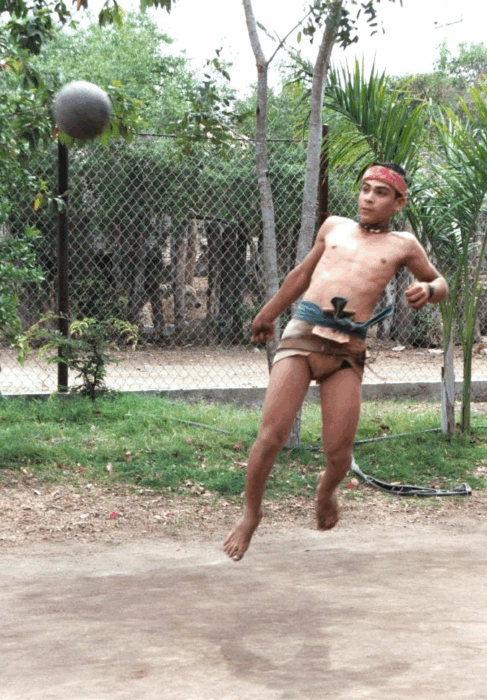
On a dirt field in Los Llanitos, a small ranch near Mazatlán, five cousins aged 8 to 13 take off their shoes and get ready to play. As NBC News reported, Adults help them tie on pre-Hispanic-style loincloths and leather belts around their hips. They grab the ball, which weighs about seven pounds—almost seven times heavier than a soccer ball—and start the game.
The rules are ancient: only the hips can touch the ball, and players jump or dive to keep it in play. Most importantly, the game is unforgiving of mistakes.
This is ulama, and as Mexico gets ready to co-host the 2026 FIFA World Cup, the country is revisiting a team sport that dates back 3,400 years. Since the Spanish conquest, the ulama survived only in remote pockets of northwestern Mexico until its late-20th-century rebirth. Now, with international attention turning toward Mexico, authorities and players are leveraging the momentum of global soccer to once again shine a spotlight on the ancient sport.
Players admit that tourism helped revive the ulama, but many are concerned that making it seem ‘exotic’ detracts from a tradition that is important to their identity. The real question is not if the game will last, but what it will turn into if it does.
A 3,400-year-old ballgame is having its moment.
The Popol Vuh, the sacred Mayan creation story, says the world was born from a ballgame. In this myth, light and darkness battled to balance life and death, starting the universe.
Long before the Maya included it in their myths, the Olmecs, the earliest known Mesoamerican civilization, were already playing ball. Archaeologists have found rubber balls dating as far back as 1600 BC and nearly 1,500 ancient ball courts, stretching from Mexico to El Salvador and maybe even into Arizona and New Mexico. The game had many forms and meanings—fertility rituals, war ceremonies, politics, and even sacrifices—but above all, it was a spectacle. It brought crowds together for entertainment and betting, making it a huge social event.
Even the word carries history. Ulama comes from the Nahuatl word ōllamaliztli, which means ‘the process of playing the ball game.’ The root, ōlli, means rubber or rubber ball. The Aztecs also called it ōllamaliztli, and the game stayed at the heart of Mesoamerican culture for at least 3,000 years. How the ulama have changed in modern times.
Today, ulama is played in three main ways.
The most common is hip ulama, where teams of five or more wear loincloths and leather hip pads to protect themselves from the heavy rubber ball, which can only be hit with the hips. Forearm ulama is played on a smaller field with teams of one to three, using wrapped forearms to hit a lighter ball—this version is often played by women. Mazo, or paddle ulama, has teams of three or four hitting a one-pound ball with heavy wooden paddles held in both hands.
The goal sounds simple: keep the ball in play and inside the boundaries. A team scores when the other side hits the ball out of turn, misses it, sends it out of bounds, or touches it with the wrong body part. Sometimes, the score can be reset to zero, which means games can go on for a long time.
Ulama stands out not just for its rules but for its physical demands. The rubber ball weighs 6 to 8 pounds in hip ulama and 13 to 15 pounds in paddle ulama, and it hits hard. Players discuss the bruises and the skills needed to avoid them.
“You have to feel the ball,” María Herrera, 53, told researchers. Herrera is the widow of Aurelio Osuna, who played ulama for decades in Los Llanitos. She has continued his legacy, teaching the game to their grandchildren. “The ball teaches you.”
The game Spain tried to wipe out.
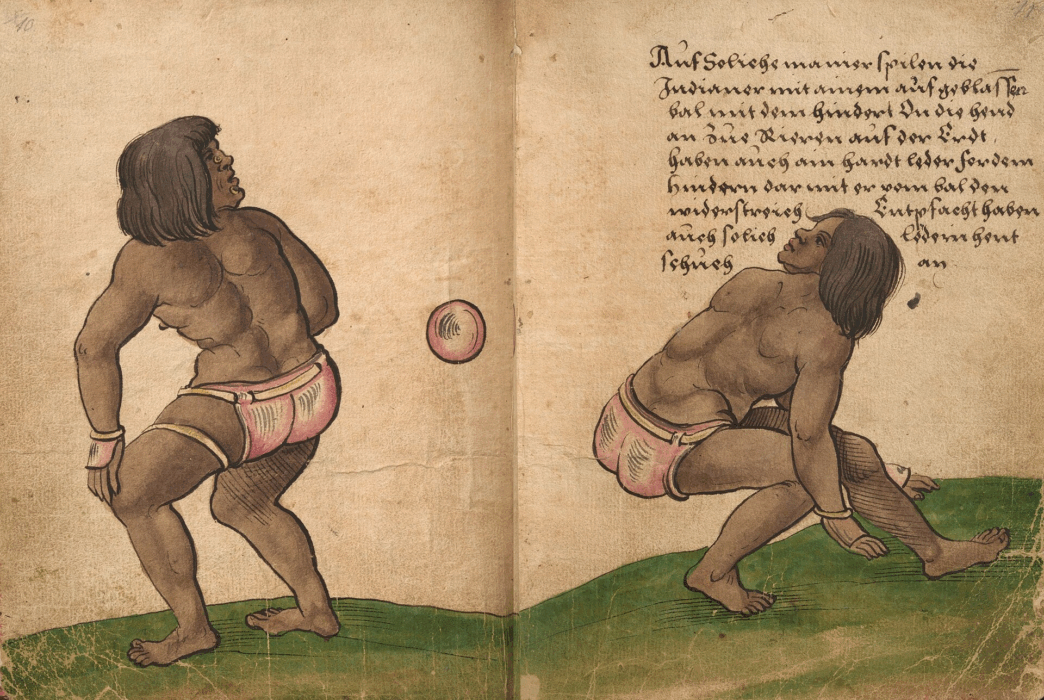
Spanish conquistador Hernán Cortés was amazed when he saw the game performed by the Aztec emperor Moctezuma’s players. They twisted their bodies in surprising ways to keep the rubber ball moving as long as possible. Cortés was so impressed that he took the players and balls back to Spain in 1528 to show them to Charles V’s court.
But even though the Spanish admired the game, they did not accept it. Spanish Catholics saw ulama as a pagan ritual and banned it, ordering the destruction of its courts. According to researcher Emilie Carreón at the National Autonomous University of Mexico, for the Catholic Church, “the ball was the living devil.”The ban was so strict that the game disappeared from most of Mesoamerica.
How the ulama managed to survive the conquest.
The game survived where Spanish colonial rule was less strict, especially along Mexico’s northern Pacific coast in Sinaloa. Jesuit priests in these remote areas were less harsh, and ulama were even included in Catholic celebrations. Ironically, the game Spain once called pagan became part of the religious calendar in these isolated communities. Players in small villages passed the tradition to their children. The game continued in the dirt fields and remote ranches of Sinaloa while the world moved on.
On the first day of the 1968 Mexico City Olympics, ulama returned to the public eye. Spectators watched players twist and turn to keep the rubber ball moving. The event led to academic studies and talks about preserving the game. Researchers started to document its history, and filmmakers captured the work of what might have been the last traditional rubber ball-maker in the Sinaloa mountains, who made balls the old Olmec way by mixing hot rubber sap with a plant to create a strong, elastic material.
But writing about the game didn’t bring a full comeback. Over time, interest faded. Rubber balls became hard to find, and the game went back to the villages and families who had always kept it alive. A resort in the Mexican Caribbean traveled across the country searching for Sinaloan families who could represent ulama as a tourist attraction in the Riviera Maya, where the game had never been played. They found players and brought them to the Caribbean coast. This way, the sport spread beyond its ancestral home for the first time in centuries.
This new attention came at a cost.
Players were asked to paint their faces and wear feathered costumes. The game turned into a different kind of show—not the grand ritual it once was, but an exotic act for tourists. María Herrera acknowledges the contradiction. “It’s pure spectacle,” she said of those early revival efforts. “They paint their faces and put on feathered costumes.” Yet she also recognizes what happened. “That’s where the revival began.”
Luis Aurelio Osuna, Herrera’s 30-year-old son, started playing hip ulama after school, just like his father did years before. The family team, started by his father, even traveled to Italy to play in a Roman amphitheater. Their performance got so much attention that they were hired for a deodorant commercial.
Now, with the World Cup coming up, officials and companies are organizing exhibitions in Mexico City and Guadalajara. Ulama players are featured in ads that celebrate Mexican heritage, and tourism boards are once again promoting the ancient game alongside modern soccer.
But not everyone is happy about the attention. Ángel Ortega, a 21-year-old ulama player from Mexico City who recently appeared in a TV commercial alongside football players, said, with frustration, “We’re not circus monkeys.”
Carreón, the researcher leading preservation efforts at UNAM, speaks for those concerned that the game could become a commodity. “We must rid the game of the notion that it is a living fossil,” she said.
Ulama and the World Cup
The 2026 FIFA World Cup brings both opportunity and risk for ulama. The global spotlight on soccer will show Mexico’s cultural heritage to billions of people. Exhibitions in Mexico City and Guadalajara will introduce ulama to many who might never have seen it before.
But there’s a risk that marketing could ruin this ancient tradition. The game could turn into just another show for tourists, rather than something played for its own sake. Ilse Sil, a player and member of the UNAM project, believes institutional support will help preserve ulama. But she emphasized a requirement: officials must promote the game in communities and schools to recruit young players. Without that grassroots work, without genuine participation rather than spectacle, the revival will remain hollow.
The numbers back this up. Ulama has about 1,000 players today, mostly in Mexico and Guatemala, so it’s still a small sport. In Los Llanitos, the Osuna family keeps the tradition alive out of both passion and practicality. In a place where organized crime is common, Luis Aurelio Osuna said, “We need to find a way to keep them entertained with good things.”