
Reggaetón Has Arrived at the Museum of Contemporary Art Chicago, and It’s About Time
For decades, reggaetón has been treated by cultural gatekeepers as too loud, too sexual, too working class. It has often been seen as “too unserious” to qualify as heritage. Especially inside the kinds of institutions that decide what culture is supposed to look like. That is part of why the Museum of Contemporary Art Chicago’s new exhibition means so much.
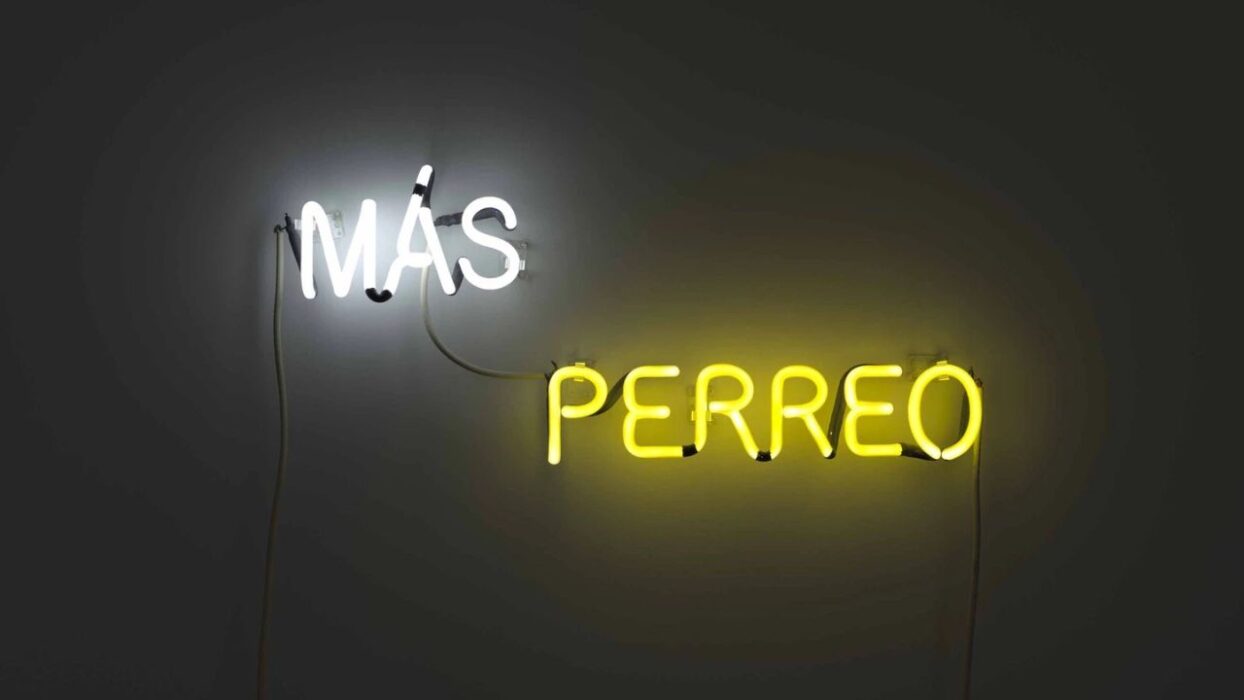
According to the museum, Dancing the Revolution: From Dancehall to Reggaetón is a major exhibition that “explores and expands the visual, political, and spiritual histories of dancehall and reggaetón through contemporary art,” tracing those histories from Kingston to San Juan through Panama, New York City, and London.
In this way, the curators are framing reggaetón not as a “tolerated” genre but as a pop phenomenon. One that happened to become commercially successful, yet one that also emerged from a deep cultural revolution. Furthermore, the exhibition situates reggaetón inside a serious curatorial argument about colonialism, Black Atlantic history, dance, protest, and collective liberation.
Because yes, reggaetón has entered museums before. But this moment feels different. This time, the genre is not simply being included as a sidebar to Latin music history or approached with the traditional institutional caution that attempts to make popular culture legible to elite spaces. This time, reggaetón is walking into one of the country’s most prominent contemporary art institutions with its politics, body language, Caribbean memory, and working-class pulse intact.
Reggaeton was always bigger than the way institutions tried to contain it
According to the Museum of Contemporary Art Chicago, dancehall and reggaetón are presented in the exhibition as “cultural practices and powerful expressions of resistance and joy,” rooted in “the Caribbean’s centuries-old traditions of dance and music as means of liberation and protest rooted in Black Atlantic history and culture.” This way, the exhibition directly resists the old institutional instinct to treat reggaetón as disposable entertainment rather than as a cultural formation with deep political and historical stakes.
Lauren Chalk’s 2025 article in Curator: The Museum Journal helps explain why that resistance is so significant. She writes that reggaetón emerged from Spanish-speaking communities across Latin America, the Caribbean basin, and their diasporas, with Puerto Rico “generally acknowledged to be the home” of the genre. At the same time, she notes that in the late 1990s and early 2000s, the genre took shape in “working-class urban neighborhoods and public housing developments” on the island.
Those origins have always shaped the backlash.
According to Chalk, public discourse around reggaetón has long been structured by “class and racially based hierarchies,” including racism and classism. The genre’s lyrics, she writes, spoke to police brutality, racial discrimination, and socioeconomic inequality, while the communities around it faced raids, censorship laws, confiscation, and moral panic. She also notes that reggaetón has often been regarded as “cultural trash” by sectors committed to preserving the “high professional standards” of more traditional Latin Caribbean genres.
The Reggaeton museum story did not start in Chicago, but Chicago changed the scale
Chalk makes clear that, for a while now, museums in the United States have already begun trying to figure out how to curate reggaetón. She specifically examines the Grammy Museum in Los Angeles and La Casita Cultural Center in New York. These two institutions have included the genre in recent years as part of broader efforts to represent Latino and Caribbean music and culture.
Those earlier efforts helped open a door.
But Chalk also shows how uneasy that process has been. Her article is, in many ways, a study of institutional hesitation. She writes that reggaetón is often denounced as not belonging to official heritage sites, especially when it is sounded in museum spaces. She cites the idea that the genre makes for an “awkward subject matter.” Chalk notes that curators often approached it cautiously, in part because of the long shadow of what she calls “authorized heritage discourse,” the system that shapes how institutions decide what counts as heritage in the first place.
In other words, reggaetón has already been knocking on the museum door. The problem is that the people inside have often still been asking whether it belongs there.
That is why what’s happening in Chicago is crucial.
The Museum of Contemporary Art is not a community center that the old guard can dismiss as too local or too intimate to count. It is not a music industry museum whose relationship to Latin music can still be mediated through award shows, celebrity wardrobes, and institutional caution. It is a hegemonic contemporary art space. And it is choosing to frame dancehall and reggaetón as engines of visual culture, political imagination, and historical struggle.
That is a different order of recognition.What the exhibition says about Reggaeton and who gets to define culture
According to the MCA, Dancing the Revolution includes painting, sound sculptures, installations, photographs, and video. It features more than forty contemporary artists, among them Isaac Julien, Edra Soto, Alberta Whittle, Carolina Caycedo, and Lee “Scratch” Perry. A special commissioned mixtape by Juan Rivera traces the evolution of these genres in Panama. It highlights “the iconic songs that have paved the way for the global phenomenon of reggaetón.”
That curatorial choice says something important. Yes, Bad Bunny made it to the Super Bowl’s halftime show. Yes, Karol G became the first Latina headliner at Coachella. However, the museum is not treating reggaetón as a one-off pop success or as a commercial afterthought. It is treating the genre as a visual and sonic archive, one that generated aesthetics, memory, movement, iconography, and ways of occupying public space.
That is a major shift in register.
For years, one of the most persistent insults against reggaetón was that it had no depth. That it was repetitive, crude, and sexual. But historically, museums have always been less neutral than they pretend to be.
Chalk’s article is especially useful on this point. She argues that reggaetón has often been positioned as de facto non-heritage, especially in Puerto Rico, where official cultural discourse historically favored older “folkloric” genres while treating contemporary Black musical practice as less worthy of institutional backing. That split, she writes, denies people who engage with reggaetón their cultural heritage by confining acceptable Blackness to the past rather than the present.
This is exactly what makes the MCA show so important. It refuses that split and insists that reggaetón belongs inside history.
Reggaeton enters the museum carrying protest with it
According to the MCA, the exhibition’s title draws partly on the “Verano del 19.” It refers to the Summer of 2019 protests in San Juan that demanded the resignation of then-Governor Ricardo Roselló. The museum notes that on July 17, the same day Roselló resigned, LGBTQ+ and feminist activists led “perreo combativo,” or “combative twerking,” on the steps of San Juan Cathedral. They turned reggaetón’s characteristic dance into a form of political protest.
That pin on the timeline interrupts one of the genre’s oldest lies: that its dance culture is merely a vulgar spectacle.
The exhibition, instead, treats dance as a reclamation of public space, as collective defiance, as embodied political language. According to the museum, that act demonstrates how music and dance can serve as “bold acts of collective resistance and emancipation.”
And that reading has an academic argument.
Chalk notes that reggaetón has repeatedly been used as a form of cultural resistance across the Latino and Caribbean world and its diaspora. She points to the genre’s anti-establishment character. For years, activists have repurposed reggaetón lyrics, blasted its music in protests, and used perreo in the streets from Madrid to San Juan. She also recounts how Puerto Rican activists brought reggaetón into the Whitney Museum lobby in 2019 while protesting the institution’s ties to violence against their community.
A long-overdue story about Black Atlantic memory
The MCA insists on the Caribbean as a site of historical continuity. And that is one of the strongest things about their exhibition.
According to the museum, Dancing the Revolution traces dancehall and reggaetón through Black Atlantic history and culture. And insists on the genre’s Black Caribbean roots. The exhibition restores the route and the movement across islands, ports, cities, diasporas, migrations, and colonial afterlives. Through the curatorial approach, Dancing the Revolution wants to make one thing clear: Reggaetón came through Black urban experimentation and immigrant circulation. And that’s something we should never forget.
Finally, Reggaeton did not become worthy once the museum noticed it
This may be the most important point of all.
The Museum of Contemporary Art Chicago is not making reggaetón valuable. Reggaetón had value long before a major museum put it on the wall. Communities, dancers, artists, archivists, scholars, and listeners have been saying that for years. The point is not that the genre suddenly became profound because a hegemonic institution acknowledged it. The point is that the institution is finally catching up to what people in the culture already knew.
Because whenever an institution like this catches up, it tells you two things at once. First, that the culture was always stronger and more durable than the gatekeepers believed. Second, that the gatekeepers can no longer pretend they do not hear it.