
How Latino Designers and Artisans Are Taking Over the 2026 World Cup
The 2026 World Cup will take place in North America for the first time, with Canada, Mexico, and the United States as hosts. As teams reveal their official kits, it’s clear that Latino designers, artisans, and creatives are not only watching the matches but also forming the whole tournament. They are defining how the world will see the biggest moment of football, and their impact is unmistakable.
We have always celebrated talent on the field. Goals, saves, and tactical brilliance usually get the spotlight. But this World Cup is showing something new: the creativity behind how the tournament looks, feels, and honors each team’s culture is coming from Latino hands. Whether in design studios, rural villages, corporate offices, or on social media, Latino creatives are making their mark.
A Mexican-American Designer at Nike Breaks Through
When you imagine Nike’s design teams, you might think of a minimalist corporate style that seems distant from the communities they serve. Yazmin Rosete changed this approach.
Rosete is a senior designer in Nike’s Global Football Apparel division and created the United States Men’s National Team’s World Cup 2026 kits. She is Mexican-American, studied fine art at UC Santa Barbara, and worked in luxury and beauty design before joining one of the world’s biggest sportswear companies. Her role was central. She guided the color choices, construction details, and the custom star-knit pattern inspired by American flag motifs.
For the USMNT kits, she intended to honor American identity and create something genuine rather than merely symbolic.
150 Hands, One Kit, Every Name Visible. This Is How Latino Creativity Looks in the 2026 World Cup
But the most powerful story of Latino creativity in World Cup 2026 design isn’t happening in corporate studios. It’s happening in Naupan, a rural community in the Sierra Norte of Puebla, Mexico.
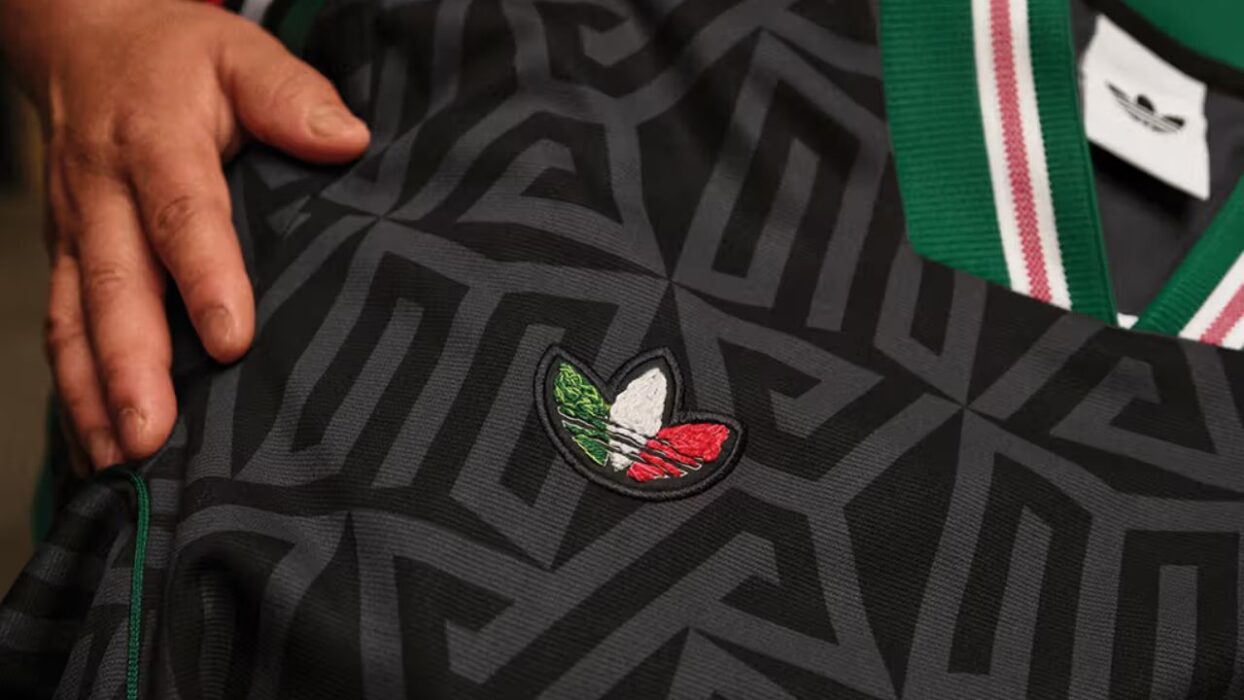
More than 150 artisans created Mexico’s third kit for the 2026 World Cup, with support from Someone Somewhere, a Mexican lifestyle brand that helps rural artisans rise out of poverty. The kit is black and features an Aztec-inspired zig-zag pattern with stylized M and X lettering. Every stitch is hand-embroidered, not machine-made or mass-produced.
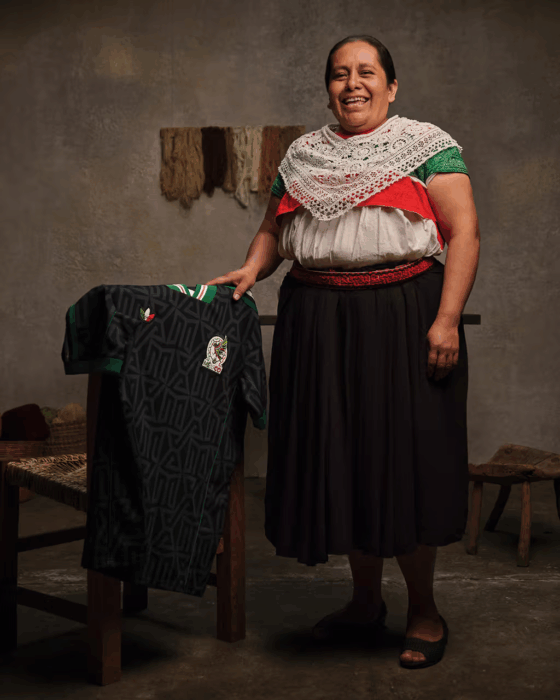
The artisans worked on this project for more than a year, using millions of inches of thread. Every crest, every adidas stripe, and every detail was hand-embroidered by these craftspeople. Each jersey has a tag with the artisan’s name and a QR code linking to their story. Their names are on the kit. When you wear a Mexico World Cup jersey made by Someone Somewhere, you are wearing the work of recognized and credited artisans.
This collaboration represents a new model for how global brands can work with marginalized communities. This way, the artisans aren’t cheap labor. They’re artists, and they’re being treated as such.
From the Streets to the Field
While Someone Somewhere focuses on corporate partnerships and the empowerment of artisans, other Latino creatives are exploring street fashion, customization, and new ways to reimagine the sport.
Brenda La Latina, a Mexican-American designer, created custom World Cup corsets made from Adidas Trionda ball pieces. She collaborated with Spicy Streetwear to combine traditional Mexican lace with soccer ball materials, creating pieces that are both deeply cultural and completely modern. One of her custom pieces was signed by Miguel Layun, a Mexican national team player. The work carries the official #CreatedWithAdidas hashtag, but its spirit is pure street creativity.
Cultural Symbols Woven Into Every 2026 World Cup Kit
Official kits tell their own story about Latino creativity. Colombia’s home jersey, designed by Adidas, features a yellow butterfly pattern woven throughout the fabric. The butterflies are a tribute to Gabriel García Márquez, the Colombian novelist who used them in his work to symbolize hope and magical realism. It is a deliberate choice to honor Colombia’s literary legacy and its contribution to world culture through the lens of sport.
Argentina’s away kit features Fileteado Porteño, a folk art from Buenos Aires recognized by UNESCO. The spiral patterns on the black jersey are inspired by 19th-century decorative art once found on horse-drawn carts and buses.
Chilean artists Guzmán, Acevedo, and Anita worked with Adidas to design Chile’s away kit. The jersey is inspired by the Desierto Florido, or Flowering Desert. The design celebrates geography, ecology, and creativity.
Similarly, Adidas designed Mexico’s home and away kits with pre-Hispanic motifs. The home kit includes the message “Somos México.” The away kit features geometric patterns inspired by Grecas, the stepped designs from ancient Mesoamerican temples, and traditional Mexican art.
The Textile Industry Steps Up
Guatemala’s textile industry is ready to take on a large share of World Cup 2026 apparel production. Umbro, the official kit supplier for the Guatemalan national team, has created three unique kits for the tournament, each inspired by the country’s cultural heritage. The designs include the Resplendent Quetzal, Guatemala’s national bird and a symbol of freedom and independence, as well as patterns inspired by the steps of Tikal’s temples.
More broadly, Guatemala’s textile industry, with major manufacturers such as Liztex and Eltitex Group, exports sportswear to brands including Nike, Puma, Adidas, and Under Armor. Thanks to CAFTA (Central America Free Trade Agreement), clothing made from regional fabric can enter the United States duty-free, saving up to 32% in tariffs. With the 2026 World Cup in North America and the nearshoring trend growing, Guatemala’s textile sector is positioned to gain.
According to a FIFA-WTO study, the economic output from the World Cup 2026 is projected at $47 billion USD. Guatemala’s textile manufacturers are positioned to capture a meaningful portion of that through contracts for team merchandise, fan apparel, and official gear.
This Is What Representation Looks Like
For years, World Cup representation has mostly focused on the field: which teams qualify, which players stand out, and which goals matter. But this tournament is opening up a new conversation. The jerseys now carry the names of artisans. The designs honor literary traditions, indigenous history, and ecological knowledge. The creative work is visible, credited, and increasingly taking center stage.
When you watch the 2026 World Cup, you will see talent on the field. But you should also notice the talent behind the scenes: the hands that embroidered every stitch, the minds that chose every symbol, and the cultures that insisted on being represented accurately. That is what Latino designers and artisans have brought to this moment. That is what they are taking over.