
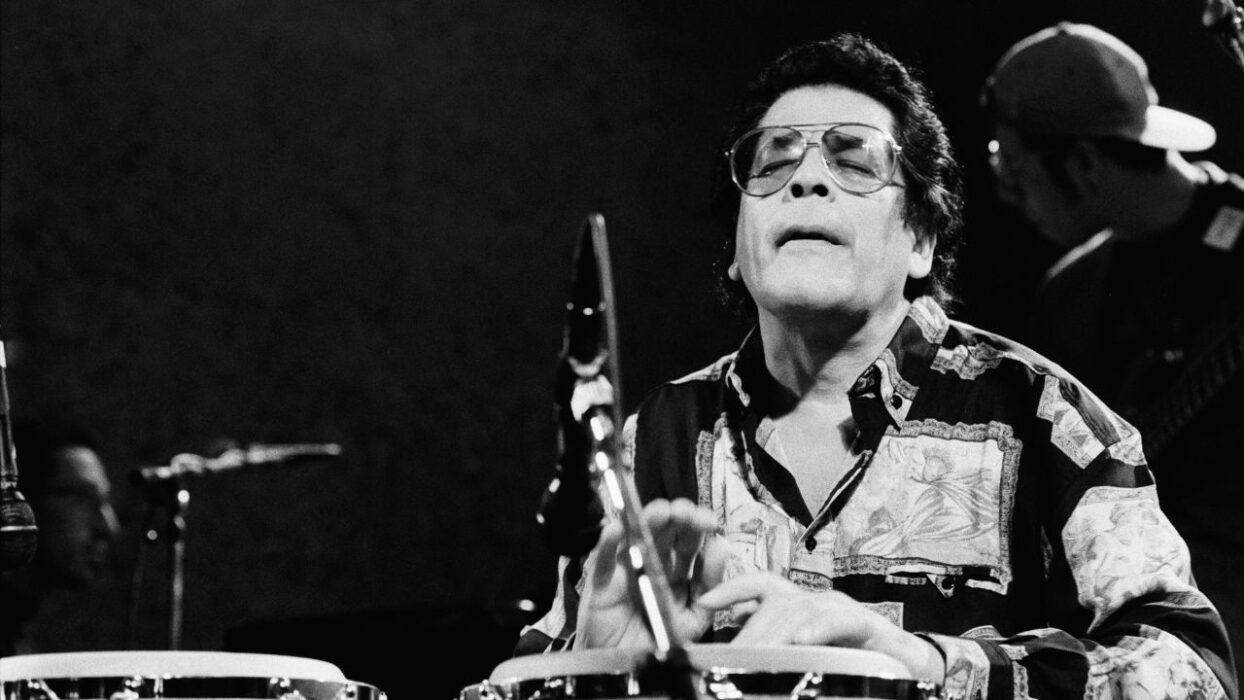
If You Love Salsa, You Owe Ray Barretto a Thank You
If you’ve ever called a party a pachanga, or if you found yourself loving salsa after Bad Bunny introduced you to it and made you curious about its roots, Ray Barretto is one of the people you should thank.
Ray Barretto, born April 29, 1929, was much more than just a conga player in a salsa band. He was the heart and rhythm of the genre. Barretto played Afro-Cuban jazz, salsa, son cubano, boogaloo, and pachanga, shaping the sound of Latin music in New York for decades. His name became tied to its boldest era. If salsa represents a city, an attitude, or a powerful way of playing, Barretto was among those who shaped that style from the ground up.
That’s why, on April 29, we remember el “Manos Duras,” the man behind a sound that now feels timeless but was once bold and new. His music still inspires every Latino artist, even if they don’t realize it.
Even before salsa had a name, Ray Barretto was already moving the music forward.
Ray Barretto was born in Brooklyn to Puerto Rican parents and grew up in both El Barrio and the South Bronx. Early on, he was shaped by two worlds: the Latin music his mother loved and pure jazz.
During the day, his mother played music by Daniel Santos, Bobby Capó, and Los Panchos. As Barretto grew up, he discovered artists like Machito Grillo, Marcelino Guerra, Arsenio Rodríguez, Benny Goodman, and Duke Ellington.
At 17, he joined the U.S. Army. While stationed in Germany, he heard Dizzy Gillespie and Chano Pozo’s “Manteca,” a song that changed his life. When he returned to New York, he bought congas and started playing at jam sessions and clubs, slowly gaining recognition in the music world.
He then became the first U.S.-born percussionist credited with bringing the conga drum into jazz. In that sense, Jazz in the United States did not merely flirt with Afro-Caribbean rhythms. Barretto helped wire that rhythm into the form itself.

Ray Barretto gave the conga a voice in jazz.
Before he became known as a salsa legend, Barretto had already made a name for himself as a jazz sideman. Charlie Parker heard him play and invited him to join his band. Later, Barretto worked with José Curbelo and Tito Puente, and his reputation as a conga player grew so fast that he was soon in high demand for recording sessions.
He soon played alongside Max Roach, Dizzy Gillespie, Art Blakey, Herbie Mann, Cal Tjader, and other big names of the time. Barretto’s playing was so influential that it changed how bandleaders thought about Latin rhythm in jazz and popular music.
What’s more, he played conga on Kenny Burrell’s Midnight Blue, an album many critics still regard as one of the great jazz recordings. He later recorded with artists as different as the Rolling Stones and the Bee Gees.
But New York in the early 1960s had something else in store for him.
In 1962, Barretto formed his first major group, Charanga La Moderna, during the height of the pachanga craze in New York. That same year, he recorded “El Watusi,” which became a huge hit and is often called the most successful pachanga song in the United States.
In fact, “El Watusi” was the first Latin song to make it onto the Billboard charts.
But success had its downside. He didn’t like being known just for that song or the pachanga craze. People who knew Barretto say he was never happy being stuck in one style or trend. By the time pachanga was popular, he had already experienced much more. If people wanted to remember him only for a dance craze, he was determined to keep evolving until his music became too rich to be misunderstood.
Then came La Fania.
Ray Barretto signed with United Artists in the mid-1960s and began recording during the boogaloo era, when rhythm and blues and Latin music mixed in New York. On albums like El Ray Criollo, he was already experimenting with the modern city sound that would become salsa, blending charanga and conjunto styles to push the music forward.
At that time, La Fania was the label that brought New York Latin music together and helped make it famous worldwide. Barretto joined with fresh ideas. His first album for La Fania, Acid, was released in 1968 and is now considered a boogaloo classic. Songs like “A Deeper Shade of Soul” lived up to the album’s name.
This is where Barretto stands out. He wasn’t just preserving old Latin music. He was helping to create hard salsa—a bold, streetwise sound that blended funk, jazz, descarga, psychedelia, and the unique energy of New York.
When he signed with La Fania, Barretto began shaping the sound of the Ray Barretto Orchestra.
“Que Viva La Música,” “Indestructible,” and Barretto’s legacy
“Cocinando,” from the 1972 album Que viva la música, was the opening track for the soundtrack to Our Latin Thing, the Fania All-Stars film that helped make salsa’s New York era legendary. Since then, Barretto has become a lasting part of Latin popular music’s shared memory.
After a painful split in his band and several members leaving, Barretto briefly returned to jazz. Then, in 1973, he came back with Indestructible.
Barretto’s music from this time had a special energy that people still notice today. It was dance music, but it also showed his discipline and determination.
Tributes from other La Fania musicians highlight this again and again. Jimmy Bosch saw him as a father figure and inspiration. Johnny “Dandy” Rodríguez admired his intelligence and how he seemed ahead of his time. Eddie Montalvo called him an idol. Andy González spoke of the deep respect between Barretto and his fellow musicians. Again and again, Barretto is remembered as a demanding, serious artist whose high standards lifted everyone around him.
Ray Barretto understood salsa as both street music and musical intelligence.
A common but misleading idea is that salsa is just “party music”—fun, lively, and nostalgic, but not as serious as jazz or rock. Barretto’s entire career proves that idea wrong.
He mastered the descarga, an improvised jam session that requires not just rhythm but careful listening, quick responses, and risk-taking. In the studio, he was a perfectionist and the only La Fania artist who insisted on being present even during mastering. Producer George Rivera described Barretto as obsessively focused on sound, balance, structure, and the final result. Jon Fausty, who engineered many Fania albums, remembered him as highly educated, very communicative with his musicians, and essential to shaping how rhythm sections sounded.
That’s also why Barretto kept coming back to jazz throughout his life. After his last Fania album, Soy dichoso, in 1990, he formed New World Spirit and continued recording with a jazz group until his death in 2006. He won his only Grammy in 1990 for Ritmo en el corazón, recorded with Celia Cruz and Adalberto Santiago, and kept moving forward instead of just playing his old hits.
If salsa reminds you of New York, Ray Barretto is a big reason for that.
Barretto’s legacy is tied to place. His Puerto Rican roots were important, and the wider Caribbean influence is clear in his music. But his sound is also deeply New York.
He grew up in New York’s boroughs, spent his youth in clubs, and took in both jazz and barrio life. He helped create the tough, urban music that later became known as salsa. That New York sound was shaped by migrants, Black and Puerto Rican musicians, dancers, hustlers, and bandleaders, all working hard in a city that could overlook them but was still changed by their music.
Barretto is part of that history. In many ways, he is that story.
He remained a longtime member and musical director of the Fania All-Stars. His orchestra’s sound became a key part of the label’s best years. He helped shape the musical language that let New York Latin music make its mark on the world.ws around the word pachanga now, as it has always just been there, they are living inside a history Barretto helped make audible. If younger listeners come to salsa through Bad Bunny, or through TikTok clips, or through whatever algorithm finally nudged “La Vida Es Un Carnaval” or “Un Verano En Nueva York” (the original one) into their lives, they are still brushing up against a house Barretto helped build.