
People Are Building the Ultimate Mexican Movie List Online, and We’re Taking Notes
X user @CepnikMaciej asked, “What are top Mexicans movies [sic] to watch to understand Mexican culture? Not Amores Perros.” And almost immediately, the internet did what it does best: it showed up with a watchlist.
The replies turned into a crowd-built canon. Some picks were obvious, others were mind-blowing. A few were technically not Mexican productions at all. However, it still made sense in the conversation because they speak to Mexican, Chicano, or borderland identity.
And honestly? The list is strong.
The classics people clearly refuse to leave out
If you want to understand why Mexican cinema carries so much weight, the thread makes one thing very clear: people still return to the classics first.
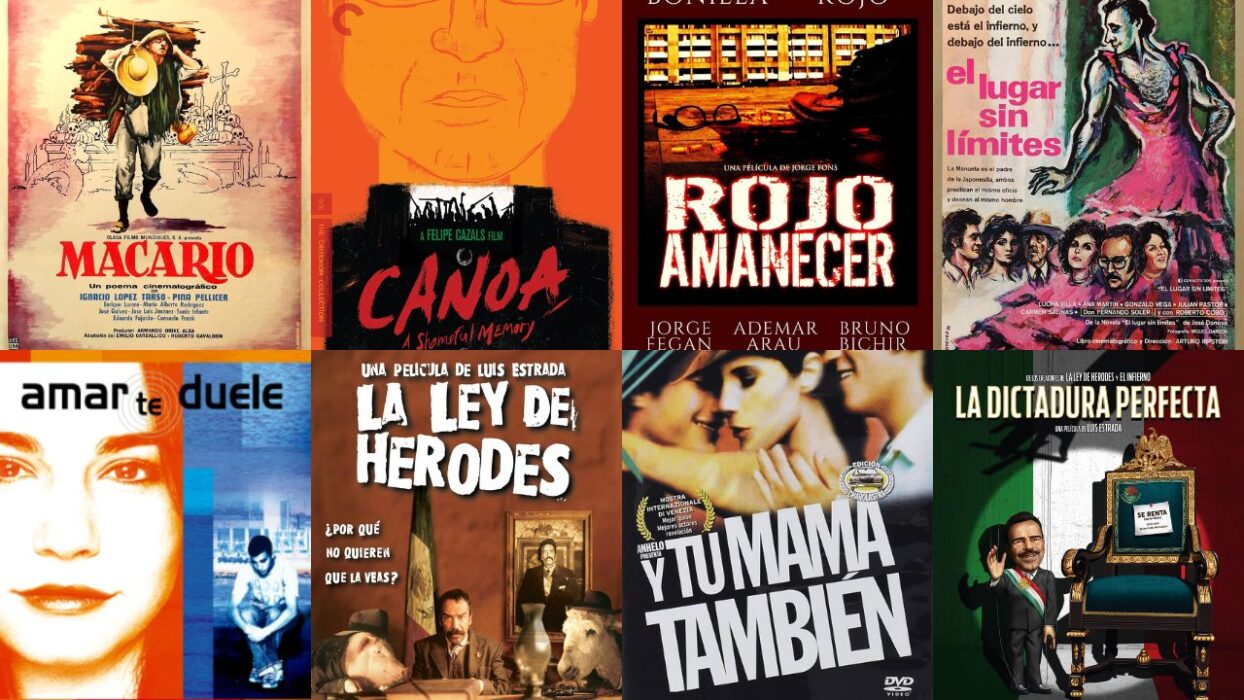
Macario keeps showing up for a reason. Roberto Gavaldón’s 1960 film, starring Ignacio López Tarso, is still treated like required viewing. Set in colonial Mexico on the eve of the Day of the Dead, it follows a poor Indigenous woodcutter whose encounter with Death becomes a meditation on hunger, class, faith, and fate. It was the first Mexican film nominated for the Academy Award for Best Foreign Language Film, and people still talk about it like a crown jewel.
Then there is Canoa. Felipe Cazals’s 1976 film dramatizes the real San Miguel Canoa massacre, when five university workers were attacked after a local priest incited villagers against them. If Macario speaks to myth and mortality, Canoa speaks to paranoia, political manipulation, and the sanctification of violence in public life.
People also brought up Rojo Amanecer, Jorge Fons’s 1989 drama about the Tlatelolco massacre, told from inside a family apartment overlooking the Plaza de las Tres Culturas. It remains one of the most direct cinematic reckonings with state violence in modern Mexican history.
And then there is El lugar sin límites. Arturo Ripstein’s 1978 adaptation of José Donoso’s novel still resonates because it tears into machismo, repression, and social cruelty without blinking. It is one of those films people mention to remind you that Mexican cinema has never been afraid of discomfort.
For horror, the thread went where it should: Veneno para las hadas. Carlos Enrique Taboada’s 1986 supernatural horror film is less interested in cheap scares than in childhood, fear, class, and the eerie logic kids build when adults fail them. That is exactly why it has endured.
And of course, Como agua para chocolate made the cut. Alfonso Arau’s 1992 adaptation of Laura Esquivel’s novel remains one of the most internationally beloved Mexican films ever made, blending romance, food, family repression, and magical realism in a way that people still instantly recognize.
If you want politics, the internet said: start with the satires
A lot of people answering that tweet were not interested in soft-focus cultural identity. They wanted the movies that explain power.
That is where Luis Estrada came in, repeatedly.
La Ley de Herodes remains one of the defining political satires of modern Mexican cinema. Released in 1999, it became notorious for its direct caricature of corruption and the PRI political machine. People still recommend it because it is funny, vicious, and painfully recognizable.
Then came El infierno, which several people in the thread treated as essential. Estrada’s 2010 film follows a deported man who returns to Mexico and gets swallowed by narco violence, using black comedy to tear into the drug war era. It dominated the 2011 Ariel Awards and became one of the defining films of that moment.
La dictadura perfecta belongs in that same conversation. Estrada’s 2014 satire takes aim at the relationship between media power and political power, and people still bring it up whenever they want a movie that captures how spectacle, manipulation, and public narrative actually work in Mexico.
The documentary pick in this lane was Gimme the Power, Olallo Rubio’s 2012 documentary about Molotov and the broader music scene. The title uses the band as a way into a bigger story about protest, rage, and the political frustrations of modern Mexico.
The youth titles are clearly hitting a nerve for people
A huge part of the thread was people naming the movies that captured what it feels like to be young in Mexico, especially when class, desire, and violence shape your life from a very early age.
Y tu mamá también was always going to be here. Alfonso Cuarón’s 2001 road movie still gets recommended because it does several things at once. It is horny, funny, devastating, and quietly political. It also picked up major international acclaim, including recognition at Venice and an Oscar nomination for its screenplay.
Then there is Amar te duele, Fernando Sariñana’s 2002 romantic drama about two teens from different class worlds whose relationship crashes into the brutal realities around them. People still describe it as a kind of Mexico City Romeo and Juliet, and honestly, that shorthand still works.
Perfume de Violetas also came up, which makes sense. Maryse Sistach’s film about two adolescent girls in Mexico City remains one of the most unsettling depictions of gendered violence and social vulnerability in urban Mexican cinema.
And then there is Ya no estoy aquí, or I’m No Longer Here, which people now treat like essential modern viewing. Fernando Frías de la Parra’s 2019 drama follows Ulises, a Monterrey teen shaped by Kolombia culture and cumbia rebajada, before violence and migration pull his life apart. It became Mexico’s Oscar submission and made the Academy shortlist, which only confirmed what audiences already knew.
Even Babel made the thread, which is interesting because it is a global film rather than a straightforward “Mexican culture” pick. Still, Alejandro González Iñárritu’s 2006 drama includes one of the most unforgettable Mexican storylines in contemporary cinema through the nanny Amelia, and the film’s Mexico strand is clearly what keeps it alive in lists like this. It won Iñárritu Best Director at Cannes and landed seven Oscar nominations.
The crowd also made room for the movies people actually quote in real life
This was not a snob-only thread. People also shouted out the titles that became part of everyday Mexican pop culture.
Nosotros los Nobles absolutely belongs here. Gary Alazraki’s 2013 comedy about a rich family forced to fake a financial collapse became a monster hit, and people still love it because it skewers class privilege without pretending that satire has to be solemn. Netflix even describes Club de Cuervos as coming from the creators of Nosotros los Nobles, which tells you how culturally tied those two projects still feel.
That same energy explains why Matando Cabos showed up. Alejandro Lozano’s 2004 crime comedy has long had a cult following, and the people who love it really love it. Its appeal is the chaos: kidnappers, mistaken identities, criminal incompetence, and the kind of manic comic rhythm Mexican audiences never really forgot.
Cindy La Regia also made the list, which tells you the thread was not pretending culture ends where prestige begins. The 2020 film follows Cindy as she ditches the marriage script laid out for her and heads to Mexico City, where reinvention hits harder than etiquette. It is lighter than many of the other entries, but it clearly still reads as culturally legible to people.
And yes, Saving Private Pérez was there too, because obviously a Mexican comedy about a crime boss being forced to rescue his brother from Iraq was going to find defenders online. The premise alone is enough to explain why people still remember it.
Almacenados, meanwhile, came through as one of the quieter recommendations. Jack Zagha Kababie’s 2015 comedy-drama is much smaller and more understated than some of the other films on this list, which may be exactly why people were so excited to bring it up. It has that “how did I almost miss this?” energy the internet loves.
A few titles sit in their own lane, and people still clearly wanted them included
Radical is one of those. Christopher Zalla’s 2023 Mexican comedy-drama, starring Eugenio Derbez, is based on the story of an unorthodox teacher in Matamoros. It won the Festival Favorite Award at Sundance and quickly turned into one of those movies people pass around when they want something emotional, accessible, and uplifting without feeling too polished.
Arráncame la vida also came up, and that makes sense because people still want period dramas that say something sharp about gender and power. The film adaptation carries over Ángeles Mastretta’s story of a woman trapped inside the political and patriarchal structures of post-revolutionary Mexico.
Club de Cuervos is technically a series, not a movie, but the internet put it on the board anyway. And honestly, fair enough. It was Netflix’s first Spanish-language original series and turned football, family warfare, class satire, and absurdity into one of the most recognizable Mexican shows of the streaming era.
And then there is Coco, which is where things get a little more complicated and a little more revealing. It is obviously not a Mexican production. But people still brought it up because Pixar built the film around Día de los Muertos, consulted Mexican cultural advisors, traveled to Mexico for research, and centered a Mexican family story in a way that landed emotionally for a huge number of viewers. Whether someone thinks it “counts” or not, the fact that it appeared in the thread says a lot about how people understand cultural storytelling now.
Blood In Blood Out falls into a similar category. It is not a Mexican film either. It is an American film about Chicano life in East Los Angeles. But it still entered the conversation because many people do not treat Mexican culture and Chicano culture as neatly sealed off from each other. The movie’s grip on generations of Mexican American viewers is real, even if its production nationality is not Mexican.