A British Baker Moved to Mexico, Opened a Bakery, and Had the Audacity to Call Mexican Pan “Ugly.” The Internet Was Not Having It
“Rage bait” is the word of 2025 for a reason. Even as we approach the final stretch of the year, it seems that we can’t escape offensive and frustrating opinions on the internet.
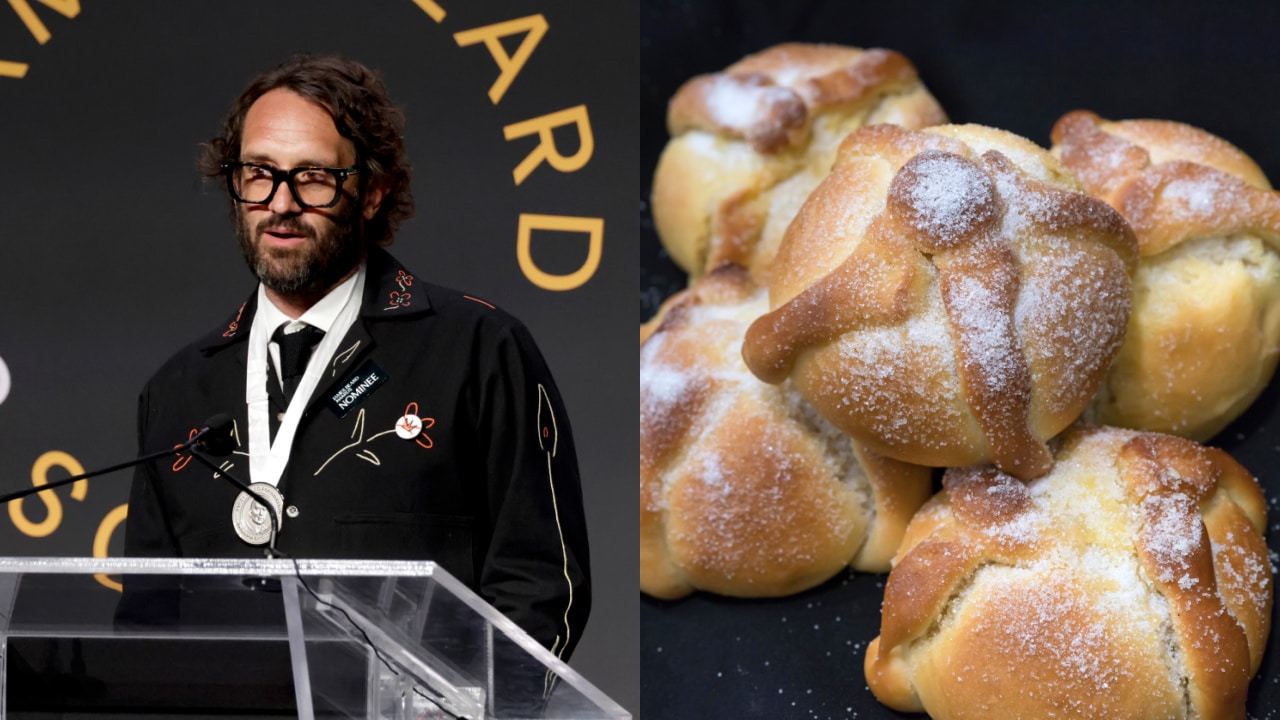
The latest virally outrageous take comes from British baker Richard Hart. Following the inauguration of his bakery, Green Rhino, in Mexico City, Hart is catching heat for diminishing Mexican bread culture.
Who is Richard Hart, and why is he receiving backlash?
Richard Hart is a baker and the founder of Hart Bageri, a popular bakery with multiple locations in Copenhagen. He is best known for, once upon a time, being the head baker at San Francisco’s popular Tartine. Originally from London, he has been living in Mexico for a while as he prepared the opening of Green Rhino.
A year ago, the baker was a guest on the PopFoodie Radio podcast. An unearthed recording from the podcast is currently making the rounds online. In the voice clip, Hart says, “They (Mexicans) don’t have much of a bread culture. They have tortas, these white ugly rolls that are very cheap, industrially made.”
After taking a jab at Mexican bread, Hart also boasted about bribing Mexican authorities.“We got closed down by the city, and we had to pay them some money,” Hart said. “Everybody knows how it works in Mexico, you can pay your way out of things, and we did.”
Naturally, the backlash was inevitable
Following the podcast’s viral spread, Mexican content creators and internet users took to social media to condemn Hart’s statements. The online consensus is that Hart wants to profit from a culture he didn’t bother learning from. Other comments pointed out the patronizing tone in which Hart said he’d bring “the world’s best bakery” to Mexico.
“The way that he spoke about it, it came as though he invented bread and came here to show us,” a user said on TikTok.
“What an unfortunate way to refer to the local culture of the country that welcomed you,” commented another user on Spotify. “Especially considering that Mexican bread culture is a cornerstone of the nation’s food traditions (and absolutely delicious). Embarrassing.”
The backlash was so intense that Hart shared an apology on social media. “I was wrong, and I am profoundly sorry,” the post read. “Since I moved, I fell in love with the people in this city,” Heart added. “However, my words didn’t reflect that respect; in this country, I am a guest and forgot to act as such.”
Bread culture runs deep in Mexico
But is it true that Mexico has no bread tradition? Experts seem to disagree.
While the history of wheat-leavened bread in Mexico can be traced back to the Spanish colonization, bread has taken its own form in the country. Historians point out that other forms of bread, such as flatbread (tortillas), existed in Ancient Mexico thousands of years before the arrival of colonizers. Debate is open about whether tortillas fit in the larger “bread” category, but that’s a story for another day.
Today, much like many countries across Latin America, the bread and baking industry is an economic pillar for the Mexican community. This year, the National Chamber of the Baking, Pastry and Similar Industries of Mexico (CANAINPA) reported that the bread industry employs more than 530,000 people. “[It generates] thousands of indirect jobs, and represents an important engine of local entrepreneurship,” added CANAINPA.
Bread is such an essential part of the Mexican diet that options on the market are varied and cater to different tastes. According to Plate Magazine, “as many as 2,000 varieties of sweet breads and pastries are baked across Mexico.” Food expert Lesley Téllez told Plate, “There’s row after row of beautiful breads in every shape and color.”
Bread recipes Mexicans can’t get enough of
Tortillas aside (we’re not getting into that debate), Mexicans show a predilection for certain types of breads.
Starting strong are white-bread varieties such as bolillo, telera, and pan de caja, among others, which account for 81% of Mexican consumption, according to CANAINPA.
Bolillo is a crispy-crusted white bread with a soft crumb. It is shaped like a football and is Mexico’s favorite everyday bread. They use it as a foundation for their favorite tortas, breakfast, and afternoon treats. Experts say bolillos were originally modelled after the French bread introduced in Mexico during the second French intervention in 1864. Quick fun fact: people in Mexico eat bolillo “pa’l susto,” a science-backed tradition that helps people feel better as they recover from a stressful situation.
Next up is pan dulce, which makes up 19% of Mexicans’ bread consumption. Here, varieties such as conchas, cuernitos, and mantecadas reign supreme. Conchas, on the one hand, take their name from their shell-shaped sugary crusty exterior. This is a sweet, fluffy, small bun that can be filled with cream, but lately bakeries have offered all sorts of innovative and rare fillings. Mantecadas, meanwhile, are buttery cupcakes, hence the name.
@nessadiosdado The audacity 😭 #richardhart #mexicocity #bread #bakery #latinotitkok
♬ Chopin Nocturne No. 2 Piano Mono – moshimo sound design
Then, there’s pan de muertos
This is a seasonal staple, favored during Dia de los Muertos celebrations. Pan de muertos draws inspiration from papalotlaxcalli, a type of amaranth-and-corn tortilla dating back to prehispanic times.
Today, pan de muertos has transformed into a large, leavened bread bun, adorned with bone-shaped decorations made from the same dough. The most traditional recipes are scented with orange and anise. However, each region boasts its own variations.
This is perhaps one of Mexico’s most traditional recipes and proof that bread culture runs deep in the country. It is also an economic booster for the country. Earlier this year, the National Institute of Statistics and Geography of Mexico (INEGI) reported that pan de muertos leads to a 40% increase in bread consumption during October and November.
That’s on having a strong bread culture!