From Los Ramblers to Ricky Martin to Shakira: How Latinos Built the World Cup Soundtrack
The World Cup soundtrack began in 1962 with a Chilean rock band, Los Ramblers, who recorded “El Rock del Mundial” for the tournament in Chile. Their catchy local song set a standard that influenced every tournament that followed. Now, as the 2026 World Cup approaches, it’s clear that Latinos have defined the tournament’s musical identity.
Since FIFA began selecting official songs for the tournament in 1990, Latino artists have been at the center of the tournament’s most memorable moments. From Ricky Martin’s “Cup of Life” to Shakira’s “Waka Waka,” their impact is clear. When FIFA wanted a global anthem, they turned to Latin America.
The World Cup’s First Latin Anthem
The official FIFA World Cup song tradition began in 1990, but its roots go back further. In 1962, Los Ramblers brought rock and roll to Chile’s World Cup with “El Rock del Mundial.” Eight years later, Los Hermanos Zavala recorded “Fútbol México 70” for Mexico. These early songs reflected the host countries’ cultures and showed that the tournament could have its own soundtrack. Latin American artists made music that appeared real to their communities, not forced by outsiders.
Ricky Martin Makes History
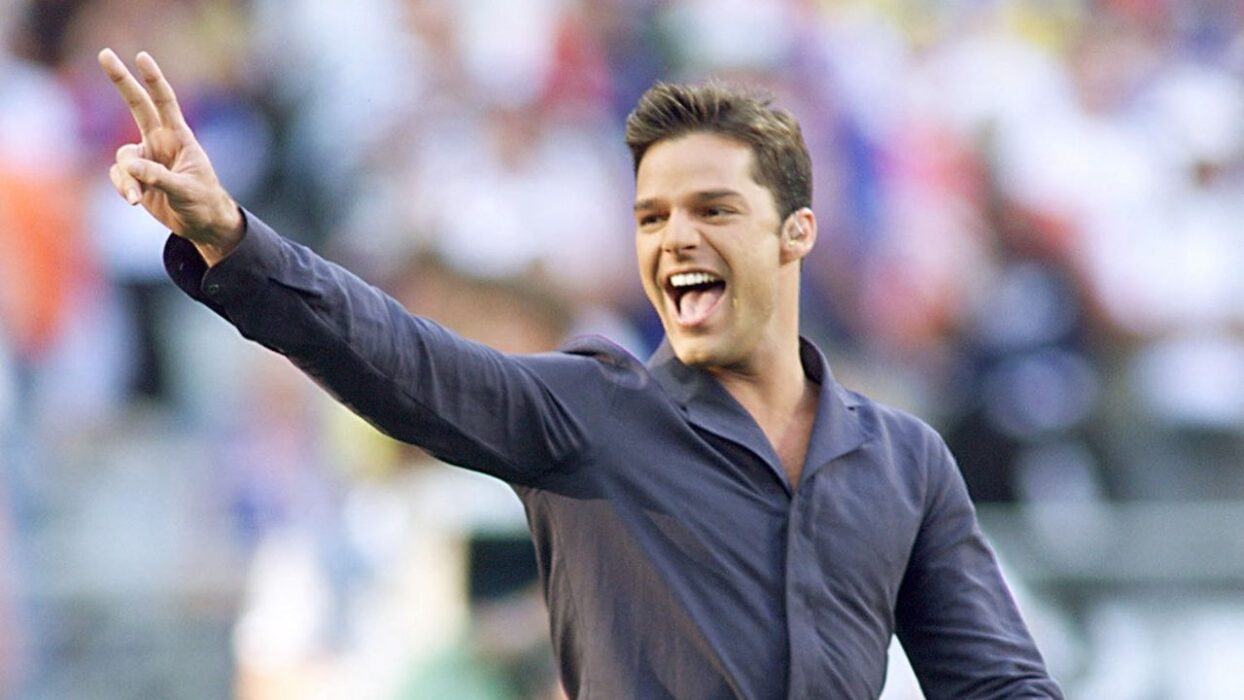
When FIFA chose Ricky Martin to perform at the 1998 World Cup in France, they helped spark the “Latin explosion.” According to Billboard, Martin recorded “Cup of Life (La Copa de la Vida)” in both English and Spanish with songwriter Desmond Child and producer Draco Rosa. The song first reached number 60 on the Billboard Hot 100, then climbed to number 45 in August 1999. It also won the Grammy for Best Latin Pop Performance.
Billboard called Martin’s song “a milestone in his career,” helping Latin pop break into mainstream American music. More importantly, it showed that a Latino artist could define the World Cup’s musical identity worldwide.
Shakira’s Three World Cup Moments
If Ricky Martin made way for Latin artists, Shakira took it even further. According to the BBC, the Colombian pop star has performed at three World Cups and released several official anthems. In 2010, her “Waka Waka (This Time for Africa)” for South Africa’s tournament became a huge hit, earning over 3 billion YouTube views and reaching number 38 on the Hot 100.
Shakira continued her World Cup streak in 2014 by recording “La La La (Brasil 2014)” for the tournament in Brazil. Now, she’s returning for 2026. On May 7, 2026, the BBC reported that Shakira released “Dai Dai” with Nigerian artist Burna Boy as the official song for the tournament in the United States, Mexico, and Canada.
Shakira’s impact stands out because she hasn’t just performed single songs. She has become the face of World Cup music across territories and years. As a user on X put it, she’s now to the World Cup what Mariah Carey is to Christmas—and it’s hard to disagree.
In 2026, The Pattern Continues
The 2026 World Cup lineup shows just how involved Latino artists are in creating the tournament’s music. Official songs feature Shakira and Burna Boy, Jelly Roll with Carín León, Belinda with Los Ángeles Azules, Daddy Yankee with Shenseea, and Jessie Reyez with Elyanna. The tournament, held in Canada, Mexico, and the United States, includes songs in English, Spanish, and Arabic, with the Spanish tracks clearly rooted in Latin American style and artists.
Even Telemundo, the broadcaster, is releasing its own official anthem, “Somos Más,” with Carlos Vives, Emilia Mernes, Wisin, and Xavi.
How Latinos Became the World Cup’s Voice
The strong presence of Latino artists in World Cup soundtracks shows more than just smart business. It recognizes that Latin American music has the worldwide influence, cultural respect, and emotional power to represent a tournament watched by billions.
Looking back, Ricky Martin showed that Latin pop could cross over to an international audience. Shakira proved it could stay on top. Now, with the 2026 lineup, it’s clear: Latino culture is the foundation of the World Cup’s soundtrack.