Frida Kahlo’s Paintings Are Headed to Spain, and Mexicans Are Not Happy
There is a particular kind of anger that arises when people feel a country’s cultural memory is being treated as a negotiable asset. It is something we’ve seen happening more and more in recent years.
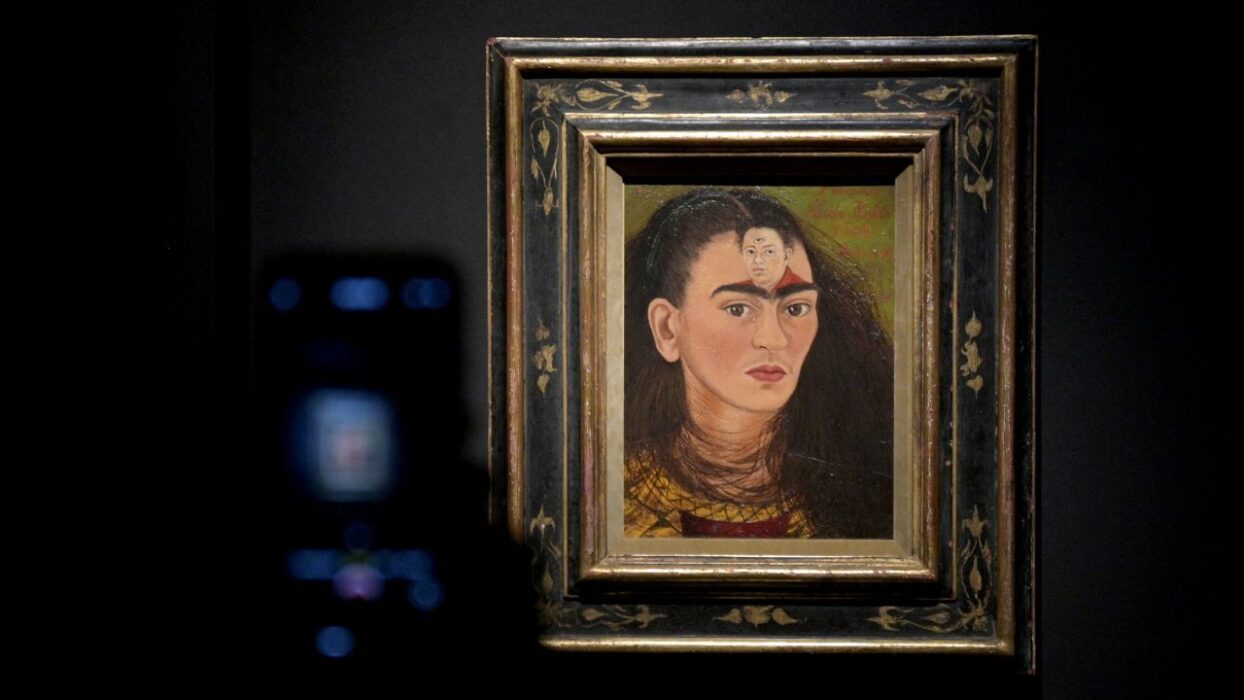
That is what is happening in Mexico right now. A portion of the Gelman Collection, including works by Frida Kahlo, is set to travel to Spain. It will do so under an agreement tied to Banco Santander’s new museum project.
The controversy that did not come out of nowhere
The planned transfer of 18 Frida Kahlo works to Spain has sparked major backlash in Mexico’s art world. The argument is that Mexican law forbids the permanent export of works declared national heritage.
This backlash intensified, as The New York Times reported, because the Gelman Collection was recently displayed in Mexico City for the first time in nearly 20 years, attracting huge crowds. While the exhibition feels like a homecoming, the imminent departure—scheduled for July—now feels like a renewed loss.
What people are reacting to is the word “flexibility”
Daniel Vega Pérez, director of Museo Faro Santander, told El País Mexican law had room for “flexibility” in renewing export licenses. He even suggested Frida Kahlo’s works could remain there permanently.
For many Mexicans, who have watched cultural assets disappear into private ownership, foreign institutions, or endless legal grey zones, the concept of ‘flexibility’ is a sure trigger.
Prompted by these developments, an open letter asked Mexico’s government to explain the double standard on Frida Kahlo.
Nearly 400 Mexican artists, historians, and curators signed an open letter questioning the Mexican government’s lack of transparency. They asked why this operation appeared to allow a de facto long-term export of Frida Kahlo works, while other protected artists are granted only short-term foreign loans.
The letter also called for a consultation process on the collection’s future. They urged a “responsible use of artistic heritage” and warned against creating legal voids and public uncertainty.
Similarly, La Vanguardia quoted the letter’s message as a statement of “consternation” over alleged legal breaches and calling the policy shift “opaque,” with fears the case could set a precedent.
The government and Santander insist this is temporary
Mexican President Claudia Sheinbaum defended the agreement and said authorities were acting within the law.
Culture minister Claudia Curiel de Icaza also endorsed the deal: “The collection is Mexican. It was not sold and will only leave temporarily.”
Banco Santander echoed that message. The bank said the agreement does not involve acquiring the collection or removing it permanently from Mexico, and that the works would return at the end of the temporary export period. Santander also confirmed the works would return to Mexico in 2028.
Then, why do people still think Frida Kahlo’s works might not make it back?
A key reason is that history has a habit of repeating itself, and contracts can sometimes be murky.
Santander says the works return in 2028, but reports note a broader deal running to 2030, which could be extended. The 18 Kahlo works are still set to ship to Spain in September, returning in 2028.
Infobae reported that the broader deal sends 160 works from the Gelman Collection to Spain for exhibition until 2028 and highlighted the same fear: that “temporary” becomes flexible when a contract permits extended custody abroad.
A fight over art, and a fight over who gets to decide
This dispute is so charged because Frida Kahlo is not just any artist in Mexico; her work is national patrimony, a cultural symbol, and public inheritance.
That’s why artists and curators demand: explain the terms, the safeguards, and why this case is different. Don’t dismiss public concern when cultural memory is at stake.
What’s more, Mexicans know very well that parts of their cultural heritage are still in the hands of foreigners. For example, today, over 15,000 pre-Hispanic Mexican artifacts have been identified abroad, with major repatriation efforts focusing on items in the US, Germany, France, and the Netherlands. The National Museum of Mexican Art in Chicago houses over 20,000 items spanning from ancient to modern periods. Additionally, private collections hold a vast assortment of colonial, modern, and folk artworks.
In light of this history, skepticism is understandable.