Did You Know a Latino Writer Helped Inspire “Killing Me Softly”? Let Us Put You On
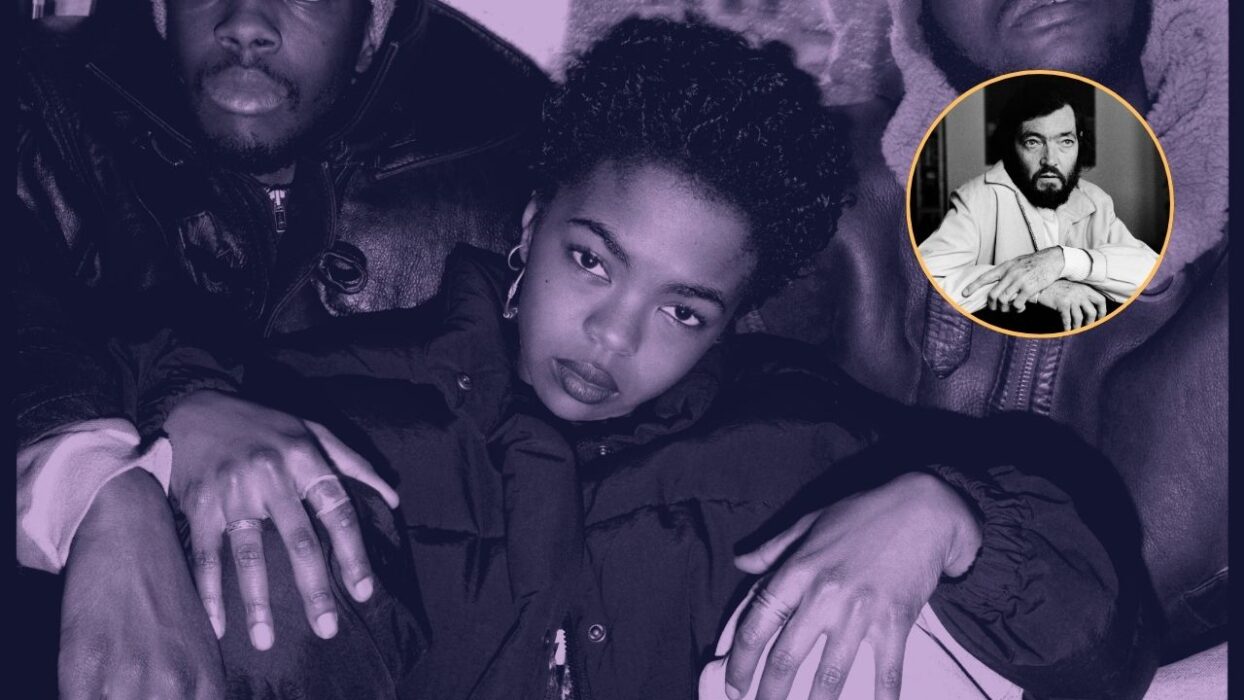
Most people know “Killing Me Softly” through Roberta Flack. Or through Lauryn Hill and the Fugees, if that was the version that first got under your skin. What fewer people know is that the phrase at the center of the song first appeared in Latin American literature. More specifically, it passed through Julio Cortázar.
And once you pull on that thread, the story gets fascinating fast.
“Killing Me Softly” did not start where most people think it did
According to Women in Waves, the phrase that would eventually become “Killing Me Softly with His Song” dates back to Hopscotch, Julio Cortázar’s landmark novel (better known in Latin America as Rayuela). In chapter two, Cortázar writes that “Ronald was left alone at the piano, with all the time in the world to woodshed some of his bop ideas or to kill us softly with some blues.”
That line ended up placing a Latino writer at the root of one of the most recognizable song titles of the last half-century. Furthermore, it shows how often Latin American influence gets absorbed into English-language pop culture without the same level of recognition that usually follows white American or British references.
According to biographical accounts, Cortázar was an Argentine writer, poet, essayist, and translator, and one of the defining figures of the Latin American Boom. This genre gave us authors like Gabriel García Márquez, for example. Hopscotch helped cement his place as one of the major literary voices of the twentieth century.
The real “Killing Me Softly” origin story starts with Lori Lieberman
Now, according to Women in Waves and accounts later reflected in public records, Lori Lieberman was 19 when she entered the orbit of Norman Gimbel and composer Charles Fox. They signed her to a management deal, wrote songs for her, managed her career, and took a cut of her income. Around that same period, Gimbel, then 43 and married, began a secret affair with her.
In November 1971, Lieberman went to see Don McLean at the Troubadour in Los Angeles. She heard him perform “Empty Chairs” and started scribbling on a napkin during the set. Her friend Michele Willens later confirmed that she began “scribbling notes” while McLean was singing. After the concert, Lieberman called Gimbel and described what she had felt listening to McLean.
Gimbel already had a phrase in his notebook, “killing us softly with some blues,” drawn from Cortázar’s Hopscotch. Lieberman’s notes and conversation then helped shape the song’s emotional architecture. Gimbel himself said in 1973, “Her conversation fed me, inspired me, gave me some language and a choice of words.”
And yet, history remembers Fox and Gimbel as the official songwriters, while Lieberman’s contribution often appears in parentheses, if at all.
How “Killing Me Softly” became a hit and left its first voice behind
Lieberman recorded the song first in late 1971 and released it in 1972. It did not chart. Still, according to Women in Waves, she promoted the record by publicly telling the Don McLean origin story, and Fox and Gimbel even wrote out the introduction she was supposed to use onstage so she could repeat it consistently. In other words, the original version of the story was not hidden at the time. It was part of the song’s public narrative.
Then Roberta Flack heard Lieberman’s recording on an airplane.
Flack later recalled, “The title, of course, smacked me in the face. I immediately pulled out some scratch paper, made musical staves [then] play[ed] the song at least eight to ten times jotting down the melody that I heard. When I landed, I immediately called Quincy [Jones] at his house and asked him how to meet Charles Fox. Two days later, I had the music.”
What happened next turned the song into a standard. Atlantic released Flack’s version in January 1973. It spent five nonconsecutive weeks at number one. Billboard ranked it as the No. 3 song of the year. Flack won Grammys for Record of the Year and Best Female Pop Vocal Performance. Gimbel and Fox got the Song of the Year Grammy.
Then, decades later, the Fugees rewired the song again for a different generation. Their 1996 version with Lauryn Hill on lead became a global hit and won the 1997 Grammy for Best R&B Performance by a Duo or Group with Vocal. Rolling Stone later placed both the Flack and Fugees versions on its revised list of the 500 Greatest Songs of All Time.
The song kept accumulating cultural prestige. Lieberman did not.
Julio Cortázar is part of this song’s history, and almost nobody knows about it
We might talk today about how Latin genres like reggaetón are taking over the world. But, in truth, Latino musicians and authors have been doing it for decades.
Yes, “Killing Me Softly” belongs to the history of pop, Black, and hip hop. But beneath that canonized version of the story lies another: the importance of Latin American literature.
So yes, if you know “Killing Me Softly,” you should know Julio Cortázar is in that lineage too.
And you should probably know Lori Lieberman is there as well.