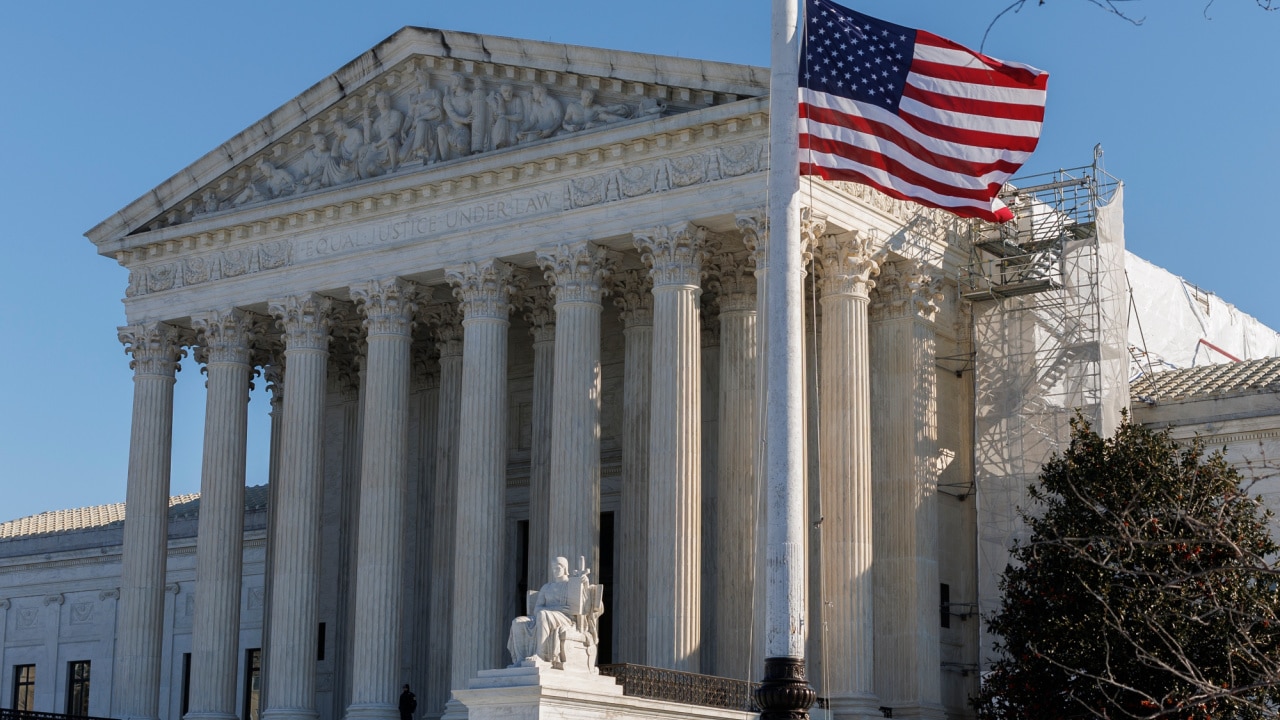
The Supreme Court Didn’t Always See Mexican Americans as Equal. This 1954 Case Changed Everything for Latinos
Mexican Americans had to fight for the right to be recognized as equals under the law, and it wasn’t that long ago. People of Mexican descent in the United States didn’t have full protection under federal law. It was a lawsuit and a group of Mexican American lawyers who took a case for discrimination protection to the Supreme Court that changed things. Here’s the story of the 1954 court decision in Hernandez v. Texas.
Mexican American attorneys helped fight for equal protection under the law
People of Mexican descent in the US faced discrimination for decades, especially in Texas. Many lived under Jim Crow-inspired laws to keep Mexican Americans segregated from the white communities. Signs in businesses often contained phrases like “No Mexicans, No Dogs Allowed,” announcing segregation.
Before the Supreme Court decision on Hernandez v. Texas, Mexican Americans were racially categorized as white but faced overt discrimination. Texas used the legal definition of Mexican Americans by race to excuse discriminatory practices throughout the state. Up to that point, courts interpreted the Fourteenth Amendment as addressing discrimination by race.
An all-white jury in Jackson County, Texas, convicted Pete Hernandez of murder. After the guilty verdict, Hernandez wanted to appeal on the basis that he was denied a fair trial because of the lack of Mexican Americans in the jury. Hernandez’s legal pro bono team launched an appeal. The State of Texas denied the claim.
The argument came down to class v race in the 14th Amendment
Arguing in front of the Supreme Court, Gustavo Garcia and Carlos Cadena argued that the 14th Amendment extended to Mexican Americans. It wasn’t because of race, it was because of class. It was the sustained discrimination and societal segregation of Mexican Americans that meant they were a different class.
Garcia and Cadena maintained that while considered racially white, the discrimination Mexican Americans experienced meant that they were a “class apart.” The attorneys argued that this interpretation extended the protections of the Fourteenth Amendment to the Mexican American community.ndment.
The Supreme Court agreed, and Chief Justice Earl Warren shared the unanimous decision of the court. The decision granted Hernandez a retrial with a jury that did not discriminate against Mexican Americans. A new jury later convicted him again.
Hernandez’s legal team was led by two Mexican American attorneys
Garcia and Cadena made history with Hernandez v. Texas. The case granted a new class of people protection under the 14th Amendment. Even more incredible, it was the first case argued by Mexican Americans in front of the Supreme Court. Along with Garcia and Cadena, attorneys John Herrera and James de Anda made up the Mexican American legal team who argued the case.
In one case, a team of Mexican Americans made history and fought against discrimination against their community. It is an example of people seeing and fixing wrongs happening in their communities. Mexican Americans faced unrelenting discrimination from people and businesses in Texas. It took a legal team from the community to fight back to save the community.