The Original Cowboys Were Mexican, and History Has the Receipts
Long before Hollywood turned the cowboy into a white American myth, Mexico had already given North America the real thing.
The figure came first as the vaquero: a horse-mounted cattle worker whose traditions were shaped in New Spain, on land that would later become Mexico and, eventually, large swaths of the American Southwest. And while pop culture later whitened that history into something cleaner and more convenient, the record speaks for itself. The original vaqueros were deeply shaped by Indigenous, mestizo, Afro-Mexican, and colonial Mexican histories. Their labor, their horsemanship, and their tools would go on to define what the United States now recognizes as cowboy culture.
How Mexicans were the original vaqueros is therefore not a niche correction to the historical record. It is one of the clearest examples of how American identity has so often been built on Mexican foundations, only to later erase them.
The vaquero came before the cowboy
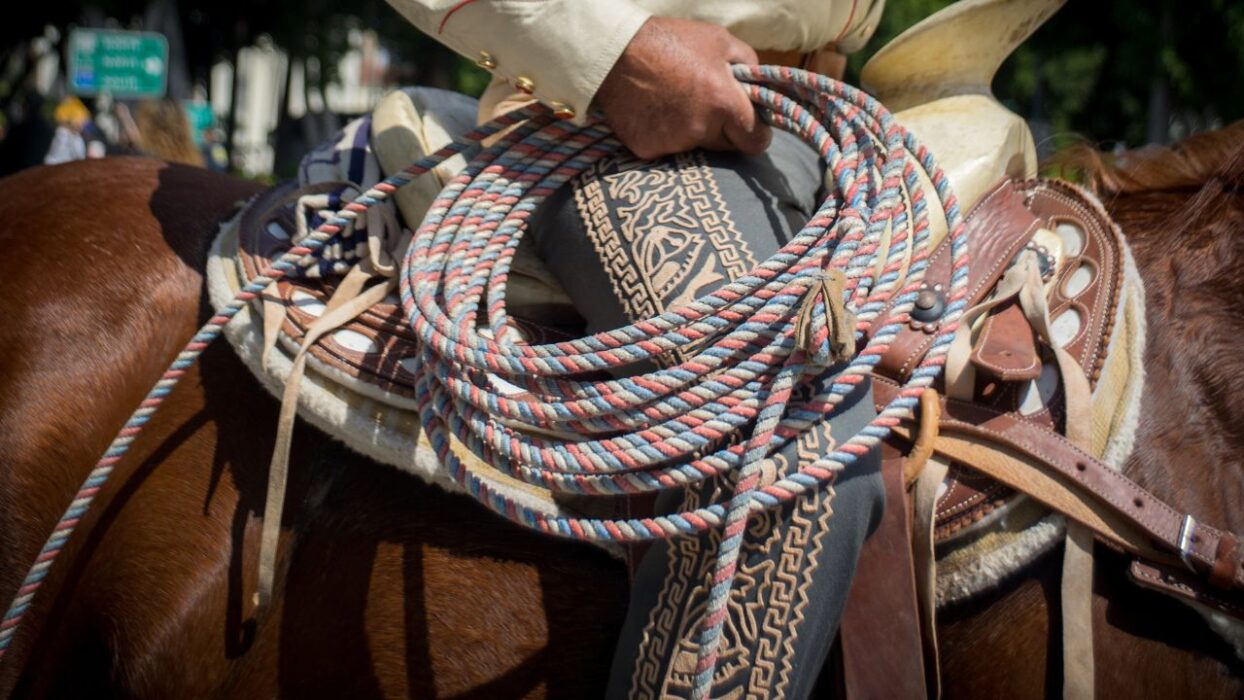
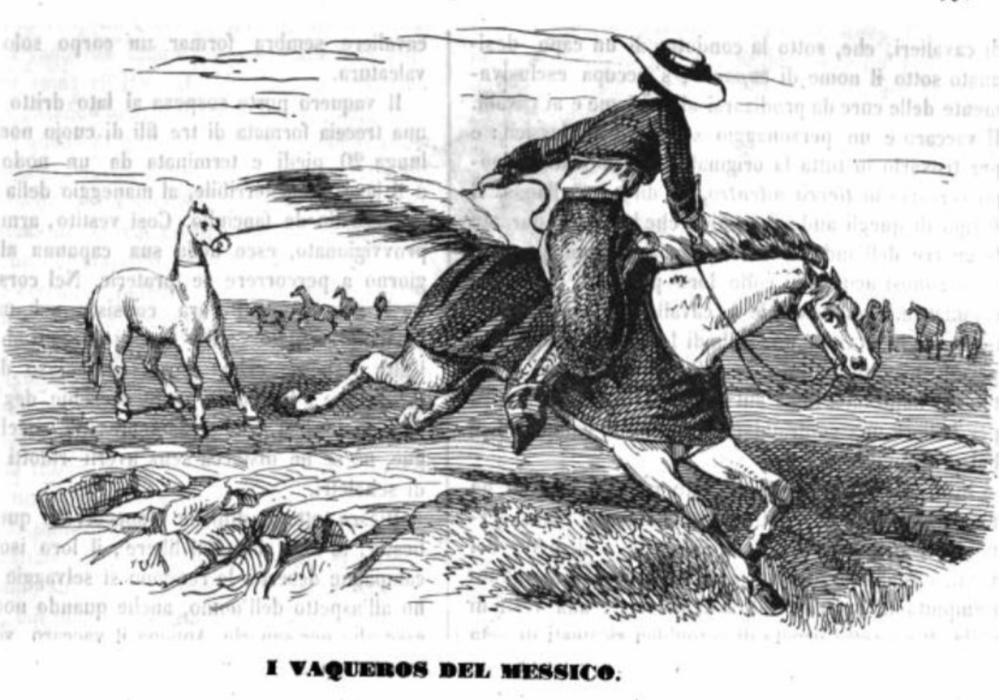
According to History, hundreds of years before there was the American cowboy, there was the vaquero, an expert horseman skilled at herding cattle, taming horses, and mastering the lasso. The word itself comes from vaca, the Spanish word for cow. Historian Pablo A. Rangel told the outlet that what distinguished vaqueros from ordinary horsemen was not simply their ability to ride, but the technical culture they built around the work. “They braided rope [and] built their own saddles,” Rangel explained. “They were able to tame wild horses, and they were throwing the lasso.”
This history begins with Spain, but it became Mexican on the ground
The earliest roots of the vaquero tradition trace back to Spain’s cattle-raising culture, which arrived in the Americas in the 16th century. Horses and cattle arrived with Spanish colonizers, but the tradition that developed in New Spain was not just a copy of Iberian ranching transplanted intact.
It changed with the land. The distances were greater, and the terrain was harsher. The labor, however, was local. And, crucially, the people doing the work were not mainly Spaniards.
History notes that the first wave of vaqueros in what later became Mexico were largely Indigenous Mesoamerican men, Spaniards trained to handle cattle on horseback. Over time, that world expanded westward into what are now Texas, Arizona, New Mexico, and California. As it did, the vaquero became indispensable to colonial life, especially in remote areas where cattle served as an essential food source and where ranching required an extraordinary degree of mobility and practical skill.
Indigenous and Afro-Mexican labor shaped the tradition
As it’s often the case, you can proofread history by looking at who was actually doing the work.
The broader historical record shows that the vaquero tradition in New Spain was built not only by Indigenous people, but also by mestizo, mulatto, and Black workers. Over the 16th and 17th centuries, those communities became central to ranch labor in colonial Mexico. In some regions, especially as Indigenous populations were decimated by disease and colonial violence, Black and mixed-race vaqueros came to make up a substantial part of the workforce.
Ergo, the fantasy of the cowboy as a racially singular figure is just that: a fantasy. The origins of North American cattle culture were mixed from the start. They were shaped by colonial hierarchies, racialized labor systems, adaptation, and survival.
Even the technologies associated with cowboy life carry those layered histories. The lasso, for example, became one of the defining tools of the vaquero tradition. Some historians have argued that its development was also shaped by legal restrictions placed on nonwhite vaqueros, who were banned from carrying certain hooked lances and therefore adapted alternative techniques for catching cattle from horseback. In other words, innovation emerged under pressure, and the tradition itself was forged inside systems of inequality.
The vaquero built a culture, not just a job
As the role evolved, so did a broader vaquero culture.
According to History, vaqueros developed a distinct world of dress, language, technique, and performance. The lasso itself comes from lazo, the Spanish word for rope. Chaps trace back to chaparreras, named after the thorny chaparral landscape that required leg protection. Their methods of roping and riding would later influence rodeo traditions across North America.
This way, the vaquero was not simply a laborer in the field. He was part of an entire cultural system that produced recognizable aesthetics, vocabulary, and practices that still survive in ranching and rodeo today.
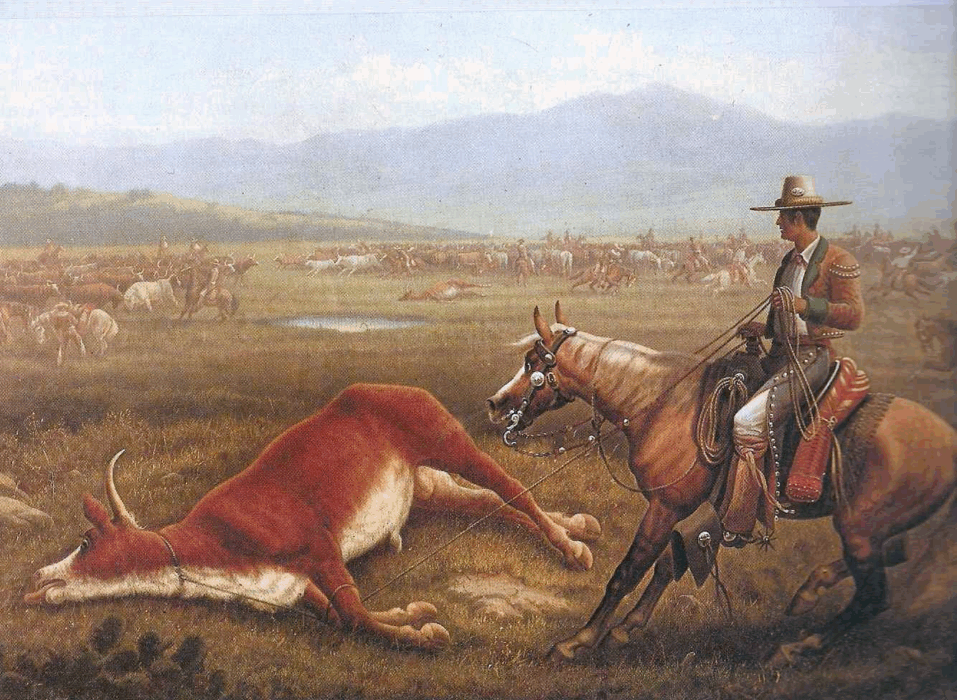
The American cowboy borrowed heavily and then took center stage
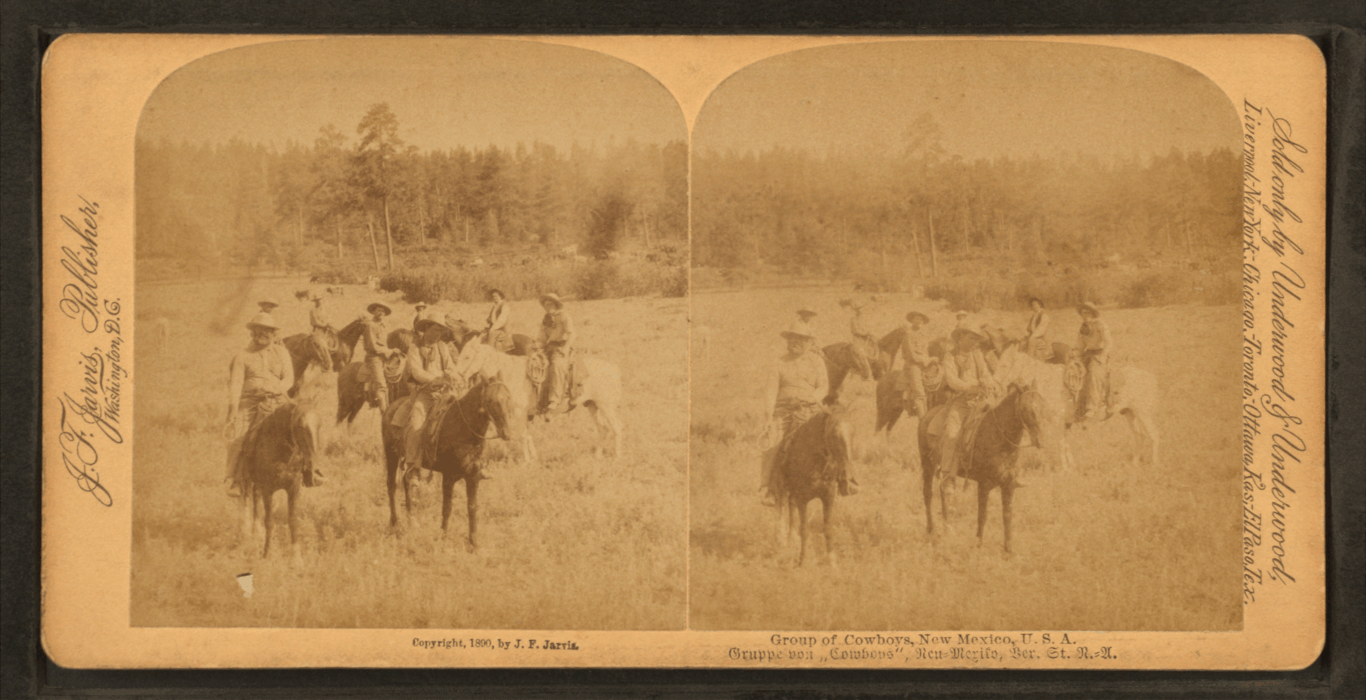
By the mid-19th century, Mexican vaquero traditions were directly influencing non-Hispanic ranchers, particularly in Texas and California.
As Anglo settlers moved into Texas after Mexican independence and then after U.S. annexation in 1845, they encountered Mexican ranching systems already in place. Vaqueros remained on the job, training newcomers in how to rope, braid, herd, and handle cattle. That transfer of knowledge was not incidental. It was foundational.
History reports that Buffalo Bill Cody’s Wild West shows later popularized a romanticized version of the West that still recognized vaqueros as part of the region’s story. But film eventually changed the balance. Once Hollywood took over, the cowboy was recast as a white American hero, while Mexicans and Indigenous people were pushed to the margins or cast as villains.
Even the word “buckaroo” points back to vaquero
Language itself is evidence.
According to the historical record, the term “buckaroo” is widely understood to be an anglicized version of vaquero. That means one of the most recognizable words in American Western vocabulary still bears the sound of its Mexican predecessor.
It is a small detail, but a revealing one. So much of what the United States treats as frontier authenticity has Mexican roots hiding in plain sight.
Mexican vaqueros even influenced Hawaiian cowboy culture
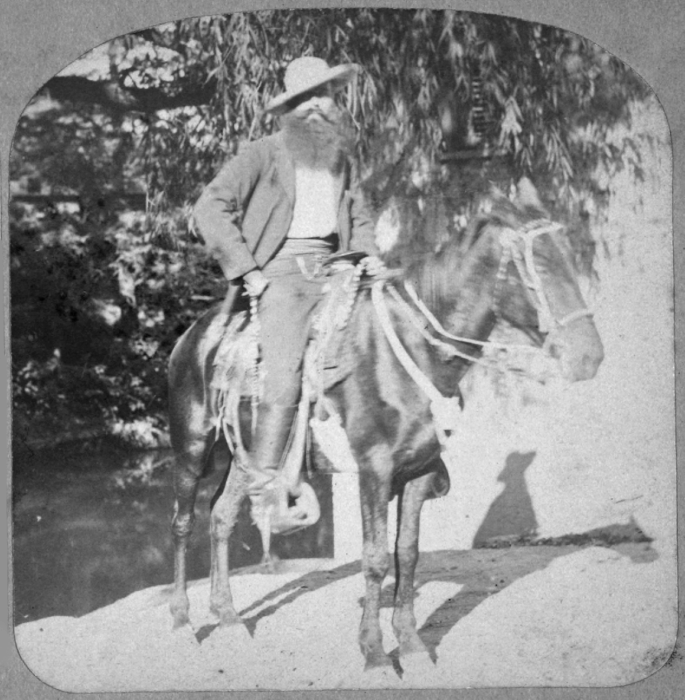
As mitú previously reported, Mexican vaqueros were so respected for the cattle-handling skills that in the early 19th century, Hawaiian King Kamehameha III invited them to teach Hawaiians how to work cattle and horses. From that exchange emerged the paniolo, the Hawaiian cowboy. According to the National Park Service, the word itself seems to derive from español.
The erasure came later
There is a reason so many people still think of the cowboy as white, American, and untouched by Mexican history. The system made, repeated, and sold that image for generations.
But the historical record tells a different story. The vaquero tradition was born in colonial Mexico, transformed by Indigenous and mixed-race labor, and carried north into the regions that would later become the United States. The cowboy, as we know him, came after.
That does not mean the American cowboy is fake. It means he comes from something older, browner, and far less easily contained by nationalist fantasy.
And maybe that is the real point. The history of the vaquero does not simply ask us to give Mexico credit where credit is due. It asks us to look again at how American myths get built in the first place, and whose hands are allowed to disappear once the legend becomes profitable.