What Jorge Ramos’ Emmy Win and Cecilia Vega’s Departure from “60 Minutes” Tell Us About the Future of Latino Journalism
Remember when we talked about the state of Latino media? Well, we knew things were bad and that the outlook for our community’s access to information was growing increasingly bleak. However, recent developments in Latino journalism have given us a new perspective.
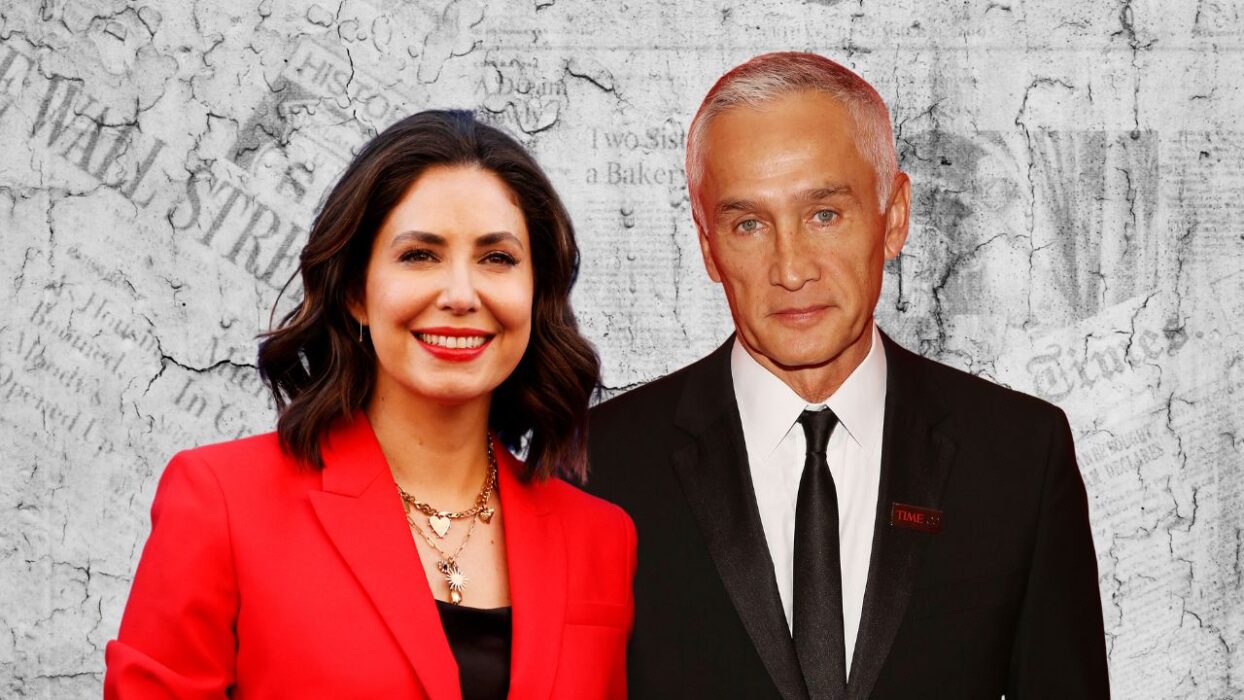
During the 47th News & Documentary Emmy Awards, Jorge Ramos, the legendary Latino journalist, won the award for Outstanding News Program in Spanish for his independent digital show “Así Veo Las Cosas.”
“Well, I think this is a powerful message,” Ramos said during his acceptance speech. “It’s like the grand march of independent journalism. For us, it’s validation. It’s proof that there’s a new space for independent journalism and that we can truly compete with—and even beat—the big media corporations.”
“Of course, it has to do with technology,” he continued. “But in the end, it all comes down to credibility, [to] who you trust. And people follow people, not institutions.”
Ramos also said that he is “just one example” that “there is life after television.”
Hours after receiving the award, Ramos addressed the audience in an episode of his now-award-winning show. He shared that the award is not just about him. It is “about dozens and dozens of journalists in English and Spanish” who are opening up new channels to reach the Latino audience.
“We are absolutely convinced that independent journalism is the way forward. It is the future, and in many cases, it is the present,” he said.
Cecilia Vega’s departure from ’60 Minutes was real-time proof of this.
After three years as host of the CBS News program, the former ABC News chief White House correspondent has been fired. This is part of a “radical” restructuring of the network under the leadership of Barry Weiss and the conservative wing affiliated with the current administration.
Weiss fired executive producer Tanya Simon and replaced her with Nick Bilton, a former technology columnist for The New York Times and a Vanity Fair contributor.
Similarly, Sharyn Alfonsi, a veteran “60 Minutes” correspondent who clashed with Weiss over a report on Donald Trump’s immigration policies, also left the program after her contract was not renewed.
But Vega did not leave without first calling a spade a spade.
“I was fired today. My contract as a 60 Minutes correspondent wasn’t set to expire until March 2027,” she wrote in a statement.
“I have the utmost respect and admiration for my colleagues at 60 Minutes and for the reports that air every Sunday. But I am deeply concerned about what the future holds and the fate of this legendary program.
In recent months, my production teams and I have witnessed attempts to introduce political bias into our stories. Reporting teams have refrained from pitching stories on important current events out of fear of internal repercussions.
Let’s call this what it is: censorship, both imposed and self-imposed. It is dangerous for the program and dangerous for democracy.”
Vega, who was the first Latina correspondent to join “60 Minutes,” told her colleagues: “Keep holding the line.”
For Latino journalism, “holding the line” is the new strategy.
“Many people said it was impossible to compete with the major networks. But we are proving that we can,” Ramos told YouTube’s official blog in April. “These two Emmy nominations are very important because they show that journalism can exist and have an impact anywhere.”
If it was already difficult for our community to get accurate news through media they could trust, the restructuring of the information ecosystem in the United States leaves only one option on the table: independent, human journalism, free from government interests.
While content creators opened a door by demonstrating the impact of access to technology, it is time for the rigor—so painstakingly cultivated by professionals like Vega and Ramos—to come into play.
The future, after all, isn’t so bleak.