Good News That Keeps Us Sane This Week
Let’s be honest, the world feels like it’s falling apart, and it seems like there’s a new disaster every day. We’re all tired of the constant bad news. That’s why, every Friday, we’re sharing stories that moved and inspired us—stories that show people are still fighting for what matters and that hope is still out there.
These are the stories that don’t go viral but absolutely should.
Minnesota Becomes the First State to Ban “Nudification” Apps.

After two years of advocacy from survivor Molly Kelley, Minnesota passed the nation’s first ban on apps that use AI to create nonconsensual deepfake images of real people, especially those that digitally undress photos. The bill passed the Minnesota Senate 65-0 and now just needs Governor Tim Walz’s signature. What’s remarkable isn’t just that it happened, but how: Kelley, while juggling law school, two kids, and a full-time job, kept reaching out until she found a legislator ready to help. The law allows survivors to sue app developers for damages and permits the state attorney general to collect $500,000 in fines for each violation.
New York City Just Ended the Annual “Budget Dance” Over Libraries.
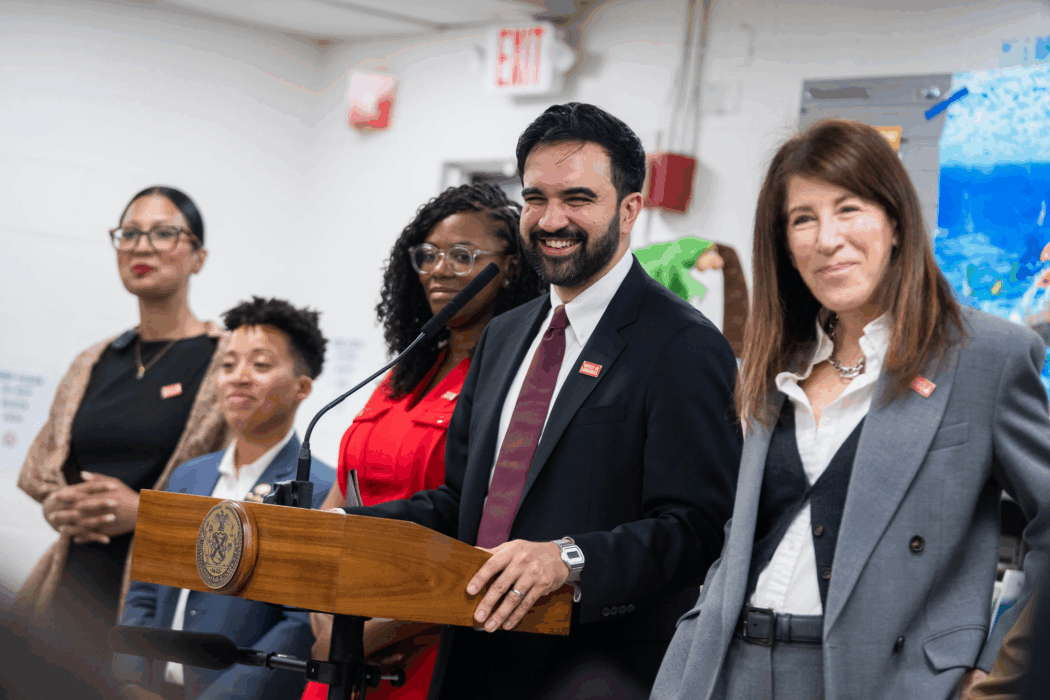
Mayor Zohran Kwame Mamdani announced that New York City will permanently give $31.7 million to its three public library systems: Queens Public Library, Brooklyn Public Library, and New York Public Library. For years, library funding was used as a bargaining chip in every budget cycle, but that’s changing. With this permanent funding, over 200 library branches across all five boroughs can finally plan ahead, hire staff, and serve New Yorkers without worrying about losing money next year. Libraries are places where people study, look for jobs, cool off during heatwaves, and build community. Now, they can focus on doing that work.
A Phoenix High School Senior Earned $5 Million in Scholarships and Got Into 49 Colleges.
Joseph Parra Miguel, a senior at Phoenix Coding Academy, broke his school district’s scholarship record by earning $5 million from 49 college acceptances. His school counselor said Joseph’s scholarships accounted for half of the entire senior class’s scholarships this year. Joseph wanted to show his immigrant parents that their sacrifices were worth it and that it’s okay to keep going. He chose to stay close to home and will attend Arizona State University, where he plans to study business with a focus on language and culture. His advice to other students: “It’s okay to feel lost. I felt lost some time, but I figured it out.”
A 72-Year-Old Abuelita Just Graduated From College.
Irma Garcia walked across the stage at George Mason University on May 17 to receive her bachelor’s degree in public administration with a minor in Spanish, a goal she set many years ago. Garcia left Puerto Rico in 1978 to give her three daughters a better life, working several jobs as a single mother. She earned her associate’s degree from Northern Virginia Community College, but had to pause her bachelor’s degree. Five years ago, she joined George Mason’s program for older people. When asked what helped her succeed, Garcia said: “The secret is to believe in yourself and dance a lot of salsa.” Her daughters celebrated with her. Now, she’s planning a trip with them before starting a part-time job in the nonprofit sector.
A Florida Man Found $30,000 and Didn’t Think Twice About Returning It.
Luis Salazar walked into a Wawa bathroom in Riviera Beach, Florida, and found a fanny pack hanging on a stall door. Inside was $30,000 in cash. His mind went numb. Then he spent several days trying to find the owner. Police eventually tracked down the man through security footage and connected them at the Riviera Beach Police Station. When Salazar handed over the bag, the owner cried and hugged him. “It’s not my money to take,” Salazar said. “I was not raised that way.”
Littering in America Has Declined by 34% Since 2020.
A new report from Keep America Beautiful shows that litter on American roads and waterways has decreased significantly over the past six years. Roadway litter fell by 22% (from 23.7 billion to 18.4 billion pieces), and waterway litter dropped by 45% (from 25.9 billion to 14.2 billion pieces). The average American’s share of litter along roads and waterways went from 152 pieces to 96. These improvements are thanks to education, stronger enforcement, better infrastructure, and more public involvement. Nearly 90% of Americans now feel personally responsible for reducing litter, and 93% agree it’s a shared community job. The study also shows how litter reflects American life: cardboard is up 50% (from online shopping), PPE is down 76% (fewer masks and gloves), and plastic is going down overall.