Colombia’s Hippo Paradox: How Escobar’s Exotic Pets Became Both a Treasure and a Threat
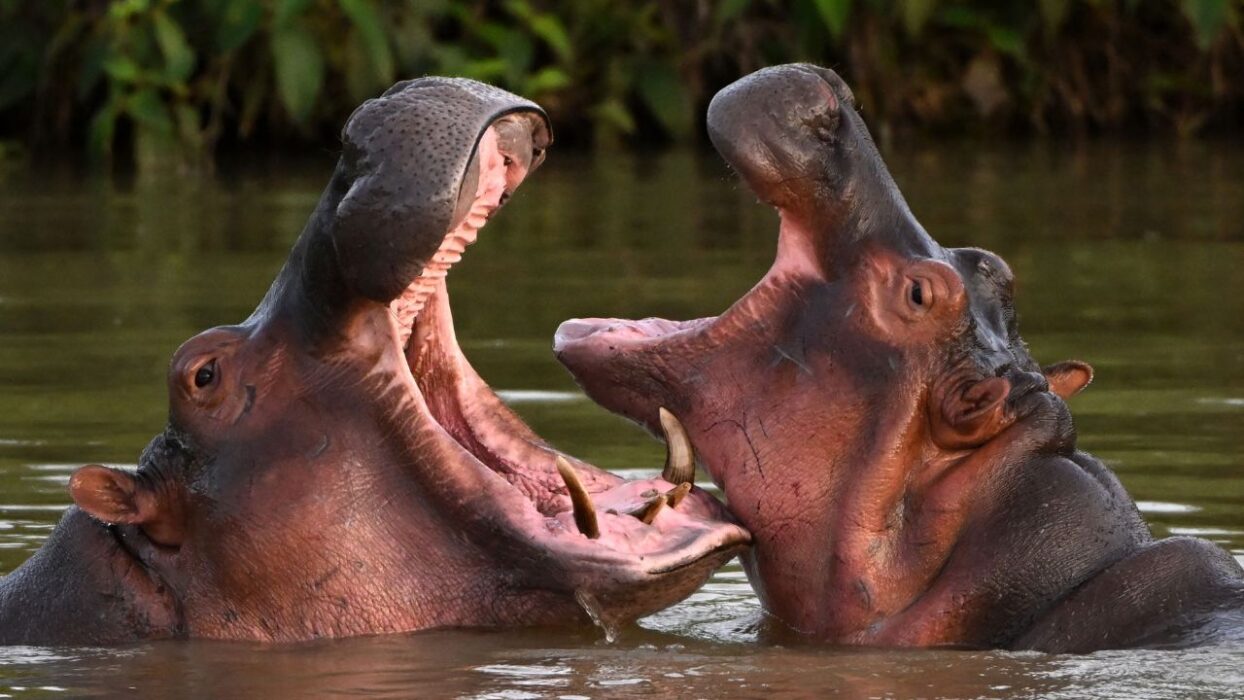
Colombia is preparing to kill 80 hippos. This isn’t a plot from a dark comedy, but a real plan announced by the government in April. The operation has a $2 million budget and will use lethal injections and rifles. These hippos aren’t native to Colombia. They are the descendants of four animals that Pablo Escobar, a drug trafficker, brought into the country in the 1980s as exotic pets.
Now, three decades later, those four hippos have multiplied to about 200. What started as one man’s whim has become a crisis, dividing environmentalists and animal lovers, fishermen and tourism operators, and scientists and local communities who now rely on these huge, dangerous animals for their livelihoods.
The plan to reduce the hippo population has triggered a strong debate. Even an Indian billionaire offered to save 80 of the animals. Animal rights groups call the plan a massacre, while people who earn money from hippo tourism feel betrayed.
Some scientists have received death threats. Meanwhile, fishermen who avoid the river at night, fearing hippos, see the plan as justice.
How Four Exotic Pets Became Two Hundred Wild Animals
The story begins with Pablo Escobar. At the height of his power in the 1980s, Escobar owned Hacienda Nápoles, a sprawling 2,000-hectare estate near the town of Doradal where he built artificial lakes, a Mediterranean-style mansion, a private airstrip, and—most infamously—a personal zoo. According to The New York Times, Escobar smuggled in “a series of exotic animals from zoos and traffickers: elephants, giraffes, camels, rhinoceroses, kangaroos, ostriches, and deer.”
And four hippos.
José Conrado Montoya Toro, 85, was hired as the caretaker of Escobar’s zoo in the 1980s. According to him, “All the animals had their special canoes. When the vegetable truck came, they brought cabbage, carrots, and lettuce for all the animals.”
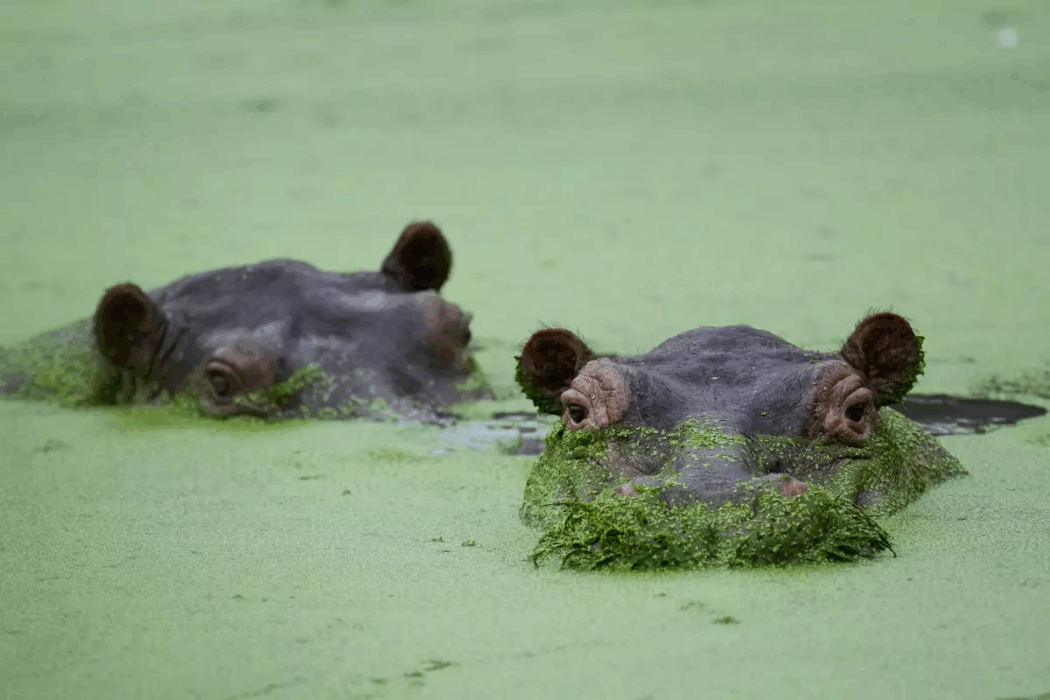
When Colombian police killed Escobar in a rooftop shootout in Medellín in 1993, his empire fell apart. Most of his animals were sent to zoos, but the hippos either escaped or were left behind. In Colombia’s lush landscape, with no natural predators, the hippos stayed in the water, ate, and multiplied.
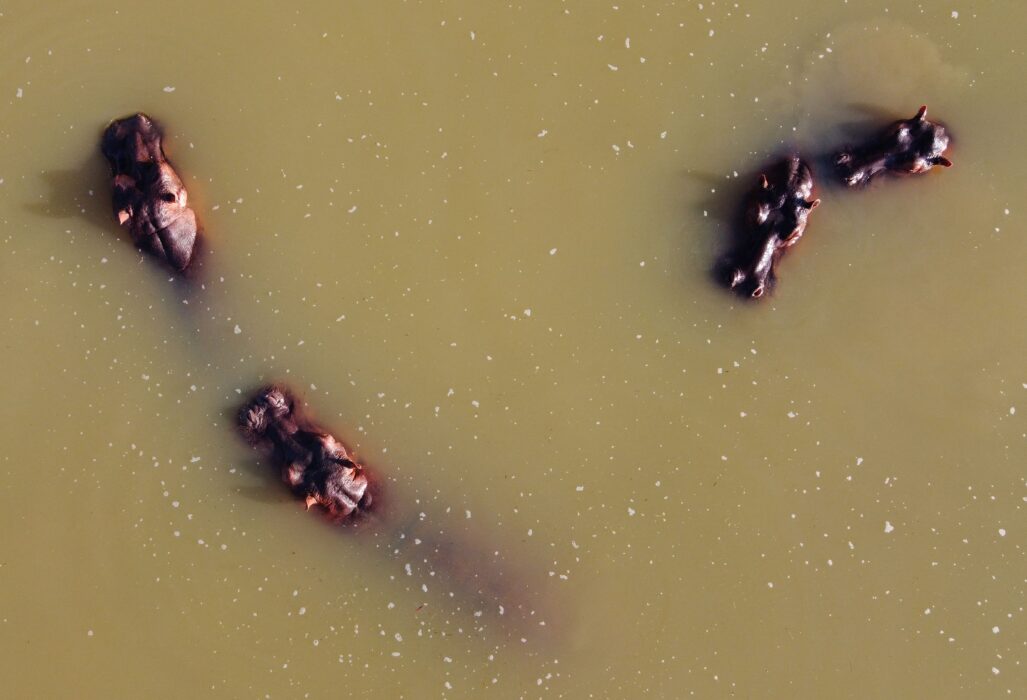
Today, Colombian officials estimate that about 200 hippos roam freely over roughly 43,000 square kilometers, mostly in the Magdalena River region. The New York Times reports that scientists believe the population could grow to over 1,000 by 2035 if nothing is done.
An Invisible Threat Beneath the Water
A hippo can weigh up to 1,300 kilograms and can run faster than a person. While in Africa, hippos have killed people, in Colombia, attacks are less common but still serious. El País reports that in 2020, a hippo attacked a farmer collecting water, breaking his ribs and almost killing him. Three years later, a driver hit a hippo on the highway. The hippo died, but the driver survived.
The environmental impact is just as worrying. The New York Times quotes Katherine Corrales, an invasive species expert with Colombia’s environmental agency in Boyacá, who said, “As the hippo invasion advances, there will be a greater likelihood of accidents. In the world, there is no invasive animal that is as large.”
Hippos change ecosystems in ways many people don’t realize. Daniel Cadena, dean of sciences at the Universidad de los Andes, explains that hippos add large amounts of nutrients to water, which can drop oxygen levels and lead to mass fish deaths. Scientists also warn that hippos could push manatees and capybaras out of their feeding areas. The Colombian government estimates that, without culling, the hippo population could exceed 500 by 2030.
But the government’s plan has created a new problem: hippos have become an important part of the local economy.
The Business of Hippos
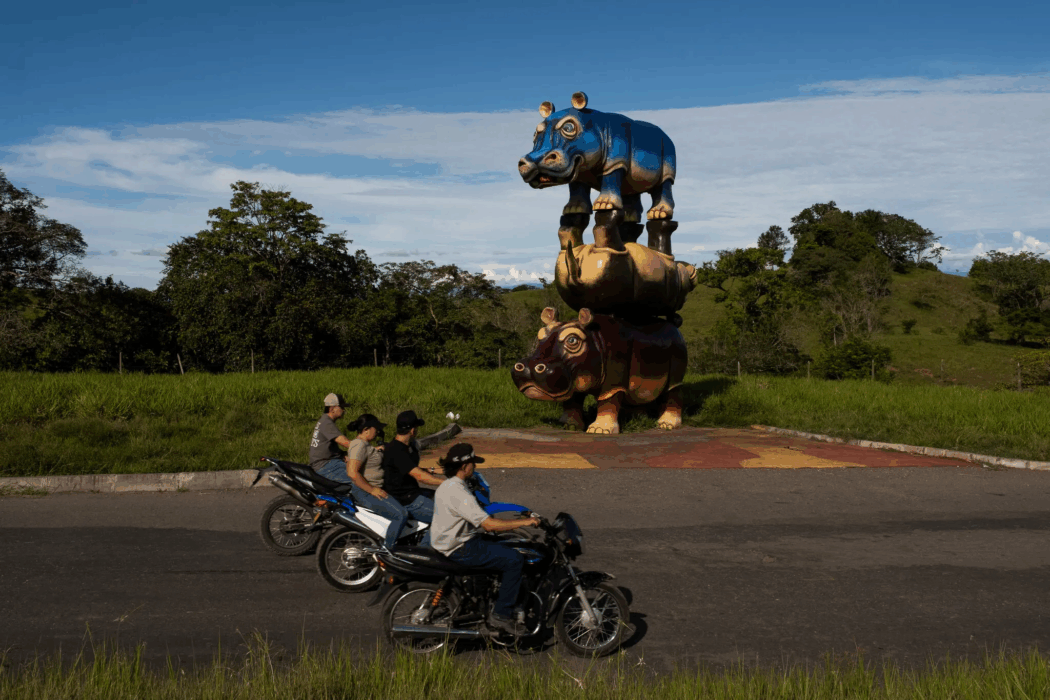
Diana Hincapié owns a restaurant in Puerto Triunfo, a town near the hippos. Her restaurant is next to the Cocorná Sur River, which flows into the Magdalena. She gets about 200 tourists each month, most of whom come to see the hippos.
According to the Los Angeles Times, Hincapié stated, “We don’t want a dead hippo. They are no longer African. They are Colombian because they have been reproducing here for more than 30 years.”
Many people in the region feel the same way. Tour guides bring visitors on boat trips to see hippos in the wild. Families take photos of the animals from platforms at the Hacienda Nápoles theme park, which the government turned into a tourist attraction after Escobar’s death. Some entrepreneurs have built their businesses around hippos, an activity locals call “hipopotamear,” or hippo-watching.
Fishermen, though, have a different experience. Giovanny Contreras, a 48-year-old fisherman, has mostly stopped using the river at dusk and dawn, when hippos are active. The New York Times quotes him: “It changed our lifestyle for us.” His nets, once full of catfish, now come back almost empty. Hippos disturb the water, scare away the fish, and are a constant danger that caution alone cannot prevent.
A hippo can smash a boat’s hull with just one movement of its head.
The Billionaire’s Intervention
In April, as the Colombian government completed its culling plan, a new voice entered the debate: Anant Ambani, a 31-year-old Indian billionaire and the son of Mukesh Ambani, Asia’s richest person.
Ambani offered to take 80 of the hippos destined for death and transport them to Vantara, his wildlife sanctuary in Gujarat, India. According to El País, Ambani stated in a message: “They are sentient beings, and if we have the ability to save them through a safe and humane solution, we have the responsibility to try.”
He added: “Compassion and public safety are not opposing forces.”
Vantara is huge, covering about 12 square kilometers, and is already home to 200 elephants, 300 big cats, over 3,000 herbivores, more than 1,200 reptiles, and thousands of birds. Still, the facility has faced criticism. National Geographic España reports concerns about how animals are acquired, the environmental impact of transporting them to India, and the sanctuary’s proximity to a refinery operated by Ambani’s family business, Reliance Industries.
Even so, animal advocates and some local politicians support the offer, seeing culling as a moral disaster. The Los Angeles Times quotes Senator Andrea Padilla, who called the plan “an extermination, a massacre,” and questioned why Colombia would “close this chapter the same way, shooting bullets at the hippos.”
Why Other Solutions Have Failed
The Colombian government did not quickly decide on culling. For years, officials tried other options. In 2009, state-approved hunters killed an aggressive male hippo named Pepe. The New York Times reports that a leaked photo of soldiers smiling next to the dead hippo caused national outrage. A judge soon banned more lethal killings, so officials had to look for non-lethal solutions.
From 2023 to 2025, Colombia tried sterilization, a difficult, expensive, and risky surgery. The Los Angeles Times says the goal was to sterilize 40 hippos each year, but only 35 were sterilized in two years. Biologist Nataly Castelblanco, who advised the government, explained: “Sterilization is effective for controlling reproduction in an individual, but not in a population. At first, they managed to bait and capture several, but the animals learned, and it was not easy to continue capturing them.”
Attempts to move the hippos also failed. The Colombian environment ministry sought international sanctuaries to take them, but few countries responded. Those who did said the costs were too high, or that their laws banned the introduction of invasive species.
By April, the government decided that controlled euthanasia was the only realistic option left.
A Reminder of Ecological Consequences
The hippo crisis is not the only case like this. It’s a warning seen around the world when people bring species into new places. National Geographic España says invasive species are one of the biggest ecological problems of this century. They can change whole ecosystems in just a few decades, push out native species, and create problems that can’t be undone.
Still, the Colombian hippos are in a strange spot. They are invasive, dangerous, and harmful to the environment. But for many Colombians, they also stand for resilience, adaptation, and a bizarre legacy that has become something new and alive. These hippos have survived in a place where they were never supposed to exist.
In the end, the culling plan is moving forward, while Ambani’s offer is still being considered. Scientists and animal activists keep debating in public. Meanwhile, on the Magdalena River, fishermen steer carefully at dusk, and tourists look for the huge shapes of hippos in the water.