The Latino Kitchen Staples That Just Feel Like Mom
Latino culture is full of traditions, but for many of us, the first is mamá in the kitchen. The smell of simmering broth, onions cooking, cilantro sizzling in hot oil, or just morning coffee brings us right back to childhood. Food is our love language.
This Mother’s Day, we’re honoring the dishes that make us think of her.
México: Sopita de Fideo
When you come in from the rain, mamá opens the door and, before you can say a word, she’s already heating the pot. It’s sopita de fideo—thin noodles in a warm, golden broth.
Sopa de fideo originated in Spain and reached Mexico during the Spanish colonial era, probably between the 8th and 9th centuries, when Arab nomads introduced noodles to the Iberian Peninsula. Spanish conquistadors introduced the dish to the New World, but Mexican cooks made it their own. They learned how to let the pasta soak up the broth’s flavor, turning a borrowed dish into something uniquely Mexican.
Today, it’s still our favorite comfort food.
Honduras: Salpicón de Res con Hierbabuena
In Honduras, whenever there’s something to celebrate—a birthday, a holiday, or just a reason to gather—there’s salpicón. It’s finely shredded beef mixed with tomatoes, onions, and cilantro. And it tastes amazing.
The word “salpicón” comes from France and means finely diced ingredients mixed with a sauce, but Honduras gave it a new twist. The dish combines indigenous, Spanish, and African flavors, bringing together three centuries of history on one plate. In Honduras, moms serve it with rice, and sometimes use rabbit instead of beef. Every family has their own version.
But honestly, your mom’s version is the one that counts.
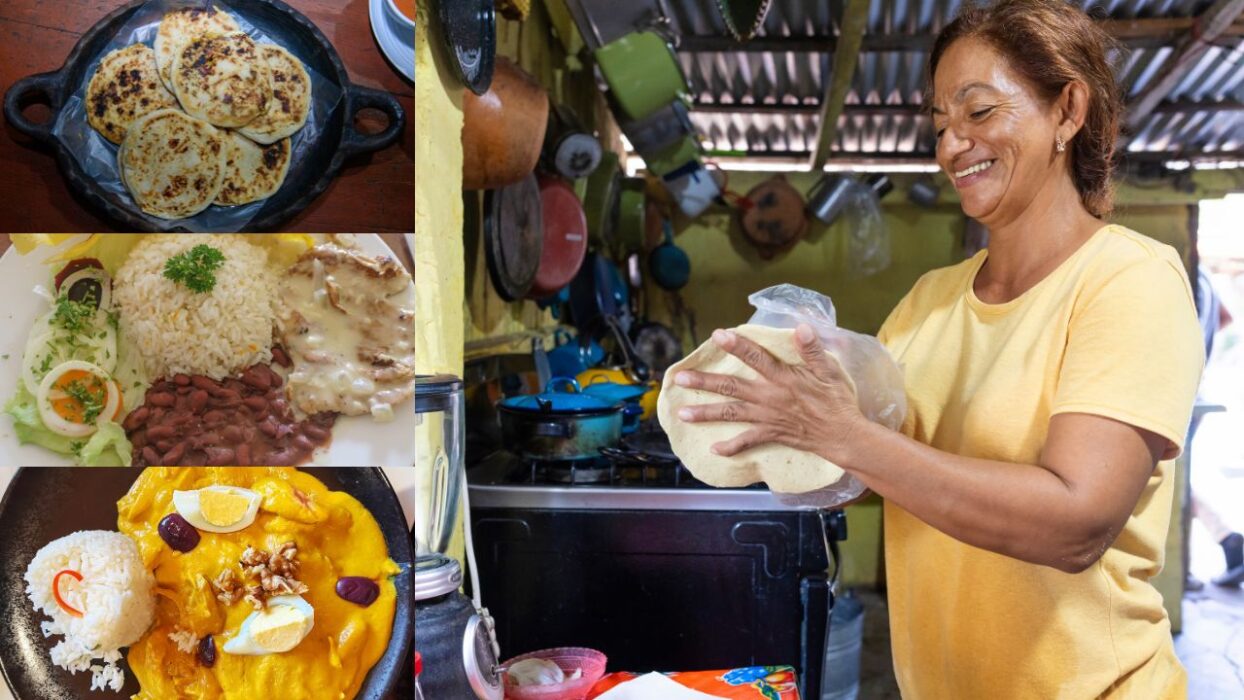
El Salvador: Loroco en Crema con Frijoles, Cuajada y Tortilla
If you’ve never tried loroco, you’re missing something special. It’s not exactly a vegetable or a flower. Loroco is an edible, unopened flower bud from Central America, and its flavor is somewhere between an artichoke and a trip back home.
Loroco has been used for centuries as an edible flower. For centuries, indigenous communities foraged for loroco as an edible flower, long before it was grown as a crop. In El Salvador, it’s used in pupusas, soups, and this creamy sauce. Served with beans, cuajada (a soft cheese), and a warm tortilla, it’s simple, elegant, and mamá’s way of saying, “This is who we are.”
Cuba: Frijoles Colorados y Pollo Asado
Frijoles colorados—red beans—come from the fusion of African slave cooking traditions, Spanish techniques, and Caribbean flavors.
The beans are stewed until they’re creamy, swimming in their own richness. Beside them: pollo asado, chicken that’s been marinated and roasted until it’s golden and falling off the bone.
In Cuba, roasted meat is a deep tradition, especially for celebrations and holidays. And yes, it tastes like home.
Dominican Republic: Sancocho Dominicano
Sancocho is the dish for feeding a crowd. And moms always seem to want to feed a crowd. It started as a fish stew in the Spanish Canary Islands, but in the Dominican Republic, it became something completely different.
The dish changed as African and Taíno influences mixed with Spanish cooking. Indigenous people added root vegetables like yuca, malanga, and yams. African slaves brought traditions that focused on deep flavors and patience. Spanish colonizers added their stewing methods. The result is a rich stew with different meats, native root vegetables, plantains, and traditional herbs.
Colombia: lentejas con chorizo
Simple and comforting, this is exactly the kind of dish we mean.
Spanish settlers brought lentil soup during the colonial era, and over time, it became a beloved Colombian recipe. The classic version has onions, garlic, carrots, potatoes, tomatoes, and cilantro, with chorizo adding a smoky, savory touch. It’s served with rice, avocado, and fresh lime juice.
Lentejas is still a favorite comfort food in Colombian homes, passed down from generation to generation. Your mom made it on days when she didn’t need to impress anyone—just to nourish and show love.
Venezuela: Pabellón Criollo
Pabellón Criollo is Venezuela’s national dish and the ultimate symbol of Venezuelan identity on a plate: rice, shredded beef stew, black beans, and fried plantains. That’s it. That’s everything.
The name “Pabellón” means “pavilion,” but it’s also another word for flag. Some people see the dish’s colors as representing the Venezuelan flag, while others see it as a symbol of Venezuela’s mix of indigenous Amerindians, Spanish conquistadors, and African slaves.
The dish originated in colonial times, when enslaved people and peasants combined leftovers—rice, beans, meat, and plantains—into a single meal. Each part has its story: beans from indigenous people, rice from Asia through Spain, meat salted to keep, and plantains from Africa. Over time, it became a national staple. And no one makes it better than mom.
Peru: Ají de Gallina
Picture chicken, bread, cream, and chili peppers. Ají de gallina likely evolved from manjar blanco, a mix of ground almonds, milk, and chicken or fish that the Moors first brought to Spain. In colonial Peru, cooks added local chili peppers to create a savory main dish. Around 1839, ají de gallina became popular in Lima’s restaurants.
It’s usually served with boiled potatoes and white rice, topped with black olives and hard-boiled egg.
Chile: Porotos con mote
Porotos granados originated with the Mapuche people, and the word “poroto” comes from the Quechua word for “bean,” purutu. Legumes have been part of Chilean cooking since before colonial times, but this mix of fresh beans, corn, squash, and basil is truly Chilean.
Argentina: Locro
Locro is a dish with a history of bringing people together in tough wars.
Locro comes from the Quechua people of the Andes and was first called “lugru” or “rucru.” Its roots are pre-Colombian. At first, it was made with corn, pumpkin, beans, and chili. After the Spanish conquest, people started adding chorizo, bacon, and different meats.
Argentine locro became a national dish during the War of Independence. It’s still eaten in large gatherings on May 25, the day that marks the May Revolution and the start of Argentina’s first patriotic government.
And you? What’s the dish that reminds you of mamá?