Why Everyone Should Be Paying Attention to This Unapologetically Latino Bar in Milwaukee
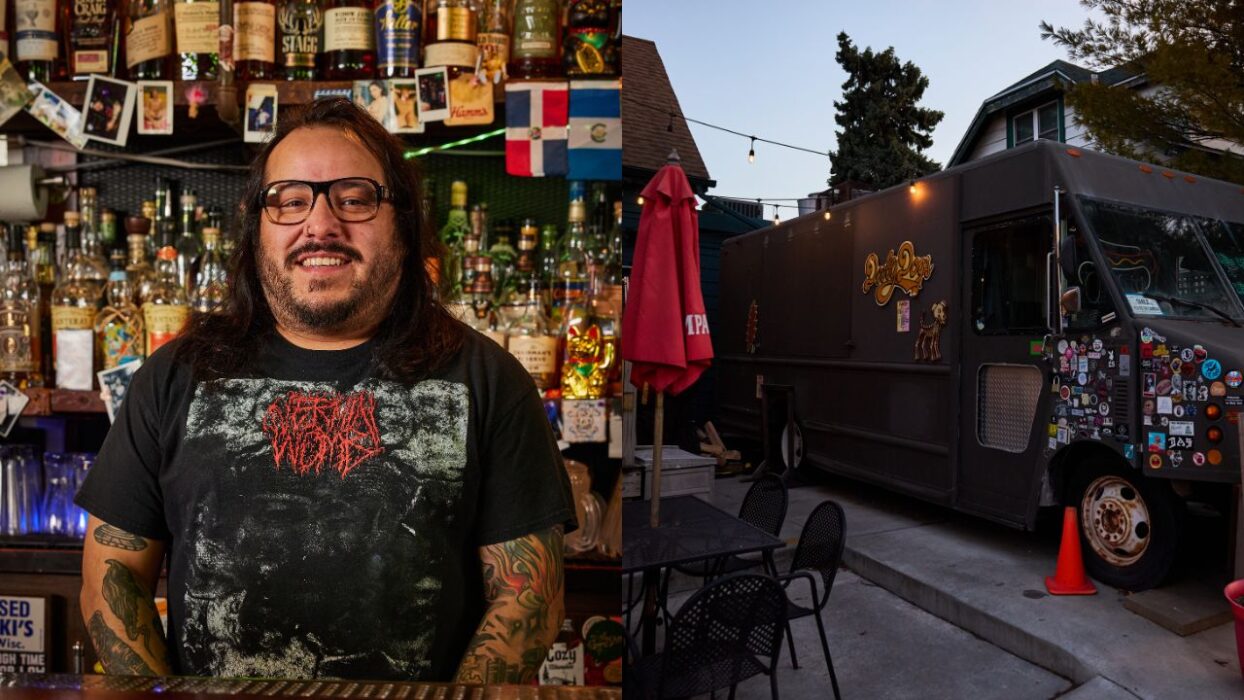
The first thing Ricky Ramirez makes clear is that The Mothership is not interested in translating itself for comfort.
Plenty of bars talk about identity now. Plenty of restaurants and cocktail programs reach for heritage as atmosphere, as branding language, as a few carefully selected cues that signal authenticity without “discomfort.” But what Ramirez is building in Milwaukee feels like resistance and vulnerability.
At The Mothership, culture is not a watered-down product but a statement in its own right. It is in the way Ramirez and his team name the drinks, in the ingredients they insist on, in the memories they pull from, and in the refusal to flatten Latino foodways into something more legible for people who only like difference when it can be consumed without respect.
More interestingly, Milwaukee is not Miami, Los Angeles, or New York.
It is not a place where Latino cultural expression gets to move through the hospitality industry without translation or compromise.
Ramirez knows that. He knows what happens when authenticity enters a room that has already decided what should count as approachable. He has watched friends in the city try to offer food that felt true to their households, only to be met with the usual complaints: “This is too spicy,” “Why is the consistency like this?” The result, as he puts it, is that “restaurant scenes turn into New American menu checkered shirt uniform hell holes.”
As a good Latino, humor is a good way to put it. However, Ramirez is also naming something deadening and familiar: the way regional food culture gets disciplined into sameness by diners who confuse their own narrow palate with universality.
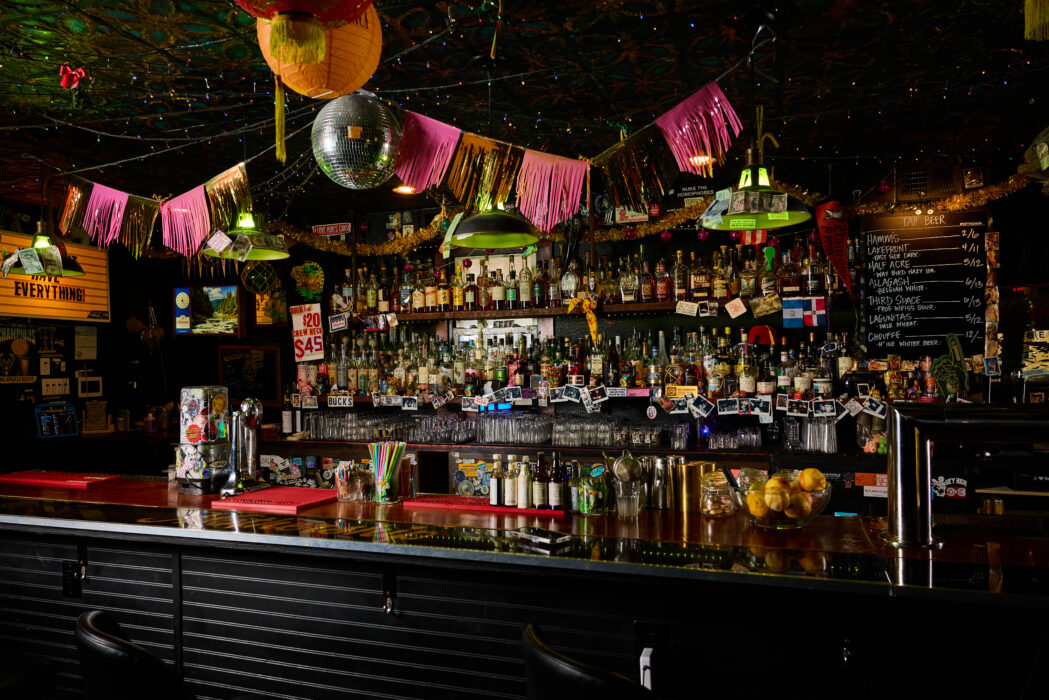
That is the context in which The Mothership calls itself an unapologetic and boundary-pushing Latino bar.
For Ramírez, there comes a point where you have to draw the line and say, “Here, this is what I’m doing, and the reason why is because that’s how things are done in households, traditions, and cultures.”
“There’s no reason to water things down anymore,” he told us. “Watering things down isn’t making things universal or being inclusive, and it’s really not about survival.”
That last part is what makes The Mothership a beacon of resistance. Because so much of the conversation around immigrant or Latino-owned hospitality businesses gets trapped in the language of adaptation. Survival. Making things accessible and meeting people where they are.
For his part, Ramirez is not denying that those pressures exist. He is saying something more poignant: that too often, the demand to translate culture is framed as generosity when, in fact, it is submission. The thing being protected is never just the customer’s comfort. It is the hierarchy that taught the customer to expect the world to arrive already adjusted to them.
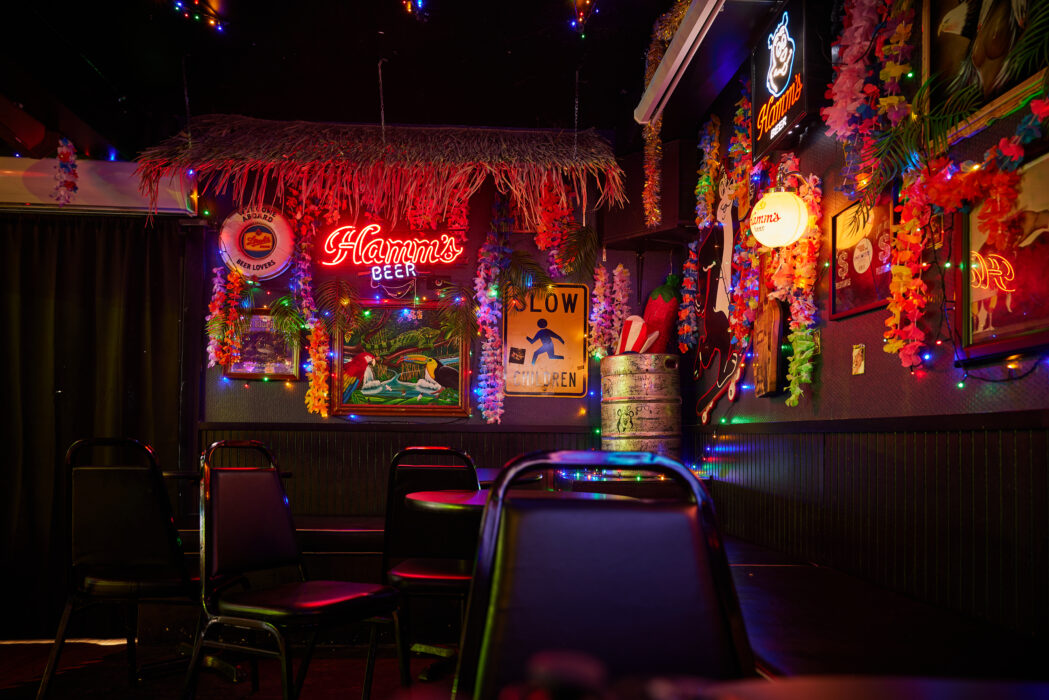
The Mothership, then, is not merely a cocktail bar with a point of view.
That choice has sharpened in the current political moment. Ramirez did not speak about heritage as if it were an abstract value or a tidy diversity statement. He spoke about it as something made more urgent by the ugliness of the present, by a country still drunk on its own mythology while actively trying to shrink the definition of who belongs inside it.
“I’ve always thought America was really riding on this 1776 business for way too long,” he said. “As if we haven’t embraced other traditions, cultures, and movements. Like, there have been so many better movements since, and now we’ve got some turd of a human being eroding history and replacing it with gold leaf fixtures from Home Depot while he chomps down McDonald’s. That isn’t America.”
It is a very Ricky answer, profane, funny, and exact. But beneath it is a serious political thesis. Ramirez is rejecting the stale national fantasy that America is best understood through its founding mythology rather than through the labor, improvisation, and survival of immigrants who built lives here under far less romantic conditions.
“What America is,” he said, “is people coming here to work, and people coming here to set up folding tables in the hood and make the most authentic food you could possibly eat, just to make a living.”
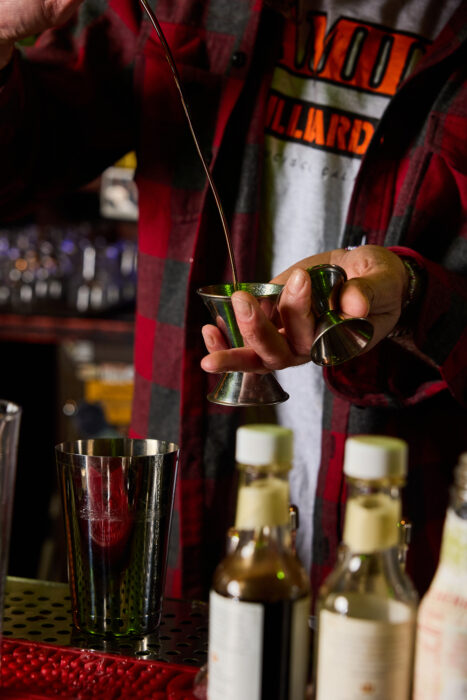
When he talks about work, it becomes even more personal.
“My dad walked his ass here from Guatemala to work,” he said. “I live 5 minutes from work, and every day I’m grateful I didn’t have to walk across an entire country just to come to a place to work.”
Gratitude, here, and as many Latinos know, is synonymous with commitment. He knows what has been sacrificed for him to be able to open a bar in Bay View, in the neighborhood where he grew up. He also knows how quickly that sacrifice gets erased by a broader American culture that still behaves as if the country is naturally owned by the people least capable of imagining how hard others had to fight to get here.
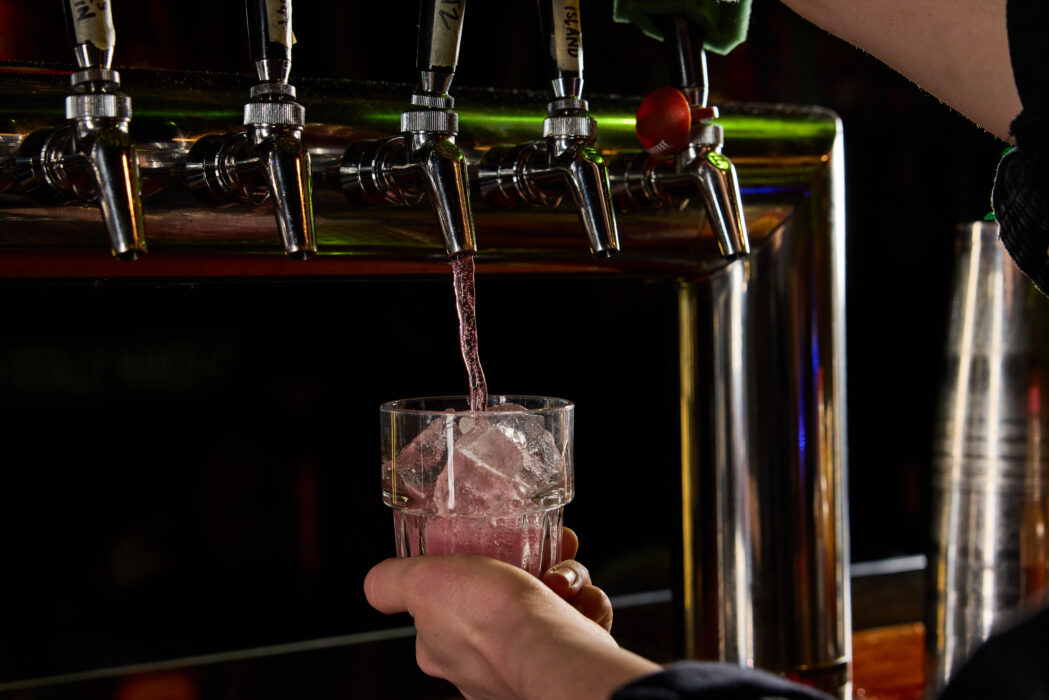
That awareness shapes this Latino bar’s menu.
Latino cuisines or family memories do not simply inspire the cocktails in some loose aesthetic. They are deeply specific, and they stay specific even when they move into the language of fine drinking.
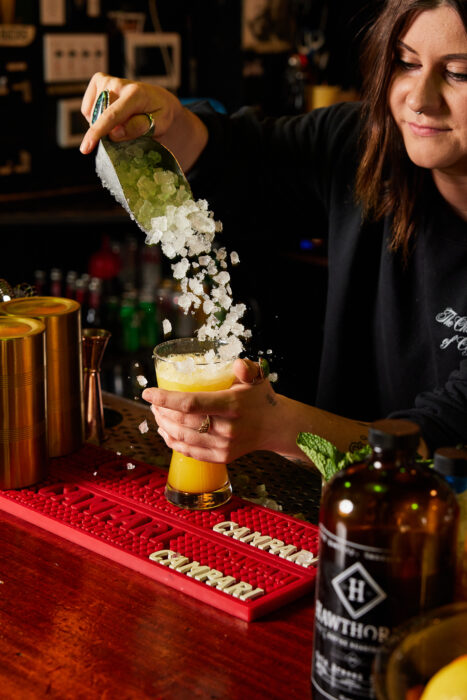
The Boricua Martini, for example, takes its cues from arroz con gandules. The Silver City Special nods to a working-class, heavily Latino part of Milwaukee. The Chancletazo Milk Punch reaches back to the papaya smoothies Ramirez’s mother made for him as a child. This way, a drink becomes a reference to texture, geography, class, migration, and household memory.
When we asked Ramirez what he is trying to preserve when he turns a dish like arroz con gandules into a martini, he refused to choose between flavor, memory, and feeling. “It’s definitely all 3,” he said. And the answer that followed revealed something about Latino life outside the major coastal cities that often gets lost in food writing.
Growing up Dominican and Guatemalan in Wisconsin, he told us, did not mean easy access to Dominican and Guatemalan ingredients. Heritage, in that context, was not something fully available at all times. It was partial, improvised, and sometimes displaced. “We didn’t really get a chance to experience our heritage a lot at home because even Latin grocery stores don’t have the cheeses or meat I know from going to Guatemala or having out east, where I was born, where there’s a bigger Dominican population. We had to dive into a lot more Mexican and Puerto Rican foods because that’s what’s here.”
A different look into Latino representation
Latino identity in places like Wisconsin is not a museum exhibit of untouched origins. It is proximity, substitution, regional adaptation, and cross-Latino familiarity. The Boricua Martini is no less authentic because it moves through Puerto Rican reference points while being made by a Dominican-Guatemalan owner in Milwaukee.
If anything, that is the point. The drink reflects the actual pathways through which Latino life gets lived in the Midwest.
It is also deeply intentional. Ramirez knows many bars are playing with food-as-drink right now, but he is clearly trying to do something more precise. “This martini has taken a life of its own,” he said. “And sure, a lot of bars are doing the food as a drink thing, but I think this is one of the best representations of both, where neither the food nor the cocktail is reaching too much.”
That distinction takes a different connotation when Ramirez talks about the broader wave of Latino-owned bars, places like Superbueno and Mírate, where heritage is central to the menu and the room.
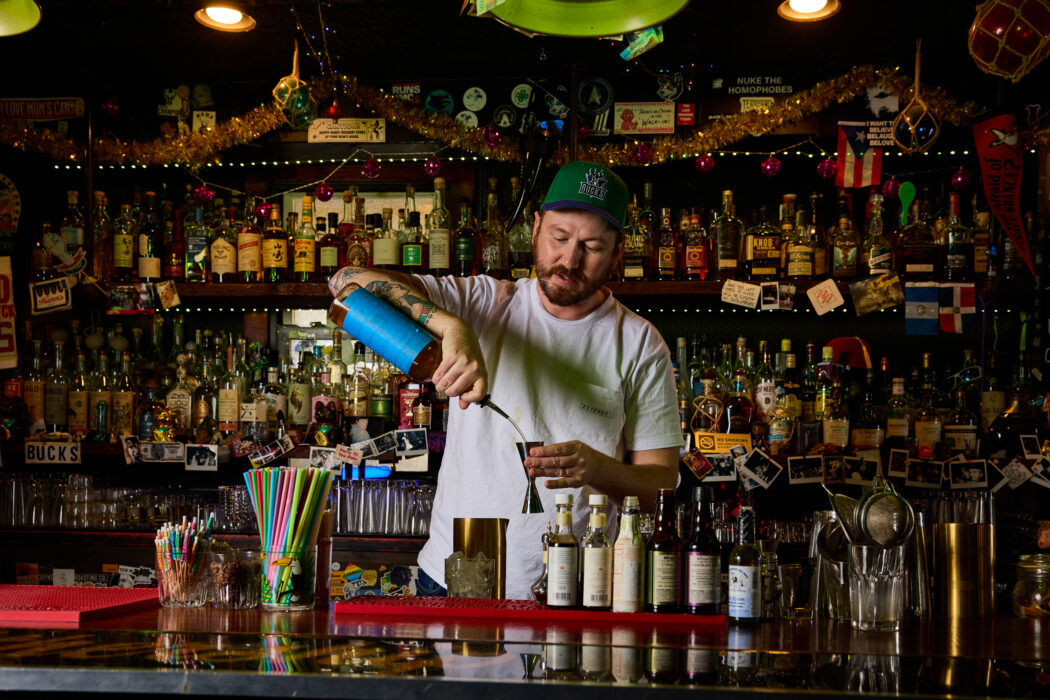
Resistance, business strategy, or something else?
For Ramirez, each initiative has its own context.
“I don’t know what they’re doing in those big joints in their big cities,” he said, before pivoting back to Milwaukee, where the stakes feel different. “Here, it is very tough to be like ‘this is what we’re doing.’ We can’t be sitting here playing merengue, marimba, and cumbias because people here still want Brandy and Sprite with cherries, and you know, hospitality. We have to throw like the Replacements and Wilco in here and there to keep people thinking that we ‘get it’ when in reality we’re trying to be something totally different.”
“And it’s tough,” he continued, “because when you try to represent people, they just think you’re a tiki bar.” There, in one line, is an entire critique of how American hospitality misreads nonwhite expression. That is the old colonial reflex in a new outfit: seeing culture as colorful consumption rather than as the record of actual people and their histories.
But then, the Mothership becomes a whole different Latino bar
“In my mind, it is resistance,” he said. “We aren’t even on a main throughway in Milwaukee. You HAVE to find us. And that makes so much sense for what we do.” The analogy he drew next was perfect. He compared The Mothership to late-night carnitas spots in Milwaukee, places you have to know how to find, when to find, and why to find. If you do not know, you end up somewhere else, getting “shredded seasoned pork at a whatever Mexican joint.”
This is more than insider knowledge. It is a way of locating value outside the mainstream’s approved circuits. “It’s awesome to have these places that live outside of the normal cocktail world because it’s a vibe, because being Latino is fucking great. At the end of the day, you’ve just got to be real.”
It is why the menu’s most affecting references are also its most intimate.
The Chancletazo Milk Punch, for instance, lands differently depending on who is reading it. To an uninitiated guest, it may look playful, eccentric, maybe even cryptic. To someone who grew up in a Latino household, the word can trigger instant recognition. Ramirez laughed when I asked what he wanted non-Latino guests to understand before treating the menu like an exotic tasting flight. “Man, I wish I could get a non-Latino person to understand what a chancletazo is,” he said. “It’s not good when you’ve got a tiny Dominican mom chasing you, threatening you with a chancletazo when you’ve been teasing one of your six sisters too much.”
The humor is obvious. So is the tenderness underneath it. “It’s like trauma bonding when someone sees chancletazo on the menu, and THEY KNOW,” he said. “They’re all rooted in real stories about real people and sayings and traditions that are not black and white.”
This is what makes The Mothership feel larger than a good bar with a good concept. Ramirez is building a room where culture can remain specific, contradictory, funny, regional, and alive.