How Street Vendors Revolutionized Latin American Cuisine
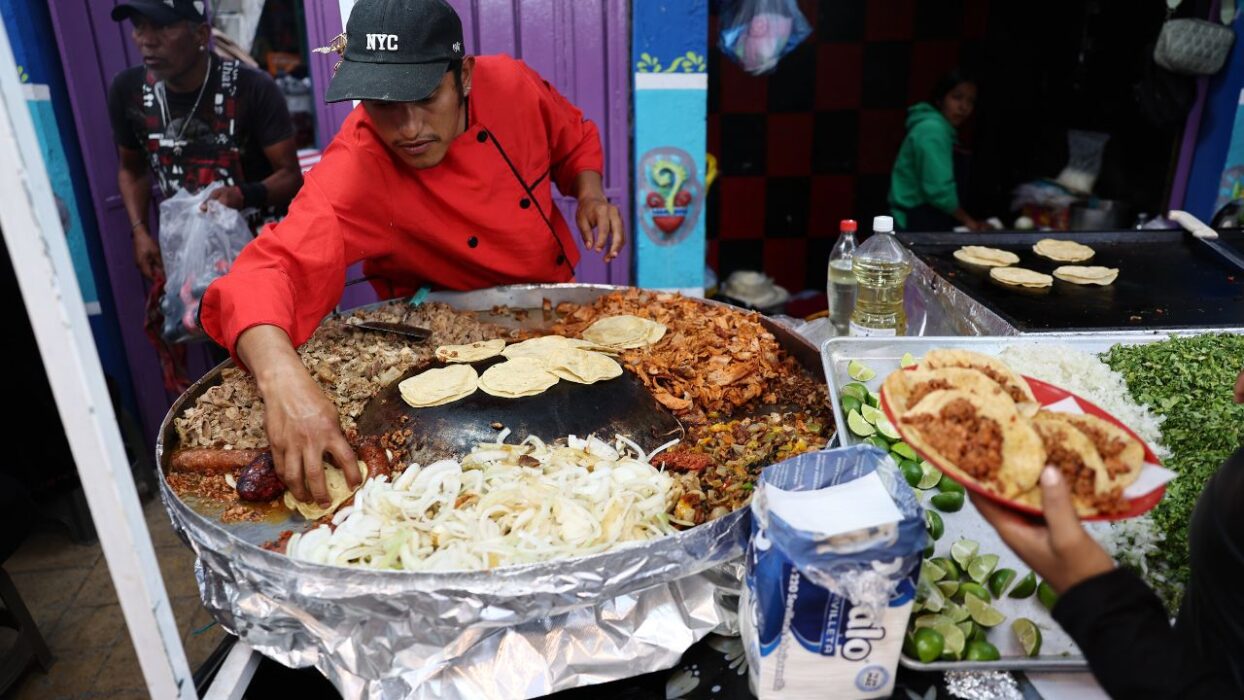
It’s no surprise that one of Latin America’s most iconic culinary traditions centers on street food, specifically street vendors. Personally, tacos from Tijuana (Baja California) are my favorite when I travel south. And really, who doesn’t crave some carne asada tacos with salsa verde?
But it’s not just about how tasty the food is. Beyond that, how have Latinos revolutionized street food sales?
A fascinating history
The earliest records of street food date back to ancient Greece, with fish stalls, through Pompeii, and to the Ottoman Empire in Turkey in 1590, where legislation regarding the informal economy was first enacted.
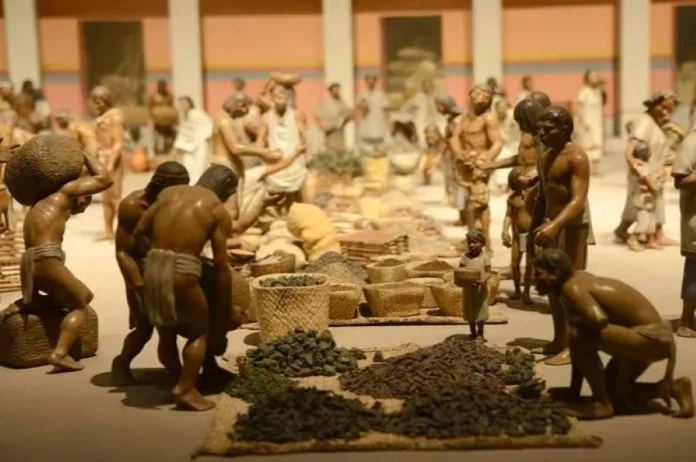
In Latin America, pre-Hispanic Mexico already had its street vendors, where the Aztecs sold prepared food on the street.
As food sociologist Liliana Martínez explains, in the great Tenochtitlan, at the street markets—called “tianguis” in Mexico—food was laid out on the ground on a mat.
“The markets were places for social gatherings,” Martínez explained in an interview.
This tradition spread rapidly across the continent.
Street vendors created a new business for themselves
One way street vendors have transformed the food industry is through an innovative small-business model. Instead of selling their products through a large corporation, owners work for their community.
It is such a massive industry that some reports suggest street food is part of a tradition that injects up to $127 billion into the economy.
Of course, this is the case for those who have the space and time to dedicate to it.
But perhaps one of the most fantastic things about street vendors is that their popularity comes from word of mouth and loyal customers. I remember that we knew who sold what in Tijuana, simply because they had been selling those products for generations.
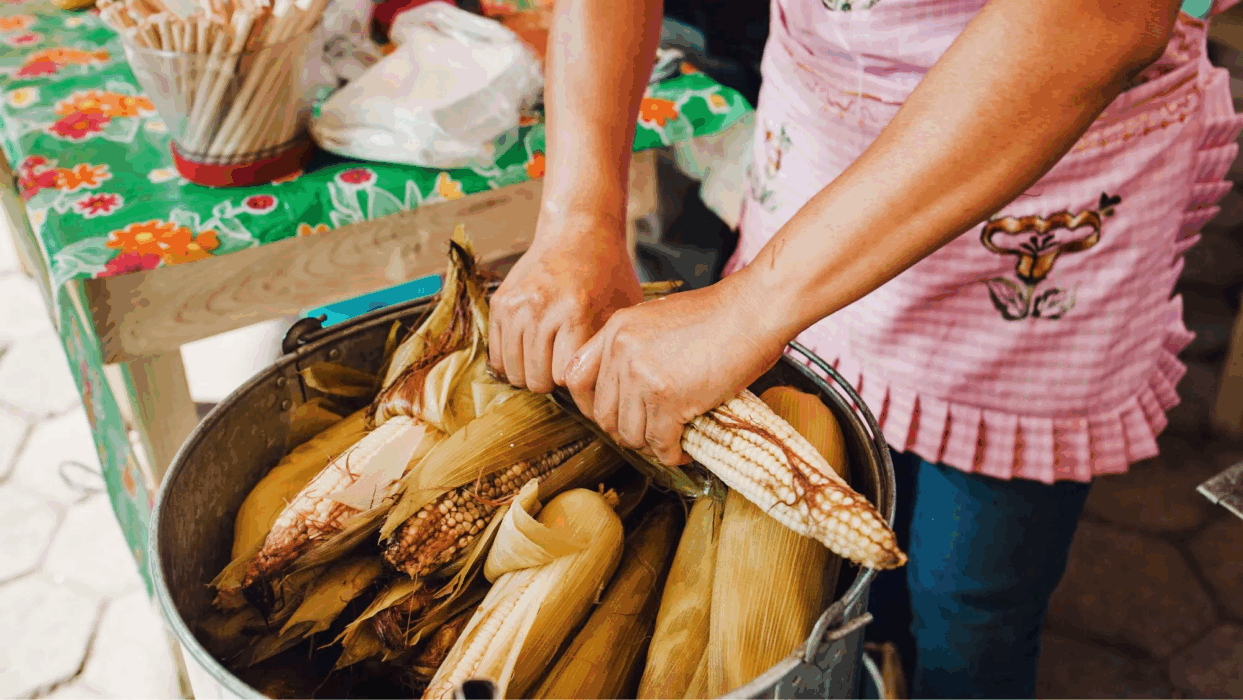
How do they continue to thrive?
We’re talking about an industry that adapts to its audience and is growing increasingly popular. For those who haven’t seen it yet, street food is increasingly appearing in mainstream media. In 2020, Netflix released a series called “Street Food: Latin America” that showcased foods from Argentina, Brazil, Mexico, and Peru, among other regions.
Similarly, street vendors are now also a voice on social media and have brought another facet of our identity to every corner of the world.
We hope to continue seeing our Latinx community thrive and remain their own bosses through street vending.
This article was originally published in Spanish in November, 2022.