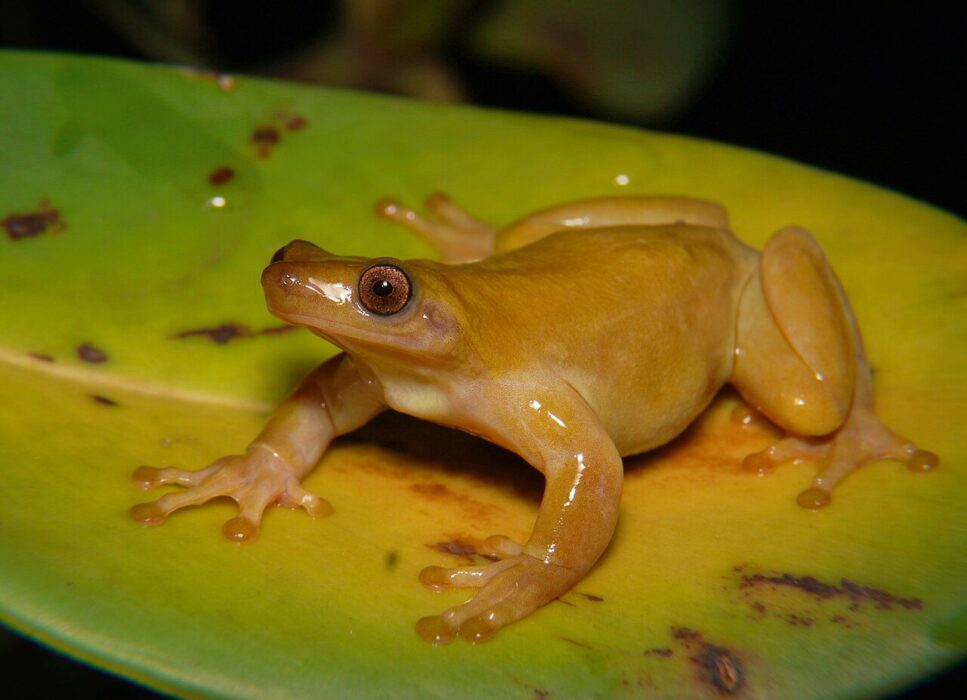
This Cute Brazilian Frog Might Be the World’s First Amphibian Pollinator
We all know the usual pollinating suspects like bees and butterflies. However, one adorable little Brazilian frog might be getting into the pollination game. The Izecksohn’s Brazilian tree frog was observed feeding on the milk tree flower, and the discovery is changing the conversation about the frog. Here’s what we know about the cute little frog that is changing science.
This Brazilian frog might be a pollinator
The Izecksohn’s Brazilian tree frog might be doing more than feeding on the milk tree flower. The frog might be inadvertently pollinating as it moves between flowers. According to scientists, the frog was observed feeding on the nectar from the milk tree flower. When it was in the milk tree flower, it collected pollen on its skin while feeding.
The discovery changes the way that scientists are thinking about amphibians. There are birds, insects, reptiles, and mammals that act as pollinators. The Brazilian tree frog is the first-known amphibian that is potentially acting as a pollinator.
“It’s maybe a game changer because now we have some visibility for these species,” Carlos Henrique de-Oliveira-Nogueira, a biologist at the Federal University of Mato Grosso do Sul in Brazil, told Scientific American. “This is a threatened species and maybe the only species [of amphibian] in the world that acts as a pollinator. So if we lose this species, we lose a unique ecological interaction between plants and amphibians.”
The special tree frog is doing more than just pollinating
According to scientists, the little frog is doing more than pollinating the milk tree flower. The Izecksohn’s Brazilian tree frog is a superstar when it comes to its environmental contributions. Along with the milk tree flower nectar, the frog eats an omnivorous diet, meaning that they eat fruits, insects, and other common prey.
The frog eats the fruit whole, including the seeds. As a result, the seeds pass through their digestive tract. The seeds in their feces help the forest regrow. The delicate ecosystem created by the plants and the frogs in their region is unique. The frog works within the ecosystem to help the plant life that it needs to survive continue to regrow. It is a self-sustainable pocket on the coastal plains outside of Rio de Janeiro.
The fragile ecosystem is at risk
The milk tree is listed as an endangered species, with the Izecksohn’s Brazilian tree frog close behind it. While the frog is not officially listed as endangered, it is listed as Near Threatened, which is the step before endangered.
Both of the species face a threat and uncertain future because of human activity. Land development is threatening the native home of the frog and milk tree. Sprawling cityscapes and suburban projects are threatening delicate ecosystems and species around the world. According to the International Union for Conservation of Nature (IUCN) Red List, there are more than 47,000 endangered species facing extinction. Forty-one percent of amphibians are facing extinction, according to the list.