Like Clockwork, the Latino Vote Is the Story Again. The Stakes Are Higher This Time
As is often the case in an election year, observers and politicians turn their attention to the Latino vote only when it suits them. This time, it’s happening eight months before the midterm elections, often considered an assessment of the current administration’s performance.
But this year, what hangs in the balance goes beyond control of Congress. Without exaggeration, it’s the fate of the country’s democracy.
That’s why outlets such as Politico have already published analyses of what the so-called “sleeping giant” could mean for November.
Latinos are once again the last resort for the major candidates
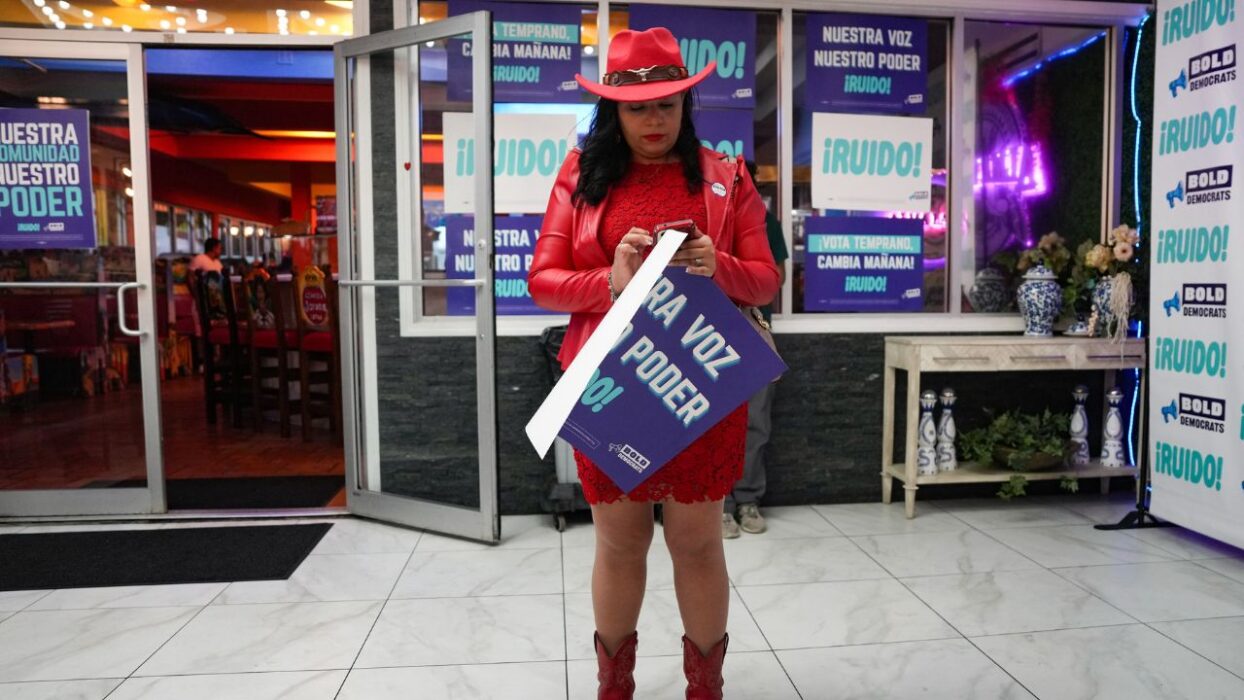
This week, Latinos again showed the country what happens when we turn out en masse. According to Politico, the Democratic Party was “stunned” to see thousands of Latino voters, many of whom had not participated in previous primary seasons, turn out en masse to vote for James Talarico in Texas. Politico framed that surge as part of a phenomenon that began last year in key elections in Latino-majority districts in Virginia and New Jersey.
Now, leading Democratic primary candidates from Colorado to Arizona and Nebraska are seeing record turnout among Latinos. Once again, they are confronting the power our community has when it organizes, especially in districts such as Colorado’s 8th and Arizona’s 6th.
At the very least, candidates have learned not to take the Latino vote for granted.
According to political strategist Chuck Rocha, who advised Talarico’s campaign, results like Talarico’s in Texas “tell you you should start talking to [Latino voters] sooner with a persuadable message.”
Now, the question is: What is that message?
Despite the results of the 2024 presidential election, when many believed the Latino vote had eclipsed that of the rest of the electorate, the reality looks more complicated. Latinos are distrustful, and we don’t hand our votes to just any candidate.
Candidates such as Denise Powell, who is running for Nebraska’s 2nd District, seem to understand that. “Especially when you have a contested primary in a year like this, every vote matters,” Powell told Politico. “And I know that’s something so cliché that we all say and whatever,” she said, but when it comes to Latinos, “We’re not taking anything for granted.”
Similarly, Manny Rutinel, who is running in Colorado’s 8th District, said, “This is Colorado’s most Latino district. It’s drawn for Latino representation,” he said. “And I think folks right now are feeling both scared on the one hand about what’s happening with ICE brutality in this district and beyond, and they’re also feeling energized to fight back.”
Is talking about immigration enough?
The simple answer is no. Latinos have spent years explaining that we are not a monolith, that our concerns are as diverse and complex as those of any other demographic, and that reducing us to immigration does the other side a favour.
In recent years, Republicans have made significant gains among Latinos not because of anti-immigrant rhetoric, or because Latinos hate our own community (that’s a phenomenon for another time), but because they talked about lowering the cost of living, creating more jobs, and “cleaning the swamp.” It’s true they haven’t delivered on any of those promises, but the messaging worked. Part of the reason is that Republicans went into rural areas, where needs and concerns look different.
Democrats seem to be catching up
In McAllen, Texas, Mayor Javier Villalobos acknowledged that the Latino community’s enthusiasm for Republicans “has waned,” with many saying they believe they made a mistake voting for Trump in 2024.
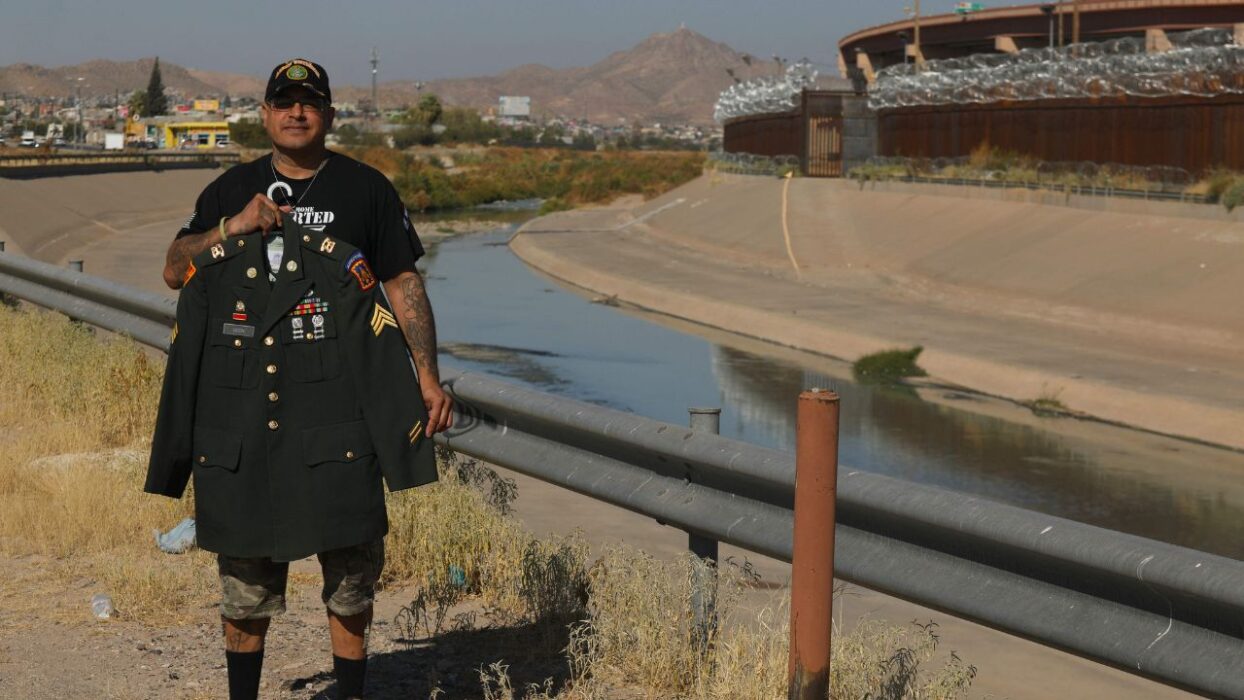
Even among Latinos who voted for Trump’s anti-immigration rhetoric, The Washington Post reported that some voters who initially supported him for “securing the border” now believe the crackdown “has gone too far.” The article notes the crackdown has affected undocumented immigrants who have lived in the U.S. for years, including children, and mentions backlash to federal deployments in Democratic-led cities after the killing of two U.S. citizens in Minneapolis.
According to The Washington Post, of the 21 Texas counties that are at least 75% Latino, 20 cast more votes in the Democratic Senate primary than in the Republican Senate primary. And in several Latino-majority House districts Trump won comfortably in 2024, the Post reports Democrats still posted higher primary turnout. In the redrawn 34th District, where Trump won by 10 points, about 56,000 votes were cast in the Democratic House primary, compared with about 34,000 votes in the Republican House primary.
The key risk
What everyone seems to agree on is that Latino voters today are misaligned and detached from both parties. That means we can change our minds at any time, even as Republicans appear to have overplayed their hand.
So the real question is whether Democrats can court this complex electorate for good, or whether they will keep gambling with democracy itself.