Op-Ed: Bad Bunny Made Puerto Rico the Center of the World, and the World Showed Up
Bad Bunny is the most-streamed artist on the planet, a Grammy winner, actor, businessman, and a global phenomenon who’s turned his identity into his superpower. But beyond the stats and headlines, what makes his rise so remarkable is how deeply rooted it remains in where he’s from.
Just like him, I was born and raised in Puerto Rico, and like so many, I see pieces of myself in him. He’s captured what it means to be Puerto Rican: the joy, the struggle, the constant push to be seen. When he sings about San Juan traffic jams or heartbreak over boquetes (potholes), it’s more than clever wordplay; it’s life on the island. He’s turned the Puerto Rican experience universal.
Bad Bunny didn’t break through because he followed a formula. He broke through because he ignored it. Because he trusted that being real was enough.
And that’s where the lesson begins.
Working in marketing and communications, I’ve seen too many brands chase algorithms, obsess over metrics, and twist themselves to fit trends. The lesson from Bad Bunny is that virality is built on authenticity. When you build something real, the world will come to you.
Un Verano Sin Ti (2022) was a cultural event. Every beach, car speaker, and corner store — not just in Puerto Rico, but in the Bronx, Miami, and L.A. — had it on repeat. The album became a time capsule of an endless summer, full of joy, heartbreak, and pride. A love letter to the island that raised him.
It also put his marketing brilliance on full display. Months before the album dropped, Puerto Ricans scrolling through Clasificados Online, our local version of Craigslist, noticed something strange: someone was selling a white Bugatti Chiron for $3.5 million. The seller? Benito Martínez Ocasio (Bad Bunny’s real name). The listing looked completely real, right down to the “solo llamadas” (only calls) warning. But when you called the number, you heard a snippet of a new song and got a text revealing the album’s name.
It was a marketing stunt, sure. But tactically, it was a wink to the island, using a platform every Puerto Rican knows.
It didn’t take a multimillion-dollar campaign to go global, just a clever idea rooted in local culture that made fans feel like they were part of something special. That’s Benito’s genius: he finds the extraordinary in the everyday.
Debí Tirar Más Fotos (2025) was dropped in the same Bad Bunny fashion with curiosity, mischief, and cultural pride. Working with Spotify and Google Maps, his team hid the track titles across 15 iconic Puerto Rican landmarks — from the beaches of Cabo Rojo to the streets of Old San Juan — inviting fans to explore the island virtually to uncover each one. He even took over Noticentro al Amanecer, the morning news show so many Puerto Ricans grew up watching before school, playing guest anchor and turning everyday island life into part of his global spectacle.
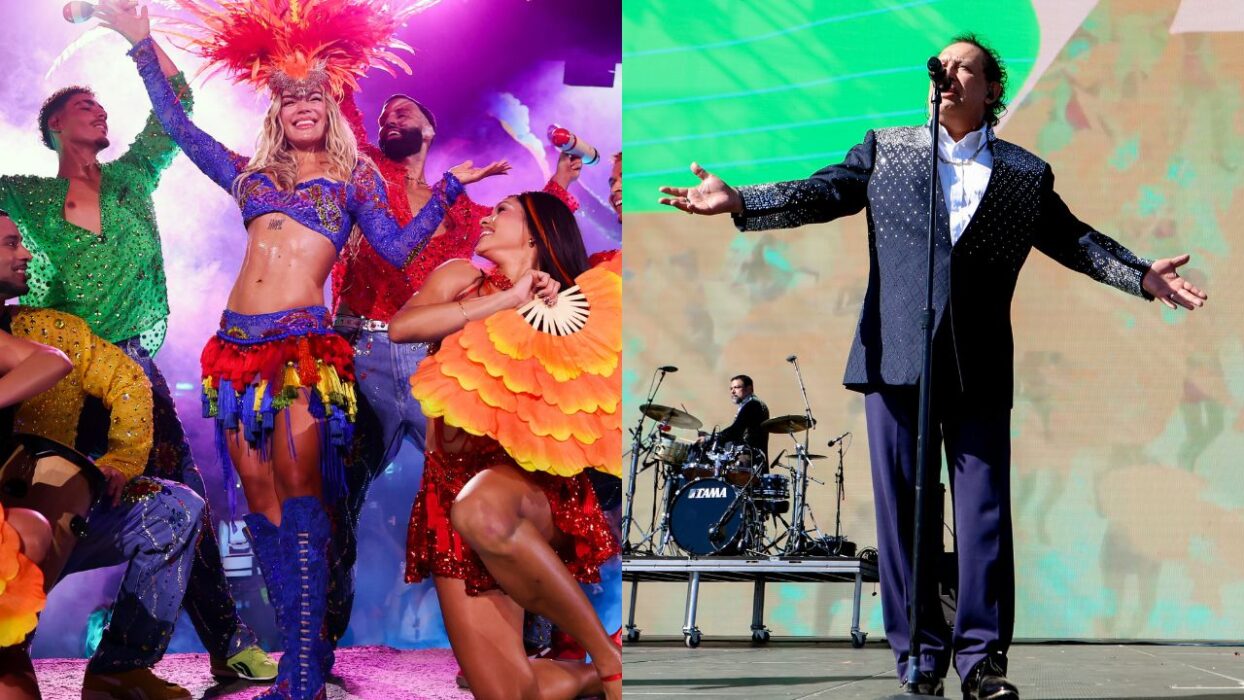
After the album dropped, he brought the world to Puerto Rico. His 30-show residency at San Juan’s El Choli, titled No Me Quiero Ir de Aquí (“I Don’t Want to Leave Here”), was more than a concert series; it was a homecoming. The title hit especially hard for those of us in the diaspora — the diasporicans who left the island chasing opportunity, not because we wanted to go, but because we had to. By grounding everything so unapologetically in Puerto Rican pride, he didn’t narrow his audience. He expanded it. He laid the groundwork for a global fan base to grow curious, then invited them in. The residency wasn’t just for Puerto Ricans. It was his way of saying to the world: “If you want to understand this music, this feeling, this place, come see it for yourself and join the celebration.”
The stage itself told that story.
There were two of them: one inspired by nature — complete with hills, pastures, chickens, and a Flamboyán tree, the iconic red-blossomed symbol of Puerto Rico — and another called La Casita, a recreation of the small houses you see across the island, the ones your abuelos and abuelas lived in, where people spent endless parties de marquesina and family gatherings.
It was a concert, but also a living love letter to the island—a night where global spectacle met local soul. By being so intentionally specific, Bad Bunny made a universal audience feel included rather than excluded. You didn’t need to be Puerto Rican to feel it, but you did leave wanting to understand more. That’s the power of authenticity: when something is deeply rooted in place, it invites the rest of the world to lean in, not tune out.
Across the island, the residency became an economic and cultural boom. It spurred a surge in Puerto Rico’s economy during what is usually a slow season for tourism. Moody’s Analytics estimated the direct economic impact at $250 million, with total spending topping $400 million. A reminder that culture isn’t just soft power; it’s real power. Local rum brand Don Q launched a limited-edition rum bottle inspired by the shows; fast-food chains rolled out menu items based on traditional Puerto Rican dishes; and local fashion labels saw such a surge in demand that they could barely keep up. The world wasn’t just looking at Puerto Rico; it was coming to it.
And just when it seemed the run was over, Bad Bunny had one more surprise.
He announced a 31st and final show. A live global broadcast on Amazon Music that drew more than 13 million viewers and broke platform records. San Juan was the center of the world’s attention. The concert took place on the anniversary of Hurricane María, a day that still carries deep pain and resilience for Puerto Ricans, turning the moment into both a celebration and a reflection. The livestream also marked the start of a broader partnership with Amazon to invest in Puerto Rico through education and local business initiatives.
Only Bad Bunny could make the world dance, cry, and celebrate Puerto Rico all in the same breath. It’s the kind of marketing success brands dream of, but it didn’t come from data dashboards or influencer briefings. It came from instinct, storytelling, and a deep understanding of identity.
And now, just months later, the world is talking about Bad Bunny again. This time, because he’s headlining the Super Bowl Halftime Show.
There has been a small amount of backlash. But it isn’t outrage marketing bait.
This is a smart business move by the NFL. They dominate the U.S. market. That’s why they’ve spent years expanding to other markets like the U.K., Mexico, and Brazil. What better way to go global than with the world’s most-streamed artist? Bad Bunny isn’t just a musician; he’s a bridge between worlds and a genuinely moving performer. The NFL sees that. Savvy brands do too.
People can complain that he’s “too political” or “too woke,” but as Molly Jong-Fast recently said in the New York Times, woke is good for business. Brands that embrace authenticity and values-based storytelling don’t lose audiences; they earn them. Consumers reward honesty, connection, and courage. Bad Bunny understands that intuitively, just as we’ve seen at Precision when we helped the Harris campaign launch the first-ever WhatsApp program for a U.S. presidential race targeting Latino voters. Messages were sent in Spanish, stickers were created that people could save and use in everyday conversations, and content incorporated touches like Bible verses, familiar pixelated art styles, and other culturally resonant details–meeting audiences where they are, in ways that feel authentic and meaningful.
He’s not just marketing music. He’s building worlds. Each release invites fans to experience Puerto Rico as Puerto Ricans do. They get to experience his world, his culture, Puerto Rico. Our culture is lived, not performed, and this authenticity makes him magnetic. His advocacy for the island, his refusal to dilute his accent, his commitment to showing Puerto Rico as it is — beautiful, complicated, alive — resonates universally.
As Sam Marciano noted in PRWeek, there’s nothing performative about his representation as a Latino artist; it’s simply who he is. When the NFL tapped him for the halftime show, one Republican strategist told The Hill that there’s “no downside” – because authenticity sells.
Meanwhile, most brands are still chasing trends, tweaking content, and running after every algorithm change. Bad Bunny doesn’t.
He does what he wants (Yo Hago Lo Que Me Da La Gana “I Do Whatever I Want” (2020)). It works because when you’re unapologetically yourself, it resonates. It cuts through the noise.
The lesson for brands is simple: stop overthinking. Be real. Define authentic values and speak with conviction. The audience will notice, and the impact will follow.
Bad Bunny isn’t just selling music. He’s selling a feeling. The same one I get when I hear the coquíes at night or when someone from the island makes it big and never forgets where they came from. He’s living our dream: sharing everything we love about Puerto Rico with the world–a dream that feels universally human.
And that’s the real marketing lesson: the best campaigns start with emotion.
Born and raised in Puerto Rico, Daniel Hernández Marrero is a digital strategist and cultural communications expert currently based in Washington, D.C. He is a Vice President at Precision Strategies, where he founded and leads the firm’s Spanish Language and Hispanic Cultures specialty.