That Critics Choice Awards Red Carpet Moment With the Portuguese Film? Yeah, People Clocked It
When the news cycle turns into a firehose, we all start triaging. We pick the headline that feels biggest, scariest, most urgent. And while our eyes stay glued to foreign crises, something quieter keeps moving inside the U.S. culture machine: who gets treated as central, who gets treated as disposable, and who gets edited out of their own moment.
That is why the strange little rupture at the 2026 Critics Choice Awards landed the way it did. It looked like an awards show scheduling. It sounded like industry logistics. But what many viewers saw was “unbelievably disrespectful” in real time.
The moment that made people sit up straight
E! presented the award for Best Foreign Language Film on the red carpet before the ceremony, then did it in a way that felt less like “awards season” and more like ambush television.
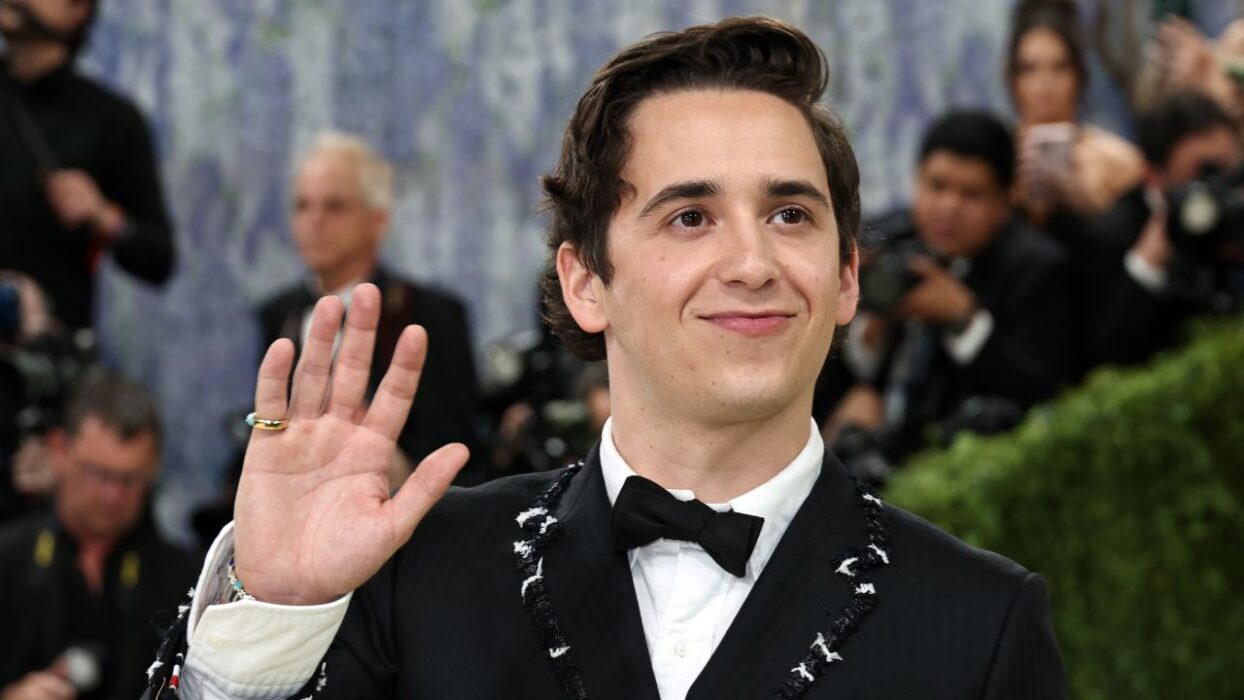
The winner was The Secret Agent, described as “a Latin American film primarily in Portuguese.” Director Kleber Mendonça Filho was abruptly presented with the award midway through an interview, and the segment ended quickly.
Then came the backlash. Viewers immediately commented on the moment and on how the category was treated like something you could squeeze between fashion shots and an ad break.
Critics Choice Awards: When “Best” gets handled like filler
Awards shows cut for time. That part is normal. BuzzFeed even notes that it’s customary for some awards to be presented before the show begins, so the live broadcast does not run long.
But this category carries a specific kind of cultural weight. According to BuzzFeed, the Best Foreign Language Film lineup had “tough competition,” with nominees listed as It Was Just an Accident, Left-Handed Girl, No Other Choice, The Secret Agent, Sirat, and Belén.
So when E! drops that win into a red carpet interview, the complaint is not only about etiquette. It is about placement and what the production chose to treat as “real show” versus “content” to clear before the main event.
The backlash was not subtle
Online reactions spread because the awkwardness looked universal. The presentation was chaotic, and people on X called it “insulting.” Similarly, on TikTok, people quickly noted how Mendonça Filho didn’t even have the chance to process what was happening or give thanks.
This is where the story stops being about one uncomfortable clip and starts becoming about an ecosystem. Because you cannot separate the moment from the machinery that staged it.
The Critics Choice Association sets the stage, but E! runs the show
The Critics Choice Association, according to its own “About” page, describes itself as “the largest critics organization in North America” and says it includes critics and journalists across broadcast, radio, and online platforms.
The same page says the group formed through the merger of the Broadcast Film Critics Association and the Broadcast Television Journalists Association.
But the choice of red carpet presentation sits with the broadcaster and the broadcast format. E! was the setting where this went down, since the moment occurred during their own red carpet interview segment.
So, if you are asking yourself “why?” you have to follow the channel’s incentives for treating the award like a hallway handoff.
E! did not invent spectacle, but it professionalized it
E! built its identity on turning access into a product. The network’s own long history, widely documented across media business reporting, tracks a steady evolution from entertainment news and event coverage into a brand engineered around celebrity culture.
And in the mid-2020s, that brand sits inside a bigger corporate reshuffle. Comcast announced a spin-off of NBCUniversal cable networks into a new company called Versant, a move covered by major outlets including Reuters and AP.
Now, history has proven that corporate transitions tend to sharpen priorities. When networks fight for relevance, they chase what keeps viewers from changing the channel. On red carpets, that usually means stars, heat-check questions, viral awkwardness, and quick cuts that feed the loop.
In that environment, an award becomes content. And that content becomes disposable.
Larry Namer and the global infrastructure of entertainment
Larry Namer’s career offers a clean line from American celebrity media to global storytelling infrastructure. He and Alan Mruvka sketched the plan for Movietime in the mid 1980s, the network that later became E! Entertainment Television. They eventually sold their stake in the company, after which his work shifted from building a U.S. cable brand to exporting U.S. entertainment abroad.
While remaining on E! ‘s board, Namer started Comspan Communications in Russia. This company promoted and produced several hundred rock concerts and brought the American soap opera Santa Barbara to Russia. Comspan became some sort of a bridge between Hollywood and the post-Soviet media landscape, built through Western programming, live events, and pop culture distribution. Later, he co-founded Metan Global Entertainment Group in 2009 to create and distribute Western-style content for Chinese-speaking audiences worldwide.
This is how “entertainment” operates as infrastructure. It trains audiences, standardises taste, and moves cultural power across borders through format and distribution.
Namer’s current chapter lands squarely in that world: in 2025, he was appointed chairman of the World Film Institute, succeeding founder Dr. Olympia Gellini. In other words, the arc runs from building E! to selling it to building international content pipelines to chairing an institution positioned around visual storytelling education itself.
Film propaganda is not a metaphor. It is a known playbook
In a column published by Whiteboard Journal, writer Marvel Maximus argues that cinema can function as an unusually powerful delivery system for propaganda because it immerses audiences and overwhelms the senses.
The same piece invokes Battleship Potemkin as a foundational example of state-commissioned film propaganda. It points to how authoritarian regimes have used cinema and mass media to control narrative, whether through direct messaging or subtler myth-making.
Maximus also brings in Neil Postman’s Amusing Ourselves to Death and the idea that each new dominant medium reshapes how people process truth.
If you accept that frame, the question becomes uncomfortable fast. When entertainment platforms decide whose stories get oxygen and whose stories are treated as disposable content, they are not simply reflecting taste. They are training attention. They are shaping what the public learns to value.
Reagan’s shadow, Trump’s alignment, and the screen as a political arena
Inside the U.S., the Reagan era remains a useful case study of how culture and politics feed off each other.
Scholars have examined “Reaganism” as more than policy, treating it as a cultural project that shaped television and mass entertainment and normalized specific values through repetition and tone.
Separate research on media representation has also tracked how “strategic whiteness” and white savior framing can preserve the superiority of whiteness even in stories that claim to address racism.
Alan I. Abramowitz’s argument in The Great Alignment works perfectly here as an account of polarization driven by the alignment of party identities with social divisions, with race playing a central role in that transformation.
Put those pieces together, and the Critics Choice moment stops looking random. Because the screen does not simply entertain. It signals status and belonging. It teaches audiences, quietly, who deserves reverence.
The question we should not dodge
BuzzFeed also reported that the Best Foreign Language Film handoff was not the only red carpet award moment. It noted that other winners missed the televised celebration as well, including Ryan Coogler, whose Best Original Screenplay win for Sinners was not televised.
So the story is not “one award got rushed.” The story is a pattern of editorial choice inside a format that already shapes cultural power: what gets framed as worthy of the room, the lights, the applause, the time.
Is this part of a broader strategy to delete people of color from the screens and from the way we celebrate wins and achievements, even when the work breaks through anyway?