Chile’s New President Signals Growing Support Of Far-Right Ideology
Chile elected José Antonio Kast to be the next president. The far-right victory seems to be revealing a larger alignment in the Americas that is friendly to the Trump administration. His victory comes with some concern due to his familial connection to the Nazi Party. A hardliner on immigration, Chilean President-elect Kast is raising eyebrows as an admirer of Augusto Pinochet, the brutal Chilean dictator.
President-elect José Antonio Kast is raising eyebrows
Voters in Chile delivered President-elect José Antonio Kast a decisive victory in the country’s current presidential election. He won with 58.16 percent of the vote to leftist candidate Jeannette Jara’s 41.84 percent.
“Here, no individual won, no party won – Chile won, and hope won,” President-elect Kast told supporters after the election. “The hope of living without fear. That fear that torments families.”
He campaigned aggressively on cracking down on undocumented immigrants. According to President-elect Kast’s campaign, migrants are the reason for the increasing insecurity that is threatening Chilean families. He has given some 330,000 undocumented immigrants, many of them from Venezuela, to go back to their home countries. If they do, he claims that they will have a chance to come back.
“When we tell an irregular migrant that they are breaking the law and must leave our country if they ever want the chance to return, we mean it,” President-elect Kast added. “We must show great firmness against crime, organised crime, impunity and disorder.”
He is the son of a Nazi Party member
Like many Nazis, President-elect Kast’s father, Michael Kast, joined the Nazi Party when he turned 18 in September 1942. Following the loss of Nazi Germany at the end of World War II (WWII), Michael fled to Chile with false identification. He got to Chile using what are called ratlines. Ratlines were pathways to South America for many fascists and Nazis from Europe who wanted to flee.
It is estimated that 9,000 people used the ratlines to leave Europe after the end of WWII in 1945. Five thousand made their way to Argentina, 1,500 to 2,000 settled in Brazil, and 500 to 1,000 made their way to Chile. The ratlines provided fascists an escape from Europe to avoid persecution after the fall of Nazi Germany.
“This backs up Boric’s framing of the race as a dichotomy between fascism and democracy,” Jennifer Pribble, a Chile expert at the University of Richmond, told The Guardian. “To the extent Kast seems to be hiding some element of his family’s history, it plays into that narrative.”
President-elect Kast’s familial connection to the Nazi party was discovered during the campaign. He has tried to explain it away by saying the signing up was compulsory at that time in history. However, as many WWII historians will tell you, party affiliation was voluntary and Kast’s father chose to be part of the Nazi Party.
He embraces Pinochet’s brutal legacy
Colombian President Gustavo Petro spoke out against President-elect Kast’s election. For the Colombian president, the election results show a growing threat to democracy growing across South America.
“Fascism advances, I will never shake hands with a Nazi or a Nazi’s son, nor will I; they are death in human form,” Colombian President Petro wrote on X (formerly Twitter). “It’s sad that Pinochet had to impose himself by force, but sadder now is that the people choose their Pinochet: elected or not, they are sons of Hitler and Hitler kills the people. It is the devil against life and every Latin American knows how to resist.”
President-elect Kast is more than an admirer of former Chilean dictator Pinochet. His family worked with the dictator as his regime murdered and disappeared dissidents in Chile. The president-elect’s brother, Miguel, who died in 1983, worked in the Pinochet regime. He served the Chilean government as Head Minister of the National Office of Planification and later the Minister of Labor.
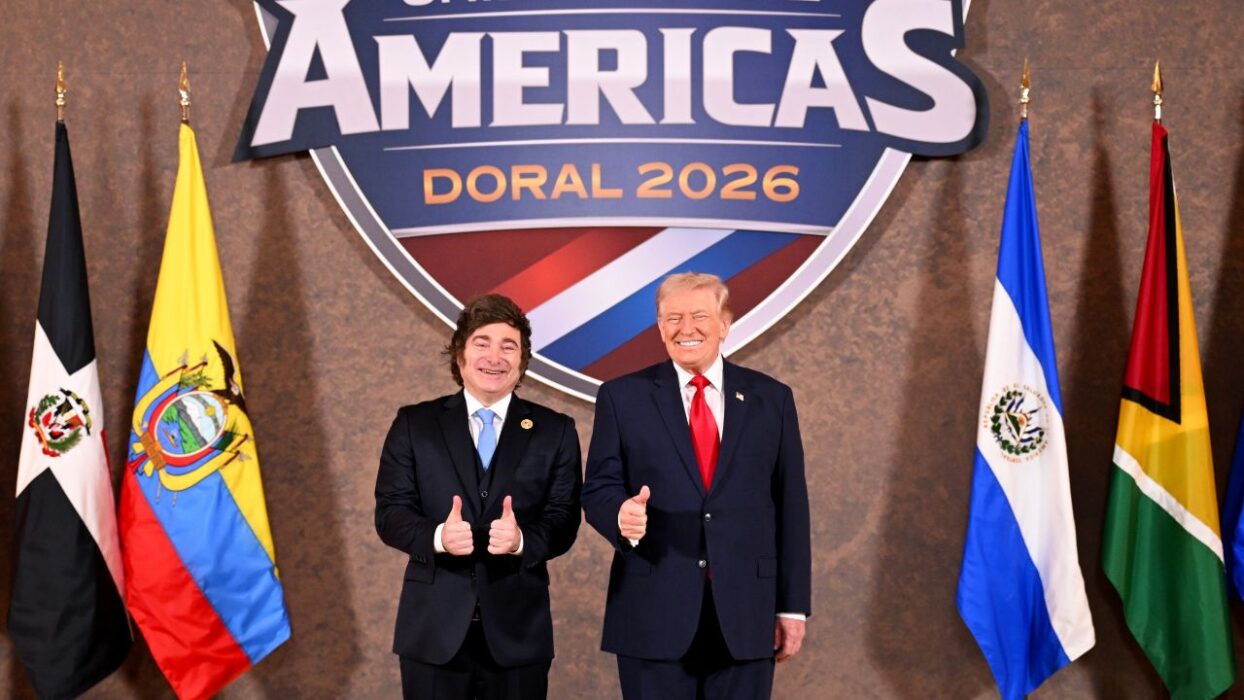
Chile is the latest South American country to vote for a far-right politician. Earlier this year, Argentinian voters elected a far-right government in midterm elections. The election was much appreciated by President Donald Trump. The US president threatened to withhold $40 billion in bailout funding if the election didn’t go far-right.