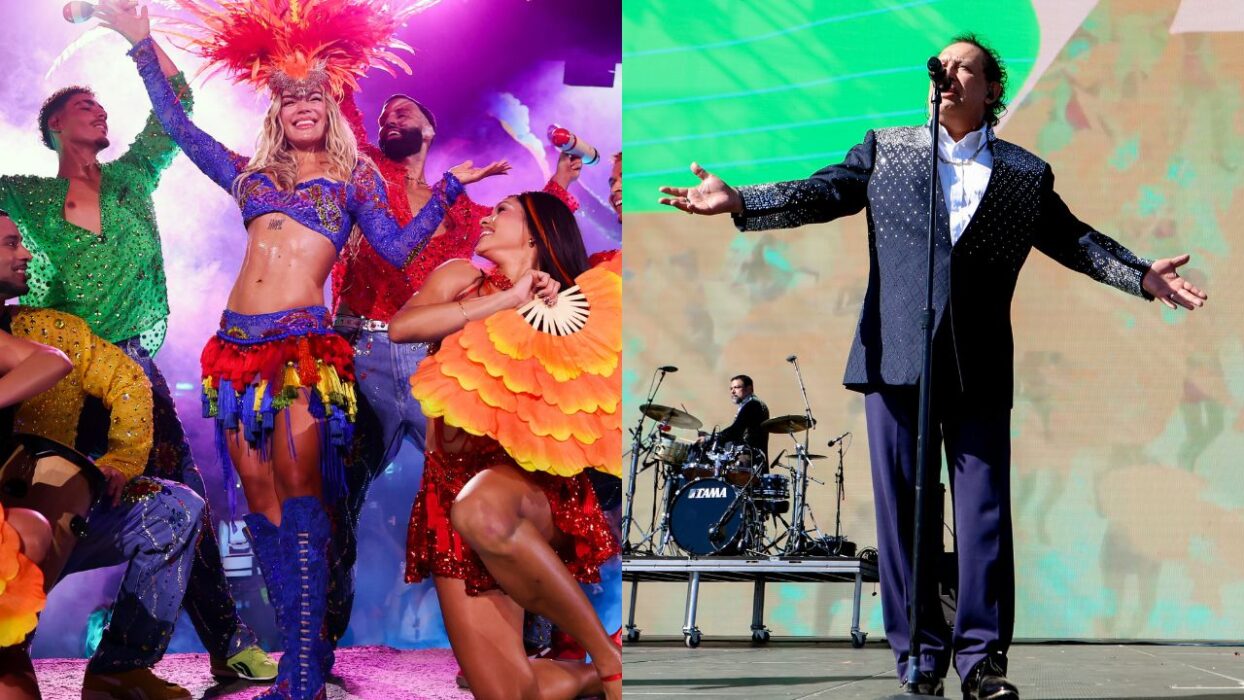
Los Hermanos Flores, Morat, Gigi Pérez, Karol G: Latinos Owned Coachella 2026 Weekend 1
Weekend 1 made one thing very hard to deny: Coachella 2026 was not “letting Latinos in.” Latinos were already there, doing what we always do when the door cracks open.
Building on that presence, we brought cumbia from El Salvador to an Outdoor Theatre crowd, turned Spanish pop into a desert singalong, and showed up in the Sahara Tent with boiler-room energy. We did it all across genres, countries, generations, and accents.
Legendary Salvadoran band Los Hermanos Flores brought Salvadoran cumbia to the Coachella stage in 2026.
Los Hermanos Flores made their Coachella debut on Saturday at the Outdoor Theatre. Their performance was steeped in Salvadoran identity and energy. They connected deeply with the Latino audience.
They opened with a popurrí that included “Yo viviré,” “Linda Muchachita,” and “Estás bien buena,” highlighting “La cumbia es una hembra” as an early singalong moment.
Morat at Coachella 2026 turned the desert into a Spanish pop singalong
Morat’s debut brought back the power of Latin pop. The performance featured live instrumentation, a crowd singing along, and a surprise appearance by Paulina Rubio for “Mi Nuevo Vicio.”
Coachella 2026 still makes space for the DJ set that rewires a tent
If you want evidence that Latino talent at Coachella cannot be reduced to one genre, look at the Sahara Tent.
ZULAN, an Argentinian American DJ and producer, turned the Sahara Tent into a massive boiler room. Even the Guardian’s Weekend 1 photo coverage included a shot captioned, “Fans go wild for Zulan in the Sahara Tent.”
The quieter side of Coachella 2026 still belonged to Latinas
A weekend like this also needs artists who do not perform loudly, but still command the room.
Cuban American Gigi Perez’s Coachella put the softness of songwriting front and center. Luísa Sonza’s Gobi Stage performance brought her new album Brutal Paraiso into an intimate, high-energy setting, alongside a guest appearance from Argentine artist Emilia.
And Karol G wrapped up the weekend on a high note
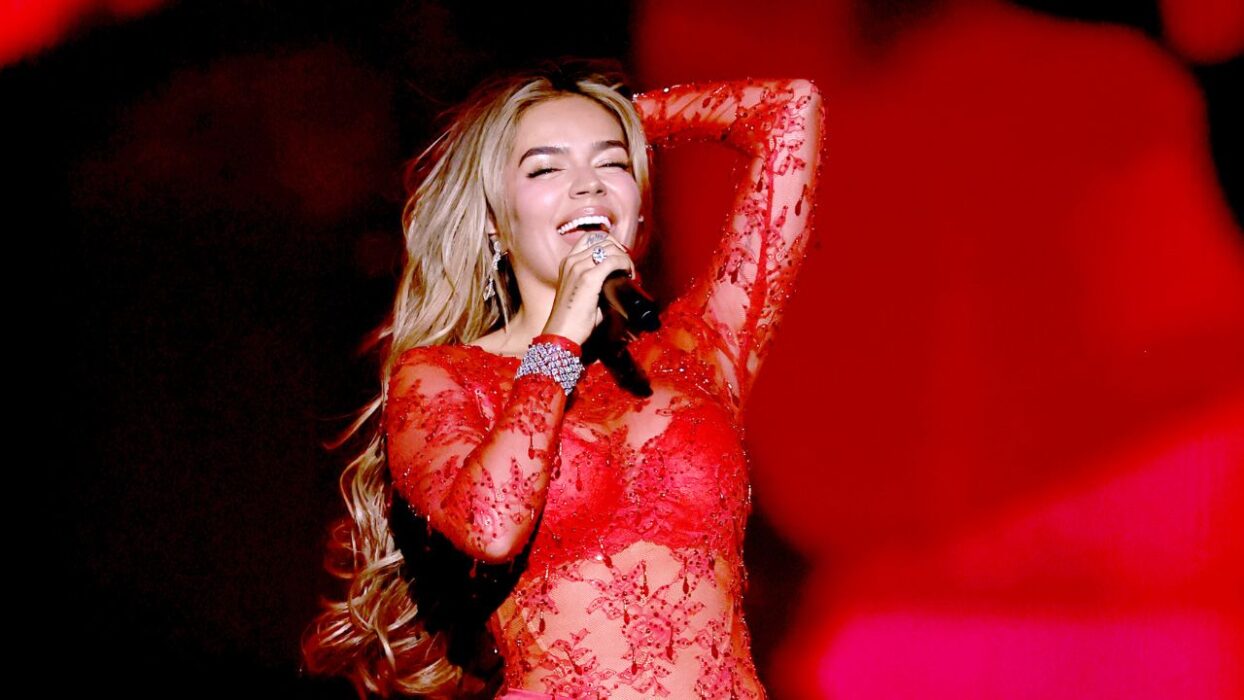
By Sunday night, Karol G no longer seemed like just another headliner. She was the axis the weekend spun around. Onstage, she spoke plainly about what the moment meant. Her show treated Latin culture as the foundation, not an accent—reflected in the flags, language, guests, and the narrative she built in real time.
And when she closed with “Provenza,” recalling her 2022 Coachella debut before Tiësto’s remix and a shower of confetti, the ending landed as a promise rather than a finale. Karol did not perform to earn legitimacy; she performed to demonstrate what happens when Latinas control the story, the stage, and the terms of celebration.
If Weekend 1 proved anything, it is that Latino presence at Coachella does not follow one script.