Some artists make good records, artists who define an era, and then there is Jorge Drexler, who somehow manages to do both while still in the quest for self-discovery. That may be part of what has made him endure with such unusual grace.
Fifteen albums in, with 17 Latin Grammys, an Oscar, and a Goya to his name, Drexler remains one of the most important singer-songwriters in Latin American music because he has never confused prestige with stillness. He moves, experiments, and even risks embarrassment. Yet his northern star has remained fixed for decades: Uruguay.
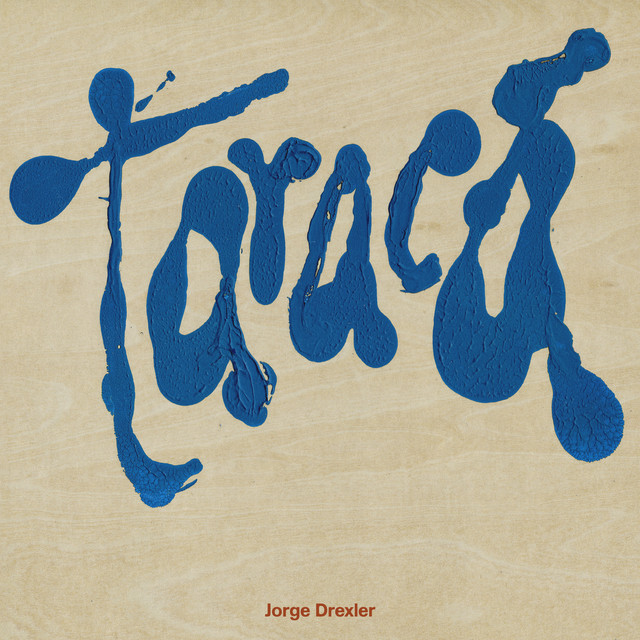
That pull runs through Taracá, his latest album, a record born from mourning, migration, rhythm, and return. The title itself comes loaded with meaning. Taracá is the onomatopoeia for the sound of the small drum. The other possible translation is more symbolic and means “to be here,” or, in Rio de la Plata terms, “tar’ acá.” In Drexler’s hands, that double meaning becomes the album’s thesis. The drum is sound, yes, but it is also a matter of location, of planting the body back into history.
When CREMA spoke with Drexler, that idea surfaced almost immediately. Even before the conversation turned to candombe, producers, or Puerto Rico, grief was already in the room. He spoke openly about the death of his father, and about the contradiction at the heart of this album. “It’s an album of mourning, but it’s also a celebratory album, which is a contradiction that I still can’t explain,” he said.
Then he explained it anyway, with the clarity of someone who has spent a lifetime turning feeling into the most beautiful structures: “My father had a wonderful life, even though it started very badly. He took full advantage of his life.”
That story begins long before Taracá. Drexler recalled that his father “was born in Germany in 1935. He was a child of war. He escaped from the Nazis at the age of four with his family. Only Bolivia took them in at that time, as it was the only country that accepted refugees.” Eventually, the family made its way to Uruguay, where Drexler’s father met his mother and built what he described as “a multicultural, multi-religious family.”
That inheritance shaped his life and his music, and it’s the thread that weaves his new album, but so did Drexler’s own experience of migration. “Emigration is never an easy process,” he said. Even in his own case, which he calls “the most privileged of immigrants you can find,” departure still altered him. He did not leave Uruguay under the pressures that forced others out. “I simply left to pursue a vocation in Spain,” he said. Yet he understands exile as something that settles deep in the body.
So when the ground shifted again after his father’s death, Drexler went back to the place that had always steadied him. He described two pivotal moments when he felt the need to reconnect with Uruguay. The first came in 1997, when his eldest son was born, and he moved from being only a son to being “a son and a father at the same time.” The second came after losing both parents. “Two years ago, I stopped being a son,” he said. “So, in those moments of change… I returned to Uruguay.”
He framed that return in tactile terms. “I think there is an attempt to, well, to touch the ground, to touch wood, as if to touch something organic.” That instinct sits at the center of Taracá. The album emerges from the mourning of his father’s death, the need to have his own house in La Paloma, the anniversary of his thirty years as a resident of Madrid, and his entry into his sixties. In other words, this is a record made by a man taking stock of what remains when time strips life down to essentials.
For years, percussion has pulsed through Drexler’s music. “It’s not really new for me to work with percussion. It has always been there,” he said. Still, Taracá takes a different route. This time, rhythm does not sit still in a guitar but becomes a collective experience.
That shift happened in Montevideo, inside the candombe circle that now animates Monday nights in the city. Drexler described it beautifully: the musicians do not face outward, as performers on a stage do. They sit around a table, looking at each other, while the audience forms a circle around them. What emerges is a recognition of sorts. “A candombe circle is a community mirror,” he said. “It’s a place where society goes to see itself.”
That idea became foundational for the album. Drexler realized that what moved him was not only the beat itself, but the way repertoire could bind people across generations. He compared it to France, where songs from the 1960s still circulate in public memory, and to Brazil, where samba remains a living intergenerational language. In Uruguay, he saw something similar taking shape around candombe. “I just saw it happen in Uruguay two years ago, and I knew it was going to be a revolution,” he said. “And I said, I want to be part of that.”
That desire led him to young collaborators and improbable combinations. He worked with Uruguayan producers Tadu and Facu Balta, engineer Lucas Piedra Cueva, and Puerto Rican producers Mauro and Gabo, linked to Young Miko’s orbit. He chose them precisely because they were not mainstream. “I could have worked with whoever I wanted on this album,” he said. “But I chose to work with people who are between 21 and 22 years old.”
By the end of our conversation, the real revelation of Taracá became clear: this is the most communal record Drexler has ever made. When asked whether it would be fair to call it “an ode to the communal nature of Latin American culture and music,” he did not hesitate. “No, no, it wouldn’t. It’s by far the most communal of the albums I’ve made.”
You can hear that in the number of voices on the record, in the choral arrangements, in the role of murga, and in the way Drexler keeps stepping away from the singular. He even connected murga directly to Greek tragedy. “I want it to fulfill the role that the chorus fulfills in Greek tragedy,” he said.
Then, almost as if he were discovering the album’s deepest impulse in real time, he vocalized his realization: “This album is… a request for permission from the Uruguayan community to reintegrate myself.”
That is what makes Taracá the crowning jewel of his career. It is a homecoming album for people who cannot always go home. It is a record about asking to reenter the circle. And in that sense, Drexler may have done what the best artists do when they have lived long enough to understand the difference between acclaim and belonging: he made a record that sounds like one man speaking, then opened it wide enough for a whole community to answer back.