Tom Steyer Allegedly Paid Texas Influencer Carlos Eduardo Espina 100k to Influence California Latino Voters. Here’s What We Know
In early April 2026, Carlos Eduardo Espina, a progressive influencer with 14.5 million followers on TikTok, received a call from Tom Steyer’s gubernatorial campaign. According to The New York Times, the campaign offered Espina an opportunity to work as a consultant and “a bridge between our community and the candidate.” Within days, Espina began posting about Steyer across his social media platforms.
What Espina did not disclose in any of those posts was the alleged price tag for the consultancy.
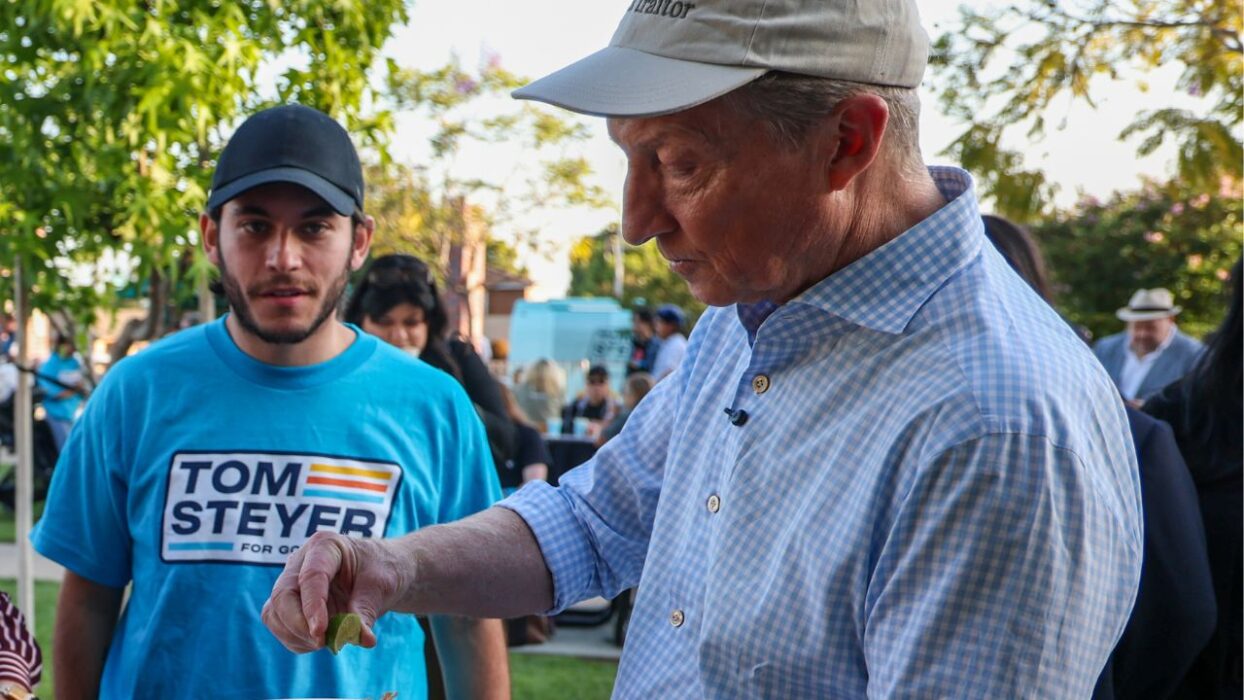
The alleged arrangement, buried in campaign finance records and described as payment for “strategic advice and campaign surrogacy,” has sparked backlash from voters, rival campaigns, and Espina’s own followers. According to the public sentiment, Espina made dozens of posts and reels promoting Steyer—many featuring him wearing a “Tom Steyer for Governor” shirt—without mentioning the financial arrangement. Furthermore, this appears to violate a 2024 California law requiring influencers who receive payment for political messaging to include a disclaimer.
The accusation has exposed a murky corner of modern politics: the largely unregulated world of paid influencer endorsements.
What We Know Of the Arrangement
According to The New York Times, Carlos Eduardo Espina is a 27-year-old Uruguayan-American activist based in Houston, Texas. He primarily speaks Spanish in his social media posts. What’s more, he has been courted by potential 2028 Democratic presidential contenders for his reach among Latino voters. According to Pew Research Center data, Espina ranked among the top five news influencers in 2025, alongside Tucker Carlson and Joe Rogan.
Tom Steyer, whose estimated net worth is $2.4 billion according to Forbes, is running for California governor as a Democrat. According to Annenberg Media, Steyer has spent over $132 million on his gubernatorial campaign thus far. This includes more than $122 million of his own money.
The campaign hired Espina to consult on Latino issues. According to The New York Times, Espina said in a video posted in mid-April that the campaign had contacted him a week earlier. He explained that he learned about Steyer through Congressman Ro Khanna’s endorsement. According to Annenberg Media, when Espina first heard about Steyer’s campaign, he called Khanna directly. “At first I was like, OK, this is weird, right, because he’s endorsing a billionaire, why is this?” Espina said. “So I called him, I was like ‘hey, what is going on with Tom Steyer?’ he’s like ‘hey, you should really give this guy a look, he’s a good guy, you know, he’s fighting for the right causes.’”
After the campaign hired Espina, he began posting promotional content. The influencer then made dozens of posts and reels promoting Steyer. He often wore a “Tom Steyer for Governor” shirt. According to The New York Times, none of these posts disclosed the $100,000 arrangement, or any arrangement, for that matter.
Carlos Eduardo Espina and The Backlash
California law is explicit. The state enacted a law in 2024 requiring influencers who are compensated for political messaging to include a disclaimer noting that they were paid. It also sets penalties for campaigns for violations.
Espina told The New York Times that he didn’t think he needed to disclose anything because the posting was being done on his own, not as part of any payment. “People see me as a content creator, and they think all I do is content,” Espina said. “What I do is more of the advising side of things.”
This distinction—between being paid to post and being paid to advise—is precisely where the legal gray area lies. According to The New York Times, the campaign added language to a job listing after the complaint was filed. The amended listing offers influencers $1,000 per month to create pro-Steyer content with mandatory disclaimers. This suggests the campaign understands the disclosure requirement but may have interpreted Espina’s arrangement differently.
For his part, Espinosa has made it clear on social media that he never hid the fact that he worked for Steyer. And he has maintained that he has always acted in accordance with his moral compass.
The Geographic Detail
Espina lives in Texas, not California. According to The New York Post, “some critics have questioned the idea of hiring a Texas individual to comment on California issues.”
Espina has responded to this criticism. He noted that many of his followers are from California and that he has relevance in the state because of his audience reach and Congressman Ro Khanna’s endorsement of Steyer.
The Latino Identity Diatribe
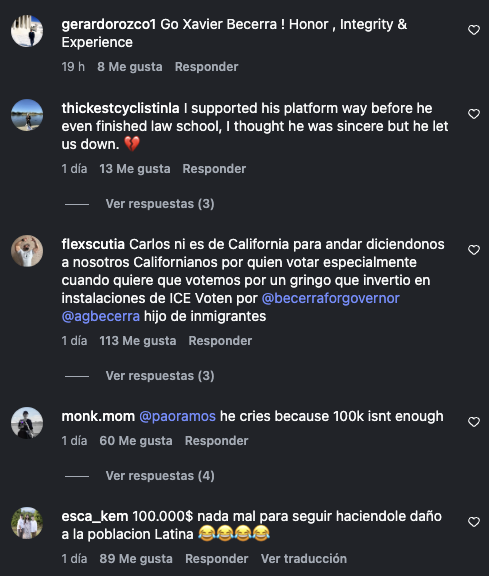
Perhaps the most pointed criticism comes from Espina’s own followers. Many have questioned why he would support Steyer over Xavier Becerra, the Democratic frontrunner in the race and a Latino candidate who previously served as Health and Human Services secretary.
According to The New York Times, many of Espina’s followers posted hundreds of comments asking why he would take such a sudden and strong interest in a California race he had scarcely mentioned previously. According to The New York Times, “Many of Mr. Espina’s followers, though, have questioned his motives. Why, they wondered in hundreds of comments responding to his posts supporting Mr. Steyer, would Mr. Espina be taking such a strong and sudden interest in a California race he had scarcely mentioned previously? And why wasn’t he supporting Mr. Becerra, a Democrat in the race who, unlike Mr. Steyer, is Latino?”
The Campaign’s Response
Kevin Liao, a spokesperson for the Steyer campaign, pushed back against the allegations. “Consistent with state law, payments for creator content are disclosed in campaign finance records, and we notify creators we directly work with of their disclosure requirements. As a result, we are confident the complaint is baseless,” he said.
In a statement after the complaint was filed, Kevin Liao said the campaign “believes in compensating people for their time and work product and has paid creators to generate content.” He added that the campaign “properly notified influencers of their disclosure requirements and that the onus was on them.”
This context—that campaigns notify creators but cannot be responsible for their compliance—represents a key point of contention. If creators receive notification but choose not to comply, who bears responsibility? California law appears to hold campaigns accountable for violations.
The Broader Landscape of Paid Political Influence
The Espina arrangement is not an isolated incident. Democratic and Republican groups have spent millions on paid influencer content “over each of the past few campaign cycles.” Yet, according to The New York Times, “little is known about many of the payments.”
The reason is systemic. According to The New York Times, “The Federal Election Commission, the agency that monitors political spending, says its rules governing disclosure for traditional political advertising do not apply to social media.” Similarly, the Federal Trade Commission, which regulates deceptive business practices, requires influencers to disclose payments. However, it does not regulate political advertisements.
This regulatory gap has created what Brendan Fischer of the Campaign Legal Center described to The New York Times as a transparency problem: “You can’t see where the money is coming from, and you can’t see where it’s going.”
Fischer’s organization petitioned the F.E.C. in October to require disclaimers on paid political content created by influencers. However, “the agency has not taken action on that request.”
The scale of these payments is significant. According to The New York Times, one political social media firm, Creator Grid, “has received almost $875,000 from the Republican National Committee and the National Republican Congressional Committee since late 2023.”
Social Media is The New Political Battlefield
On May 15, 2026, two social media influencers who support rival candidate Xavier Becerra filed a complaint with the California Fair Political Practices Commission. They are accusing the Steyer campaign of paying “perhaps dozens of third-party influencers to publish content supporting” the candidate without proper disclaimers.
The California Fair Political Practices Commission enforces the state’s campaign finance laws. The commission is now investigating whether online creators hired by the Steyer campaign failed to properly disclose sponsored political content.
The California gubernatorial primary is scheduled for June 2, 2026. Today, Steyer is trying to wrest away the Democratic frontrunner position from Becerra.
Whether the disclosure violation—if confirmed—will impact the race, or the outcome of the investigation, remains unclear. What is clear is the mechanics of how modern campaigns reach Latino voters and the gap between what is legal and what voters perceive as transparent and honest.