21 Times the Dominican Republic Said ‘Global Impact’ and Meant It
Feb. 27, 2026, marks the 182nd Independence Day for the Dominican Republic. Over the centuries, Dominicans have contributed to the world through culture, arts, sports, food, and medical techniques. Some of the contributions to the world changed the way we listen to music or perform cardiovascular surgery. This Independence Day, let’s look at the people and culture that started on the island and made its way to the world.
Innovations and Contributions
Cardiovascular Surgeries
Dr. Juan León-Wyss was a global leader in complex pediatric cardiovascular surgeries. He was a world-renowned pediatric cardiac surgeon. He died in 2024 after battling cancer. At one point, he was the only pediatric cardiac surgeon in the Caribbean, and he worked to expand medical care across the Caribbean and Central America. He established himself in the Dominican Republic in 2014 and spent a decade building a world-class clinical service that performed 1,300 procedures over the ten years. He is credited with turning a mission model reliant on foreign doctors to do pediatric cardiac surgery into a self-sustaining practice.
Anti-Corruption Digital Government Systems
The Dominican Republic has emerged as a leader in the anti-corruption digital government systems space. The island nation began the work in 1998, focused on creating systems that are the most transparent in the Caribbean. The sophisticated system uses complex algorithms to spot conflicts of interest, red flags, and fraud just for the procurement of government projects. The work that the Dominican Republic has done is recognized globally, with the island nation being tapped to host the 22nd annual International Anti-Corruption Conference (IACC) in December 2026.
Affordable Modular Housing Designs for Disaster Zones
Dominican architects have worked to create modular housing designed to survive natural disasters. The Caribbean is no stranger to natural disasters, from devastating earthquakes to powerful hurricanes. This is why the architects have focused on creating modular homes to address housing solutions during the recovery phase. One of the designs recently approved by the Dominican government is “Container Cities,” developed by Richard Moreta Castillo. It utilizes shipping containers to create resilient housing for people.
Agricultural Irrigation Improvements for Caribbean Climates
Water scarcity is an increasing concern around the world. The Caribbean is no different, and that means that agriculture is at risk, leading to food shortages. Dominican agronomists are working to combat the increasingly worrisome future. To do this, they are focusing on technification, precision agriculture, and climate resilience to use less water to irrigate crops. Agronomists are scientists who specialize in the study of soil management and crop production.
Teleférico de Santo Domingo, Dominican Republic
The cable cars in Santo Domingo are pioneers in this form of public transportation in an urban setting. Linea 2 is a record-setting gondola as the fastest urban cable car, clocking in at about 15 miles per hour. The system is built to move 4,500 passengers per hour per direction. It is such a technological marvel that it is the inspiration for similar projects in other island nations. The overall project has drawn international attention from the transit industry.
Modern Recording Studio Techniques for Merengue and Bachata
Juan Luis Guerra and later Romeo Santos were pivotal in getting bachata and merengue to the masses. Sure, the music is popular, and the two musicians are talented, but it was the equipment and technology that moved this forward. The two, on their own, have worked to perfect the recording equipment to clearly capture the musicality of the genres without sounding muddy. The equipment advances moved the recording from one-room recordings to hybrid digital-analog. The advancements these two made shaped the way that Latin music is recorded around the world.
Baseball Training Technologies
The Dominican Republic has given us some of the greatest baseball players the MLB has ever known. This was not a mistake. This was by design. The humble Caribbean nation is home to 30 MLB-affiliated academies that train people with raw athletic potential and turn them into star baseball players. It is a global laboratory for the sporting organization for player development. The training facilities include standardized nutrition and care, bilingual integration, and educational mandates.
Culture and Arts
Merengue
Merengue has deep roots in the Dominican Republic as a music created from African-influenced rhythms and Spanish dance styles. The genre is traced back to the 1840s and 1850s as a rural folk genre. Like so many other rich cultural legacies, merengue was looked down on by the elites, but it has come to represent the island to the rest of the world. It was in the 1950s that the genre started to gain international recognition because of artists like Juan Luis Guerra and Wilfrido Vargas.
Bachata
Bachata didn’t come about until the 1960s when José Manuel Calderón recorded songs like “Borracho en Amor” in 1962. Like merengue, bachata drew from African and Spanish influences but also incorporated indigenous Taíno influences. Romeo Santos and Aventura are credited with popularizing bachata and bringing it to international audiences.
Baseball Culture from the Dominican Republic
We have already talked about how the Dominican Republic is home to world-class baseball training. However, the integration of Dominican players in the sport brings with it a cultural influence over the game and fandom. The sport was originally only open to white men until the years of World War II, when women played the game. Ozzie Virgil Sr. was the first Dominican-born player in the MLB and debuted on Sept. 23, 1956, for the New York Giants. As of the 2025 season, there are 144 MLB players from the Dominican Republic. This has obviously led to a growing number of Latino baseball fans filling the stands, impacting everything from food to Spanish-language game callers.
Carnaval Dominicano
The Dominican Republic is one of several countries with a carnaval. The Carnaval Dominicano is a month-long celebration of Dominican culture that includes parades every Sunday. The streets are lined with vibrant and devilish masks that incorporate all of the identities that have shaped the Dominican Republic. The Diablos Cojuelos are the most iconic characters from the celebration, and they are more than colorful costumes. They are a source of national pride and are nods to resistance and freedom.
Dominican Cuisine
If there is anything that Latin America does right, it is food. The Dominican Republic is no different. With a diaspora around the globe, Dominican food has made its way to countries on every continent. You can find delicious sancocho in France. Restaurants in the Midwest offer up the iconic dish la bandera. As people migrate, they take their foods with them, bringing some of the purest forms of their culture with them.
Dominican Cigars
Everyone knows about Cuban cigars, but the cigar rolling happening in the Dominican Republic is unrivaled. In 1959, when Cubans started to flee to other countries, some of the best cigar rollers and farmers landed in their Caribbean neighbor. The result was bringing the craftsmanship to the island. Dominicans learned the techniques and have run with it ever since, creating a class of cigars that is unmatched.
Dembow
Dominican artists have been influencing music for as long as people could move. Dembow is no different. The musical genre came to be when Dominican artists blended together Jamaican dancehall and Puerto Rican reggaeton into a high-energy genre all its own in the 1990s. Thirty years later, the musical genre is continuing to take over the world with artists like Bad Bunny bringing it to more music lovers.
Celebrities and Politicians
David Ortiz
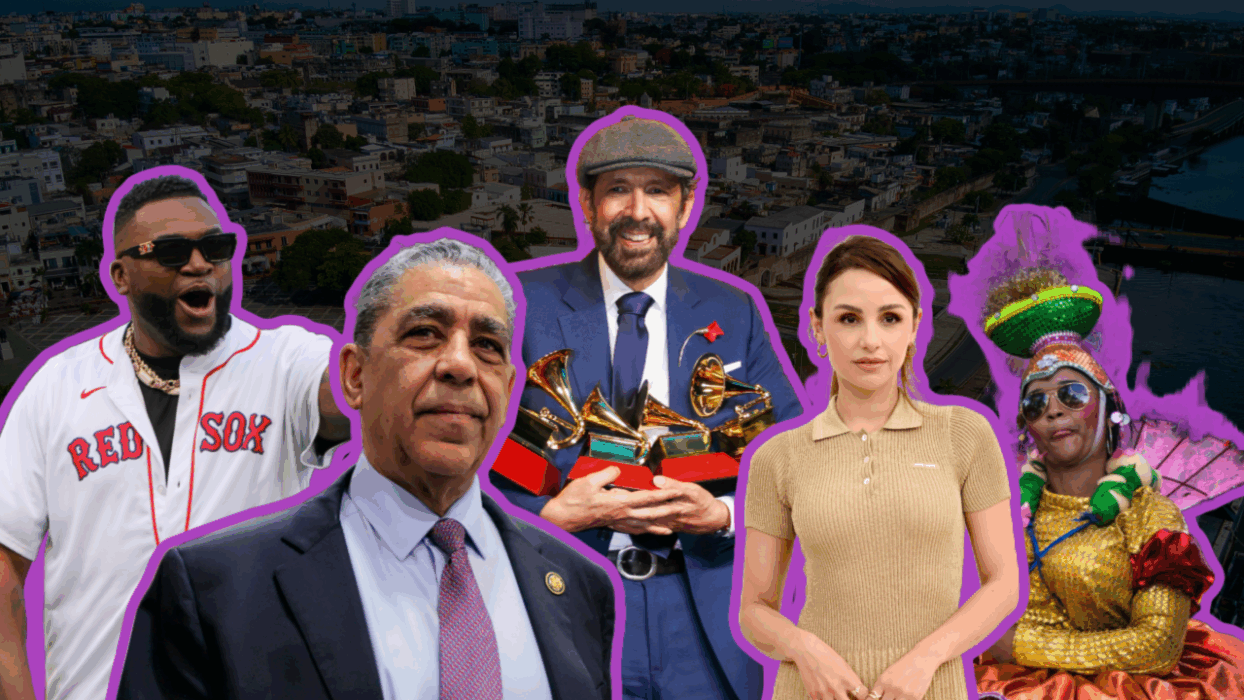
David Ortiz started in the MLB in 1992 and moved between teams until he joined the Boston Red Sox in 2003. The baseball star helped to lead the team to three World Series wins during his 14-year tenure with the franchise. He is credited with ending the 86-year “Curse of the Bambino.” Even though he is retired, he is still a major name in the sport.
Albert Pujols
Albert Pujols is another MLB superstar who made a name for himself with his talents. Over his 22-season career, Pujols became arguably the best hitter in the sport. He is one of only four players with more than 3,000 hits and 700 home runs. Now that he is retired, Pujols is entering a second phase of his career in coaching and management. He is the current coach for the Dominican Republic national team.
Fernando “El Niño” Tatís Jr.
Fernando Tatís Jr. is a right fielder for the San Diego Padres and has electrified the sport. He has established himself as a multi-category force in the sport and recently earned his second Silver Glove award. Tatís Jr. has been with the Padres since 2020 after signing a 14-year, $340 million deal.
Sammy Sosa
Sammy Sosa is another retired MLB star because Dominicans know how to play baseball. He is best known for his home run hit chase with Mark McGwire in 1998. Sosa played for more than a decade with the Chicago Cubs but had a falling out with the franchise when he retired. He recently reconciled with the Cubs and got inducted into the Cubs Hall of Fame.
Aimee Carrero
Aimee Carrero is an actor who helped to break down barriers for the Latino community. She holds the distinct honor of voicing Disney’s first Latina princess, Elena of Avalor. Since then, she has starred in movies like “The Menu” and shows like “Your Friends and Neighbors.” She also appeared in the Marvel series “Wonder Man.”
Oscar de la Renta
Oscar de la Renta created a fashion empire that few could rival. His gowns have graced red carpets and state dinners around the world. The fashion designer brought together influences from around the world for his collections, but also made sure to highlight his Dominican roots. His looks included floral motifs, vibrant colors, and traditional craftsmanship that called back to the Dominican Republic. Even after his death in 2014, his fashion line has remained one of the most revered and beloved fashion houses in the world.
Rep. Adriano Espaillat (D-NY-13th)
Rep. Adriano Espaillat is the first Dominican-born person and the first formerly undocumented person elected to the House of Representatives. He started his political career after being elected to the New York State Assembly in 1997. From there, he was elected to the New York State Senate before running for the House of Representatives. Before politics, he was an organizer and worked to help tenants in New York. In the Assembly, he used his position to pass laws to strengthen tenant rights, continuing his work for his community.