
Things Other Countries Are Getting Right That Have Us Wondering ‘Why Not Here?’
When was the last time you wondered if another world was possible? The news cycle is so heavy, fast, and unrelenting that we tend to shrink the panorama to what our algorithm thinks we need to see and consume. However, lately many of us have been receiving good news from other parts of the planet. And we can’t help but wonder: Why isn’t the U.S. taking notes?
And hey, those countries aren’t perfect, by any means. After all, most of them are less than a quarter of the size of America, and we get it that it’s not that easy to get almost a whole continent to agree on stuff. But there’s a stark difference between where our country is heading and where other countries with smaller GDPs are.
So here are just some ideas:
Luxembourg and Malta Made Public Transit Free for Everyone

In February 2020, Luxembourg became the first country in the world to make all public transportation free, covering buses, trams, and trains across its entire territory. Malta followed in October 2022, becoming the second. In January 2025, Belgrade joined the list as the largest European city yet to go fare-free, extending the benefit to all 1.7 million residents. Each of these decisions came down to a single premise: getting around should not be a luxury. Per Stacker/LocalNews8, a 2025 report by Italian researchers counted 100 places worldwide that have now adopted fare-free transit, including cities in the U.S., Brazil, and across Europe. The U.S. federal government is currently moving to cut transit funding.

Belgium Gave Workers the Legal Right to Work Four Days a Week
Under Belgium’s Labor Deal Act, passed in 2022, every employee in the country has the statutory right to request a compressed four-day workweek, per 4dayweek.io. Employers are required to respond in writing and must provide a written justification if they refuse. The law does not reduce total hours but gives workers the choice of how to distribute them across the week. It is the only law of its kind in the world. In the United States, a federal 32-hour workweek bill has been introduced multiple times and has not passed.
Brazil Is Cutting the Work Week to 36 Hours
Brazil’s Senate Justice Committee approved a constitutional amendment in December 2025 to reduce the country’s legal maximum work week from 44 hours to 36 hours by 2030, per 4dayweek.io. The amendment, backed by the Lula government, would make Brazil one of the most worker-protective economies in the world on the issue of hours alone. Brazil already mandates 30 days of paid vacation per year. The United States mandates zero paid vacation days and has no federal cap on work hours.
The UK Gives Every Child Under Five 30 Hours of Free Childcare a Week
Starting in September 2025, the United Kingdom extended free childcare to 30 hours per week for any child under 5, according to Global Citizen Solutions. Portugal is rolling out a parallel program offering free childcare for infants and plans to extend it to all children under three, regardless of family income. Sweden caps what any family pays for childcare at 3% of income for the first child, 2% for the second, and 1% for the third. The United States has no federal childcare program, and the current administration has moved to pull back existing state-level childcare funding.
Australia Is Expanding Paid Parental Leave to 26 Weeks
Starting July 1, 2026, Australia’s paid parental leave entitlement rises to 26 weeks, including 20 days reserved specifically for the partner, per Playroll. The reserved partner days are designed to close the caregiving gap by making it harder for families to default to one parent taking all the leave. The United States remains the only high-income country in the world with no federally mandated paid parental leave.
Finland Sends Every Pregnant Woman a Box Full of Baby Gear
In Finland, a government-provided maternity box goes out to every pregnant woman in the country. Per Bored Panda, a Reddit user who shared their experience of opening the box described its contents: a snowsuit, mittens, bodysuits, a sleeping bag, a cloth diaper, towels, a small book, a toy, hygiene products, and more. All the clothing is gender-neutral and largely made by Finnish companies. The bottom of the box itself functions as a mattress, so the baby can sleep in it from day one.
Scotland adopted the same program. However, the Scottish version includes items for the mother as well and is available through any midwife and is completely free.
In Norway, the Government Pays Students to Study

Most people already know that college in much of Europe is free or nearly free. What surprised world traveler King Siu, who runs the platform Travel, Eat, Drink, was that Norwegian students also receive a government living allowance on top of that. “This wasn’t just a few bucks to help with groceries,” Siu told Bored Panda. “This was enough for them to get an apartment and live.” The logic is simple: when students do not have to worry about rent, they can concentrate on actually studying.
Germany Offers Free Tuition to Everyone, Including Foreigners
American students graduate from college carrying debt they spend years paying down. Germany made a different calculation. Per Rough Maps, German universities offer free tuition, and that offer extends to international students as well. Not reduced tuition. Not a scholarship application process. Zero tuition, available to students from outside the country the same as for Germans.
Amsterdam Has Free Period Products on Every Corner
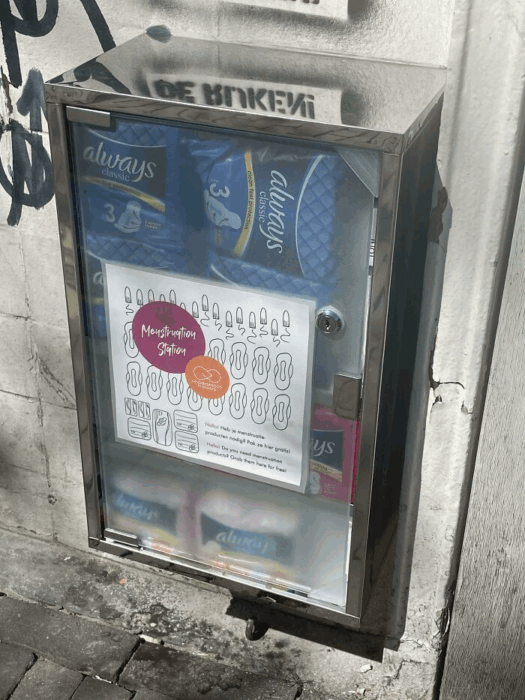
Throughout Amsterdam, small menstruation stations provide free tampons, pads, and menstrual cups for anyone who needs them. Scotland made the same move as part of a government effort to eliminate period poverty, placing free period products in most public bathrooms across the country. Both programs treat period care as a public health matter, not a luxury.
The Netherlands Puts Free Sunscreen on Its Beaches
Dutch beaches have free sunscreen dispensers available to anyone. It is a small thing. It is also the kind of small thing that communicates exactly where a government’s priorities actually sit, more clearly than any press release.
France Prescribes Spa Days as Medical Treatment
This one sounds too good to be true, but here we are. France allows doctors to prescribe spa treatment stays for various ailments, from stress to post-breast-cancer recovery. Those stays last 18 days and are fully or partially covered by the government depending on income.
South Korea Is Literally Paying People to Fall in Love
South Korea has a low birthrate, and the city of Busan decided to get creative. Busan launched cash incentives for couples at every stage of a relationship, whether dating, engaged, or married. The further along the relationship, the more money couples receive. The government also provides funds for a down payment on a house or covers rent for newlyweds for 5 years.
Brazil, France, and Spain Guarantee at Least 30 Days Off Per Year
The United States has no government-mandated paid vacation time. Companies set their own rules. Ten days of PTO is considered standard in the American private sector. By contrast, countries like Brazil, France, and Spain legally require a minimum of 30 days of paid time off per year, per the same reporting. People in those countries take actual month-long vacations. Not someday. Regularly.
Singapore Redesigned the Crosswalk for Older Pedestrians
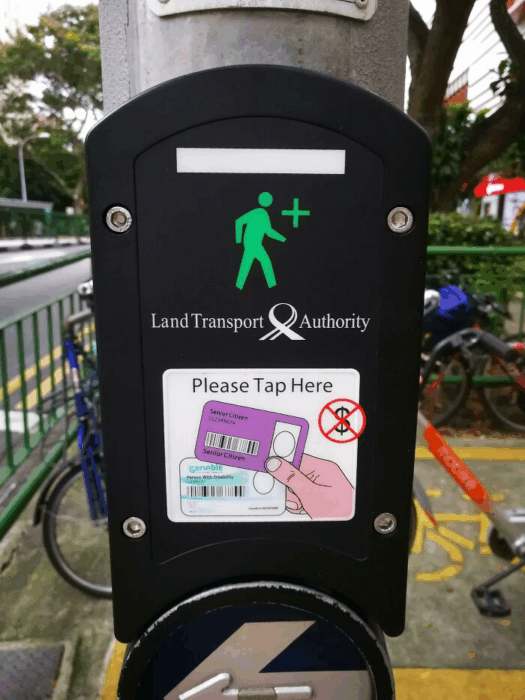
At pedestrian crossings throughout Singapore, older residents can tap their national identity card to get more crossing time at the signal, per Bored Panda. It is a design decision that required someone to ask: what does it actually look like to move through a city when you are not young? And then do something about the answer.
Mexico Built a Swing for Wheelchair Users
At a park in Mexico, a swing specifically designed for wheelchair users sits alongside the standard playground equipment. Somebody thought about everyone who might show up.
México Is Showing the U.S. That Universal Healthcare Is Not That Complicated
Claudia Sheinbaum announced the implementation of universal healthcare in Mexico with such simplicity that the ambition felt almost matter-of-fact. As we previously reported, the plan centers on a single credential, physical and digital, giving patients access to care across Mexico’s historically fragmented public system. IMSS, IMSS-Bienestar, and ISSSTE would all fall under the same credential, regardless of employment status or geography. “The goal is that, when we leave office, any Mexican man or woman can go to any healthcare institution for treatment of any condition and be received,” Sheinbaum stated.
Registration began in March 2026, organized regionally to avoid system overload, and continues through the end of the year.
Government estimates cited by mitú project that over 60 million people could benefit, many of whom were previously excluded from formal coverage. Medical records become portable. Appointments can be scheduled digitally. It is the first integration of this kind in Latin America.
Set that next to the United States, which spends roughly $14,885 per person on healthcare, more than any other high-income nation, yet ranks last in overall performance among those same countries, per the Commonwealth Fund’s 2024 “Mirror, Mirror” report. México’s approach begins from a different premise: healthcare as a right tied to citizenship, not a service tied to employment. The credential follows the patient. That is the whole idea.
Denmark Treats Prison as Rehabilitation, Not Punishment
Danish prisons look nothing like what Americans picture when they hear the word. Denmark uses rehabilitation-centered approaches that reject solitary confinement and the death penalty. The underlying logic, as reported by Rough Maps, is to address the reasons people commit crimes rather than simply punish them. While American prisons are overcrowded, Danish prisons are not.