
Claudia Sheinbaum Is Showing the U.S. That Universal Healthcare Is Not That Complicated
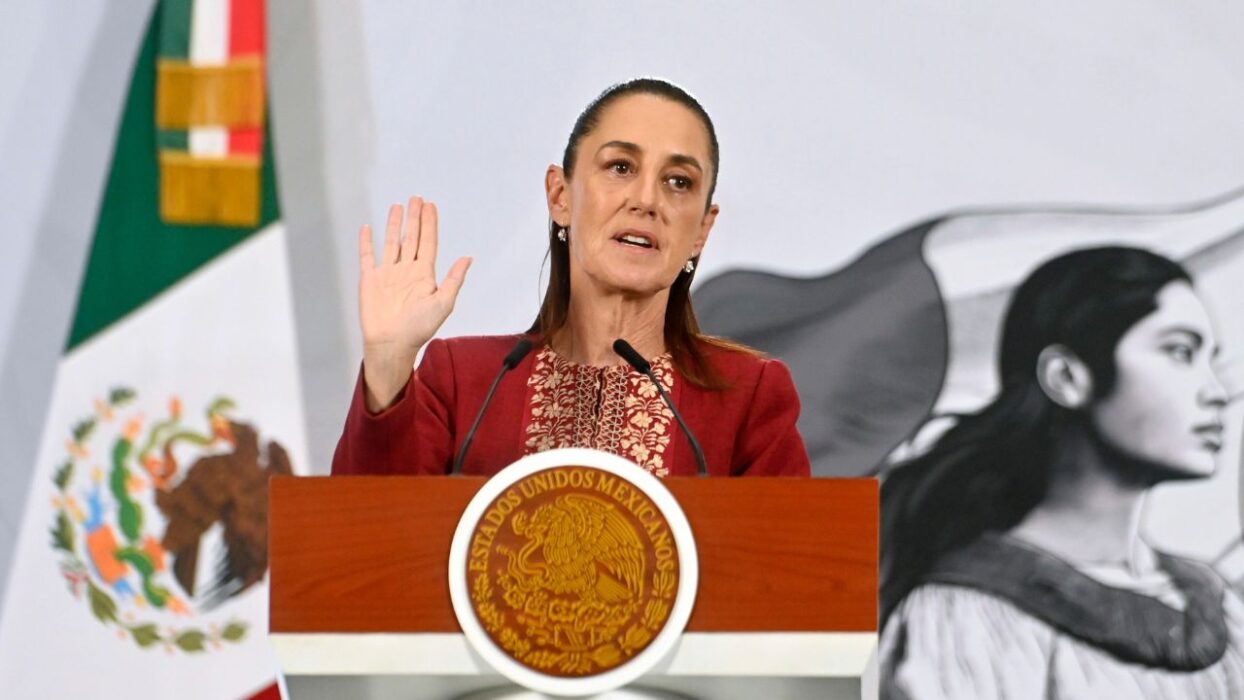
Claudia Sheinbaum’s announcement on the implementation of universal healthcare in Mexico arrived without spectacle, almost bureaucratic in tone. After describing a pretty straightforward process, she promised that, by the end of the administration, any Mexican could walk into any public hospital and be treated, regardless of affiliation.
However, if you read the fine print, the scale of what Claudia Sheinbaum is historic.
This is not just another reform inside an already functioning system. It is an attempt to resolve a core contradiction that has defined Mexican healthcare for decades. The system is a fragmented network—IMSS, IMSS-Bienestar, ISSSTE—operating in parallel. Each is tied to employment status, geography, or bureaucratic category and reproduces the same inequality the system was supposed to fix.
Sheinbaum proposes something simpler and thus more radical: a single credential, shared infrastructure, and guaranteed access that follows the patient, not institutions.
In her own words, “The goal is that, when we leave office, any Mexican man or woman can go to any healthcare institution for treatment of any condition and be received.”

The long history behind a “simple” idea
To understand this moment in history, it helps to resist the temptation to treat universal healthcare as a sudden political invention. In Mexico, it is the endpoint of a much longer, uneven process.
The country’s healthcare system emerged in fragmented form, shaped by colonial hierarchies, post-independence instability, and the slow development of state capacity. Early hospitals were tied to religious institutions, and care was stratified by race and class. Indigenous and mestizo populations were systematically excluded, while medical training itself was inconsistent, often empirical, and shaped by necessity rather than standardization.
Even as Mexico moved into the 19th and early 20th centuries, the pattern held. Epidemics exposed the limits of public health infrastructure. Political upheaval delayed reform. Access remained uneven, concentrated in urban centers and among privileged populations.
The turning point came in the mid-20th century with the creation of the Mexican Social Security Institute (IMSS) in 1943, followed by ISSSTE in 1959. These institutions marked a genuine expansion of coverage. For the first time, large segments of the population gained access to structured medical care tied to employment.
But that expansion came with a built-in limitation: coverage depended on where you worked, how you worked, and whether you worked at all.
Informal workers, rural populations, and those outside formal employment structures remained partially or entirely excluded. Over time, additional programs attempted to fill those gaps — most notably Seguro Popular, later replaced by INSABI — but the system never fully resolved its fragmentation.
What emerged instead was a layered system: public institutions with overlapping mandates, uneven resources, and persistent disparities in access and quality.
By the early 21st century, those disparities were measurable. According to national data, significant portions of the population still lacked regular access to healthcare. Rural regions lagged behind urban centers, and infrastructure gaps persisted. When the COVID-19 pandemic hit, these weaknesses were impossible to ignore.
This is where Sheinbaum’s reform enters the story.
Integration as a political argument
The Universal Health Service does not eliminate IMSS or ISSSTE. It instead connects them.
With a single credential — physical and digital — patients can access care across institutions. A worker enrolled in IMSS can receive treatment at an ISSSTE hospital. A person without prior coverage can enter the system through IMSS-Bienestar and still move within it. Medical records then become portable, and appointments can be scheduled digitally, as in countries like France.
This administrative integration is an attempt to collapse the logic that made access conditional in the first place. And it’s also a first in Latin America.
Registration began in March 2026 and will continue through the end of the year, organized regionally to avoid system overload. The process includes biometric identification, the creation of a digital medical record, and the issuance of a credential that serves as both an access point and official identification.Benefits include shorter wait times, shared data, better continuity of care, expanded prevention programs, and improved chronic disease management. Government estimates indicate over 60 million people could benefit, especially those previously excluded from formal coverage.
Public health officials argue that the system could reduce preventable mortality by up to 15% over 5 years, based on comparable international models.
But beneath those metrics sits a more fundamental claim: that healthcare is not something you earn through employment but a basic human right.
A different premise
In a moment where the U.S. Administration insists on scapegoating the immigrant community, Mexico moves towards integration and a first-world structure.
By all accounts, the United States continues to move in the opposite direction.
According to the Commonwealth Fund’s 2024 “Mirror, Mirror” report, the U.S. ranks last among high-income countries in overall healthcare performance. It spends more than any other nation — roughly $14,885 per person — yet produces worse outcomes: lower life expectancy, higher rates of avoidable death, and the lowest levels of access and equity among its peers.
Administrative complexity alone sets the U.S. apart. Patients navigate a dense web of insurance plans, billing systems, and eligibility rules. Doctors and hospitals spend significant time on paperwork rather than care. Costs remain high, so a significant portion of the population skips treatment, tests, or medication altogether.
At the same time, policy continues to favor privatization. Recent proposals include increased payments to privately managed Medicare Advantage plans and default enrollment in those plans. Critics argue these moves would expand corporate control over care and raise overall costs.
This is not a system struggling to achieve universality. It is a system organized around the idea that universality is not the goal.
Which makes Mexico’s approach feel less like an outlier and more like a reminder.
It’s not that difficult
There is a line buried in Mexico’s Universal Health Service rollout that we had to surface: Mexicans abroad will also be able to register.
Just as many first-world countries do, Sheinbaum ensured her new healthcare system would define citizenship beyond territory. Healthcare is framed not as a benefit tied to residence or employment, but as a right tied to belonging.
That was the broader principle articulated by Mexican officials in international forums: coverage must be universal, public, and free, starting with the most marginalized populations. Public health, in this view, is not a market, as the U.S. has forced upon its people. It is a collective good.
Set that next to the American debate.
In one system, the key question is how to integrate institutions so everyone can access care. In the other, the question becomes who deserves access, under what conditions, and at what cost.
Sheinbaum’s reform does not solve every problem in Mexico’s healthcare system. Infrastructure gaps remain, regional inequalities persist, and, most importantly, implementation will test the capacity of both federal and state governments. Critics have already raised concerns about logistics, funding, and long-term sustainability.
But the direction is clear: it starts from the assumption that healthcare is a right. Then it builds the system around that assumption.