
Good News This Week: California City Banned Datacenters for Good, a Teenager Filtered Out Microplastics, and FIFA Reversed Its Water Bottle Ban
Everyone is watching the World Cup right now, and rightly so. But while the world’s eyes stay fixed on the tournament, plenty of other stories this week deserve their flowers too. A California city took a stand on datacenters, a teenager built a filter that could change how we think about clean water, and the Amazon got a real reprieve.
Here is the good news you may have missed.
First piece of good news of the week: Fans won one against FIFA
People heading to World Cup games in the United States and Canada will be allowed to bring their own water into the stadiums after all, following a backlash that reached as far as New York’s mayor.
FIFA had announced last week that fans could no longer carry reusable water bottles into matches. They did so citing safety concerns, according to Novara Media. The policy sparked anger among fans. Many feared that it would force them to pay stadium prices for water during periods of extreme heat. New York mayor Zohran Mamdani joined the criticism. He told The Athletic the policy was “concerning” and that his team would “follow up” to understand the reasoning behind it. Over the weekend, he posted on X that he was glad FIFA had reversed course. “No one should have to fear being priced out of being hydrated. Especially fans who are often waiting for hours before a game in extreme heat,” he wrote.
FIFA later issued what it called a clarification. The organization said fans would be permitted to bring one soft, factory-sealed, 20-ounce disposable water bottle into any FIFA World Cup 2026 match in the United States and Canada, though hard-sided reusable bottles remain barred for safety and security reasons. The statement did not address the policy for matches in Mexico.
A California city just made history with a single vote
Residents of Monterey Park, California, became the first in the country to vote on a permanent ban on data centers. And the early results were not close.
As of 2 a.m. Pacific time, 86.3 percent of the more than 7,000 votes counted so far were in favor of the ban. City councilmember Jose Sanchez called it a landslide victory for residents who did not want the facilities in their community. “[This] shows unequivocally that residents in Monterey Park do not want datacenters in their community,” he said. “We hope that other communities will use the model set by residents here in Monterey Park as inspiration to stop datacenters from encroaching on their backyard.”
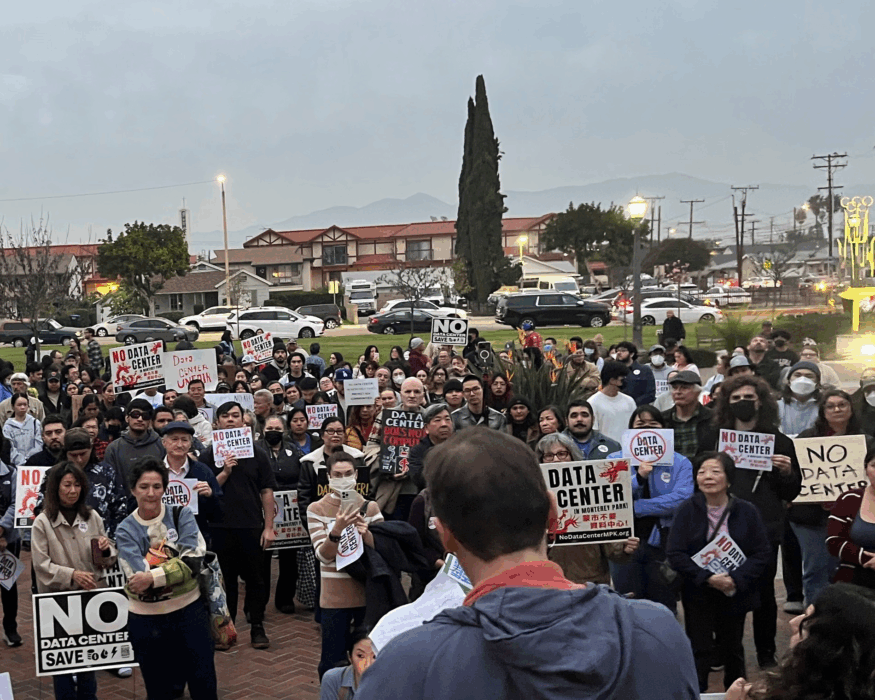
The vote followed months of organizing after the investment company HMC StratCap pushed to build a nearly 250,000-square-foot data center in the city. The city council had already passed an indefinite moratorium on the project in April amid resident concerns. Principally around negative environmental effects, rising utility prices, and the project’s proximity to homes. Developers later withdrew their application. Amy J. Wong, co-founder of San Gabriel Valley Progressive Action and a key partner of the group No Data Center in Monterey Park, told The Guardian that organizers had only about two months to mobilize. They printed 10,000 flyers and sent mailers in English, Chinese, and Spanish to get the vote out.
Other communities are watching closely. Voters in Port Washington, Wisconsin, already approved a measure requiring officials to seek voter approval before offering tax incentives to data center developers, and residents in Augusta Township, Michigan, and Janesville, Wisconsin, have similar votes coming later this year. Nationally, seven in 10 Americans oppose the construction of AI datacenters in their local areas, according to a Gallup poll cited by The Guardian.
An 18-year-old built a water filter that does not need a membrane
A Virginia teenager just won an award for inventing a filtration system that removes microplastics from drinking water using little more than magnetism.
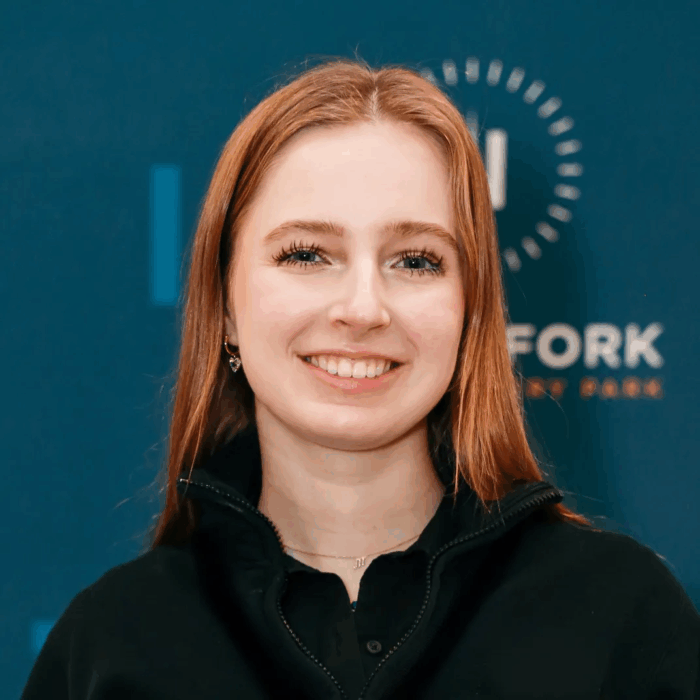
Mia Heller, an 18-year-old student at Kettle Run High School in Warrenton, Virginia, began developing the idea after reading a local news article about PFAS and microplastic contamination in her area’s water supply, Smithsonian Magazine reported. When her family bought a traditional filtration system that needed constant membrane replacements, she set out to build something that would not.
Her design relies on ferrofluid, a reusable magnetic oil that binds to microplastic particles as water flows through a three-module system. The first module holds the contaminated water, the second stores the ferrofluid, and the core process occurs in the third, smaller module. “A magnetic field pulls the microplastics out of the water, and the ferrofluid is recovered and reused in a closed loop,” Heller explained. In testing, Heller’s prototype removed 95.52 percent of microplastics from water and recycled 87.15 percent of the ferrofluid, a result that compares well with traditional treatment plants, which typically remove between 70 percent and more than 90 percent of microplastics.
The work earned Heller a $500 award from the Patent and Trademark Office Society at the 2025 Regeneron International Science and Engineering Fair. Matthew Campen, a toxicologist at the University of New Mexico who studies microplastics, called it “a really great idea.” “She is doing something that has to be done,” he added, though he noted that scaling the system and confirming how captured microplastics get disposed of would be the next hurdles. For now, Heller sees it as a system for individual homes, since ferrofluid remains expensive to produce at scale. “I would love to eventually bring it out to market,” she said.
The Amazon lost less forest than it has in years
Brazil’s rainforest got some real breathing room in 2025. Deforestation in the Amazon biome fell by 23.5 percent compared with 2024, according to a new report from MapBiomas, a Brazil-based land-use mapping project, marking a 21 percent decline in nationwide forest loss.
Nathalia Crusco, a researcher with MapBiomas, wrote to Mongabay that the decline likely reflects a combination of stronger environmental enforcement, improved satellite monitoring, and growing market demand for sustainable production. Clear-cut deforestation on Indigenous lands in the Brazilian Amazon fell nearly 25 percent in 2025 to its lowest level since 2016, according to a technical memo from Brazil’s Indigenous agency, Funai. The Pantanal wetland saw deforestation fall by nearly half compared with 2024, and by close to 80 percent compared with 2023.
The progress was not universal. The report flagged a stark exception in the Batelão Indigenous territory in Mato Grosso, where clear-cut deforestation rose roughly 10,000 percent in a single year, an area Indigenous leaders say has been overtaken by soy, cotton, and corn farms. “We want Terra Batelão back. We are fighting for it, but there are only promises — and so far, nothing,” Indigenous representative Porokó Kayabi told Mongabay Brasil. Even so, the overall numbers mark some of the steadiest forest gains Brazil has reported in years.
A nurse came home from a 12-hour shift to a trail of Post-it notes
Sometimes good news looks like a stranger’s invention, changing how we filter water. Sometimes it looks like sticky notes on a kitchen counter.
Andrea Munn, a NICU nurse in Los Angeles, usually comes home to find her husband, indie musician Zachary Munn, already cooking dinner. But on May 27, after a 12-hour shift, Zachary was out with friends. So he left her a different kind of welcome home. TODAY reported that Munn found a set table, baked pasta with a veggie side, soda, chilled glasses, and a string of Post-it notes guiding her through it all, each one anticipating exactly what she would need. She posted a video of the setup on Instagram with the caption, “How did I get so blessed?”
The post drew plenty of swooning, along with a few skeptics who doubted a man had written the notes. Andrea told TODAY the gesture was real, and just one piece of how the couple shows up for each other. “Very rarely am I at home by myself,” she said. Zachary admitted he “went overboard.” However, both were quick to push back on the idea that their relationship runs on grand gestures alone. “Our love is deeper than just him putting Post-It notes and getting me flowers,” Andrea said. “Flowers are great. But what are you actually doing for your partner?” Zachary agreed, adding that the relationship has its hard days, too. “There are always hard times, but whimsical love is real,” he said.