
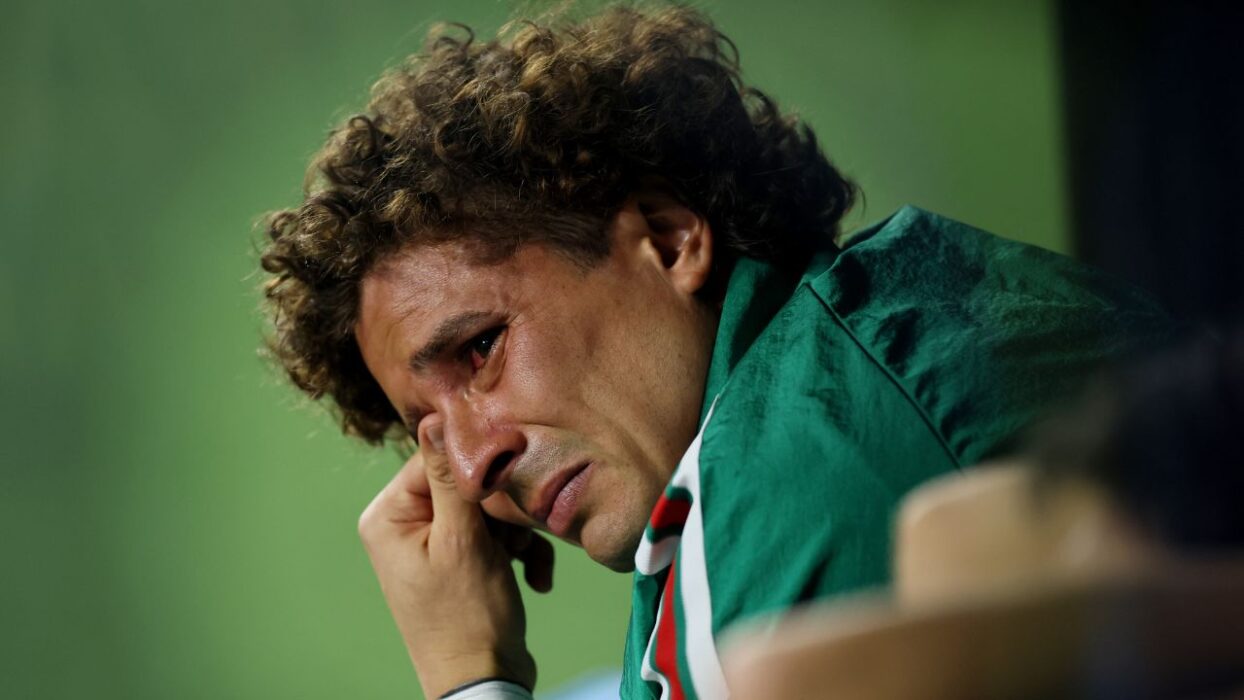
Mexico Goes Home in the Round of 16 and the Azteca Sends Them Off Like Champions
When the final whistle blew at the Azteca on Sunday night, Guillermo Ochoa and Raúl Jiménez were the last ones still standing on the field. The rest of the squad had started toward the tunnel. Those two stayed. Ochoa had already announced he would retire from football after this tournament. Jiménez, at 35, would almost certainly never have another World Cup. Both players were formed at América, the club that calls the Azteca home. So they stood there together for a few minutes more, as if neither was ready to let it end.
England won 3-2. Mexico was eliminated from the Round of 16. Despite it all, the crowd gave their team a standing ovation.
Javier Aguirre Said Goodbye With Red Eyes and Got Applause
Javier Aguirre walked off the Azteca field after his last match as Mexico’s head coach with red eyes. By any measure, the result was painful. The quarterfinals, just one round away, remained out of reach.
The crowd responded with applause.
Aguirre is the only coach in history to manage Mexico at three World Cups, accumulating 13 matches across those three tournaments. His record: seven wins, two draws, and four losses. He gave Mexico more World Cup games than any manager in the country’s history, and on Sunday night the fans sent him off with applause.
Jude Bellingham Made History at the Azteca. So Did Julián Quiñones
England needed their best player at his very best to get through. Jude Bellingham, who had never scored a brace for the English national team before Sunday, scored twice in a matter of minutes. Harry Kane added his sixth goal of the tournament, giving England a ticket to Miami for a quarterfinal against Norway.
Bellingham’s brace placed him in rare company at the Azteca: only Müller, Lineker, and Maradona (the last of whom did it twice) had previously scored two goals in a single World Cup match at the stadium. It was also the first time in England’s history that they eliminated a World Cup host nation in the knockout stage.
On the Mexican side, Julián Quiñones closed his World Cup with four goals, tying Luis “Matador” Hernández and Javier “Chicharito” Hernández as Mexico’s all-time leading scorers in World Cup history. Like Matador, Quiñones scored all four in a single tournament.
However, one moment darkened the night outside the field. The discriminatory and homophobic chant Mexico is known for rang out at least nine times inside the stadium. The corresponding protocol was not activated. No warning was issued over the public address system. No one stopped the match. It is one of Mexican football’s most persistent and still-unresolved problems.
After the final whistle, Wonderwall played over the stadium speakers. The Oasis song had become one of England’s anthems during the tournament and was among the 10 tracks each national team submitted to FIFA for use during their matches. The detail had a whole meaning behind it. Liam Gallagher had publicly predicted a 5-0 England victory over Mexico before the tournament, a comment that had drawn sharp criticism.
Outside the Azteca, the Party Was Still Going
After the game, Mexico’s players completed a lap of honor around the Azteca. The crowd stayed, cheered, and sent the team off the way they had welcomed them throughout the tournament.
Outside the Ángel de la Independencia, where Mexican fans had gathered to celebrate their wins in earlier rounds, the atmosphere after the elimination remained festive.
One fan captured the feeling best, speaking to Radio UChile after the game. “Honestly, we were excited, genuinely excited. But this is Mexico, and Mexico always shows up to celebrate,” they said.
Not everyone masked the heartbreak, though. “I’m sad. It was horrible,” said one fan, according to Radio UChile. Another said she had held onto hope for a draw until the very end. But even the disappointed ones described something that went beyond a loss. “The way everyone supported the team made you feel like they could actually win,” one fan said.
That feeling, that collective belief filling a packed Azteca across four games, was the whole point.
Gilberto Mora Is 17. He Just Played in a World Cup Round of 16
Mexico’s tournament had a second story running through it, and it belonged to the youngest players on the field. Gilberto Mora, 17, was one of the major revelations of the World Cup and, over four games, showed he will be a pillar of Mexican football for years to come. Brian Gutiérrez and Obed Vargas were also identified as part of a new generation with multiple World Cups ahead of them.
Veterans Raúl Jiménez, Luis Chávez, and Guillermo Ochoa gave this tournament its leadership both on and off the pitch. The younger players confirmed the next generation is already here.
Rafael Márquez, who already knows many of these players from his playing days and now sees them from the bench, takes over the program from here. Mexico enters the next cycle with a foundation it has not always had: a clear generational transition, young players who just competed on the biggest stage in the world, and a fanbase that proved once again that their love for this team requires no particular result to show up.
England became only the third team to beat Mexico at the Azteca in official competition, after Costa Rica and Honduras. Mexico’s elimination from the Round of 16 extends a 40-year wait for a quarterfinal.
And after the final whistle, with Ochoa and Jiménez still on the field and the fans still in the stands, the Azteca gave them one more minute of everything they came for.