
Japan’s Fans Are Back at It, Teaching the World Cup What Decency Looks Like
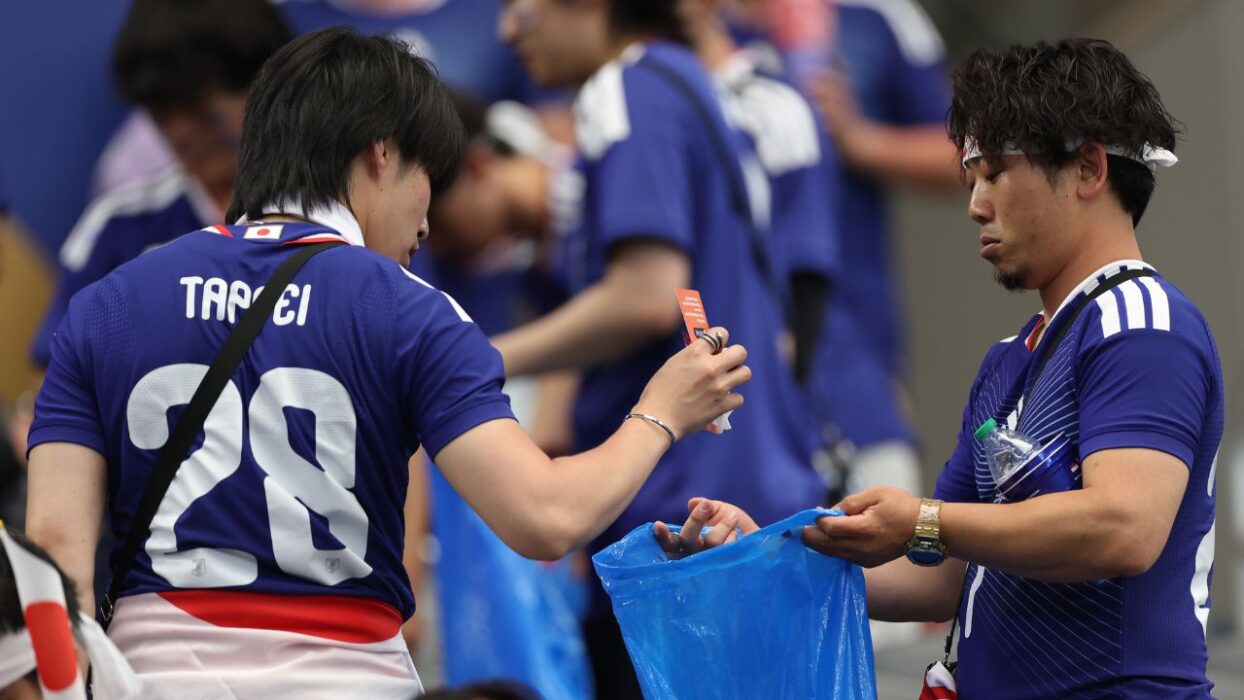
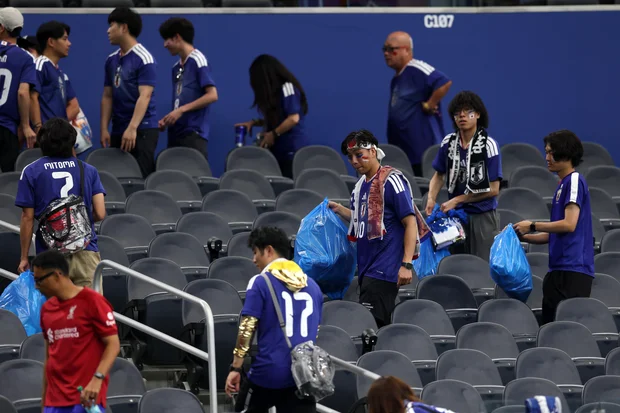
In the 88th minute of Japan’s match against the Netherlands, Daichi Kamada scored with a header from Koki Ogawa’s corner kick. The Japanese fans in Dallas Stadium cheered, waving blue plastic bags above their heads like flags. Just moments before, those bags were empty. By the time the game ended in a 2-2 draw, the bags were filled with trash, and the section where all the excitement had happened was spotless.
Japanese fans cleaned Dallas Stadium on their own initiative
Photos that quickly spread online showed hundreds of Japanese fans moving through their section, picking up cups, wrappers, and anything left behind. The men’s team also cleaned up their own area. No one asked them to do it. “It’s kind of a habit or natural, I guess,” Nina Shimaguchi from the Japan American Society of Dallas-Fort Worth told CBS News.
This isn’t something new. This tradition started with Japan’s first World Cup in France in 1998, and fans have kept it up at every tournament since. After Japan’s comeback win over Germany in Qatar in 2022, a video of the cleanup went viral, and FIFA praised the effort on social media. Whether they won or lost in the 2018 and 2022 tournaments, the team always left their locker room spotless, leaving behind only a thank-you note and a few origami cranes.

This habit begins in the classroom, not at the stadium
To understand why adults are picking up trash after a soccer game, you need to look back at elementary school in Japan. According to Shimaguchi, Japanese schools usually don’t have custodians for hallways and restrooms, so students clean these areas themselves.
Nozomi Morgan, founder and CEO of Michiki Morgan Worldwide and an intercultural leadership expert, told CNN she remembers realizing this after moving from Seattle to Tokyo at age 8. Her parents sent her to school with a zokin, a hand-sewn rag with her name on it, and her first task was cleaning the classroom.
“Each child has their own rag, several pieces of recycled fabric, hand-sewn together, with their names on it,” she said. The chairs and desks were pushed to the front, the floor was swept, then scrubbed by hand. “It kind of felt like a little game that you play cleaning up,” Morgan said, “it wasn’t like a chore, it’s just something that we all did together.”
Morgan grew up hearing a saying that sums up this philosophy: “A bird that flies never leaves a trace.”
Even some of the cleaners didn’t always believe in it
Hirokazu Tsunoda is now known as an unofficial spokesman for Japan’s dedicated fans, having helped clean up after the Olympic Games and World Cups since 2008. But he didn’t always feel this way. “I hated every minute of it,” he told CNN, remembering his school days. “I resented it, I used to think, ‘Why do we even have to do this? Japanese classrooms aren’t that dirty to begin with, and everyone uses the bins anyway.’ It wasn’t until he was an adult, helping clean up at his daughter’s school, that he started to believe in the habit.
Now, when people say the stadium cleanups are just for show, he responds simply: “Just try it once. Picking up someone else’s half-eaten food or half-finished drink is unpleasant, no question. But once you’ve had that experience, you are far less likely to become someone who litters in the first place.”
A deeper spiritual meaning lies behind the trash bags
This instinct goes back even further than school. Shintoism teaches that ordinary objects have their own meaning, Shimaguchi told CBS News. “We think all natural items have a spirit, like a tree, stones,” she said. “There is a saying that one rice grain has seven spirits in it.”
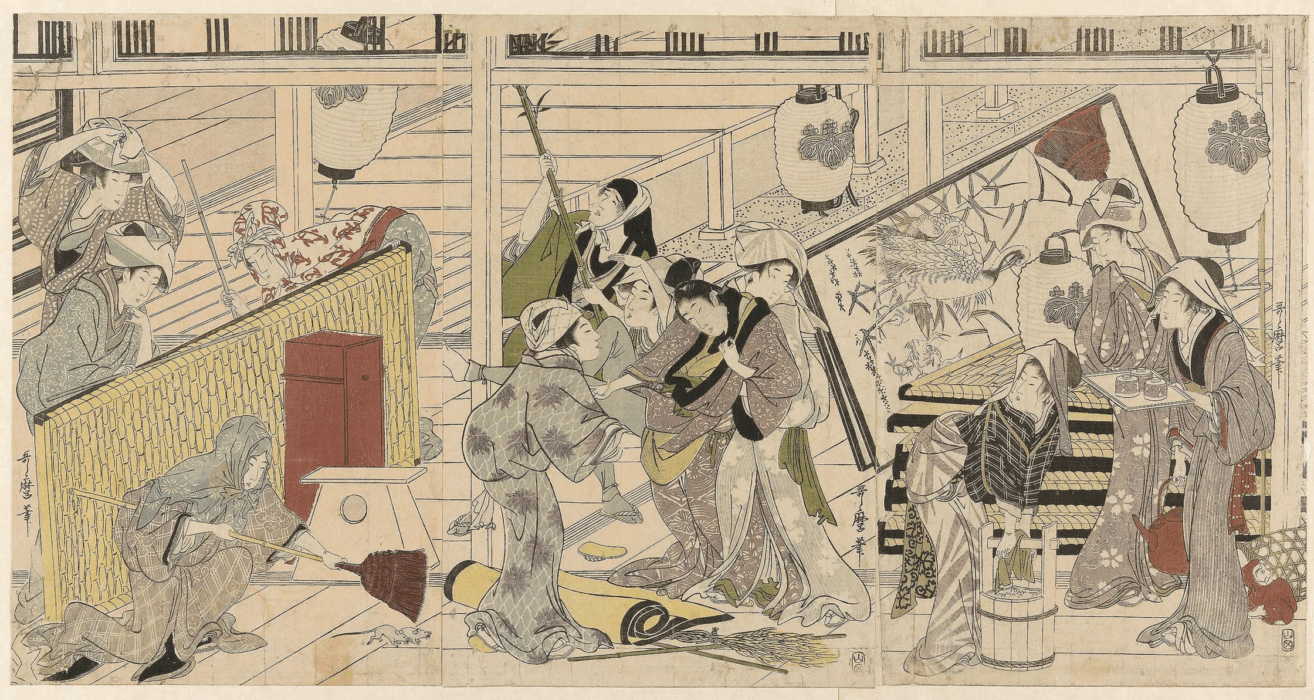
In a 2021 article for The New Yorker, Hiroko Yoda linked this belief to the idea of kami, spirits that live in both nature and everyday things, and to ohsoji, the “great cleaning” tradition before the new year. This tradition dates back over a thousand years, to a 927 A.D. government text called the Engishiki, which gave instructions for cleaning the Imperial Palace of Kyoto.
What began as susu-harai, sweeping soot from wood-fire homes, spread from temples and shrines to regular households by the seventeenth century, as an offering to the god of the new year. As Yoda noted, Marie Kondo didn’t invent this idea—she’s just its most famous modern example.
It’s never just about the trash
Tsunoda says volunteering isn’t just about cleaning stadiums. He calls it “patching over someone else’s problem,” according to CNN. “It can genuinely be picking up litter, or giving up your seat for an elderly person. It can be saying, ‘Let me carry that,’ to someone struggling with heavy bags.” He has volunteered at disaster sites more than 200 times, and with help from community fundraising, he brings children affected by disasters to World Cup matches.
Seven kids from the 2024 Noto Peninsula earthquake attended the game against the Netherlands. “Of all the ways to patch over someone else’s problem,” he said, “I think picking up litter has the lowest barrier and the widest entry point. And I believe that foundation, that base instinct for volunteering, exists in most Japanese people.”
For his part, Makoto Hasebe, captain of Japan’s 2018 team in Russia, said after a tournament: “I often feel that there is no country with streets as clean as Japan’s,” he said. “I am proud of this, not just as a football player, but as a Japanese citizen.”