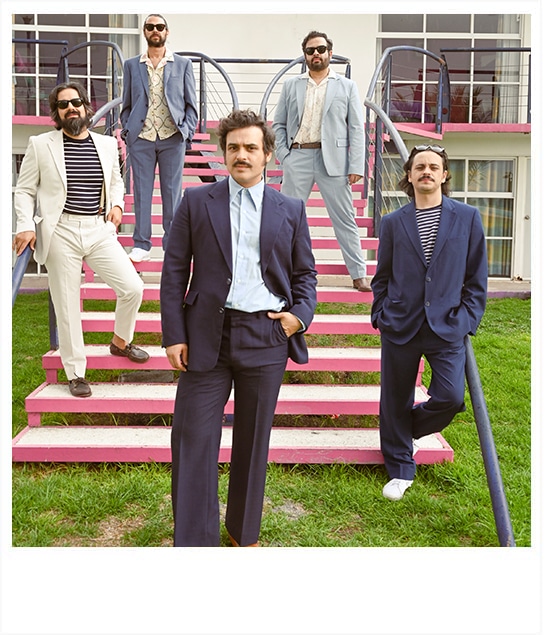
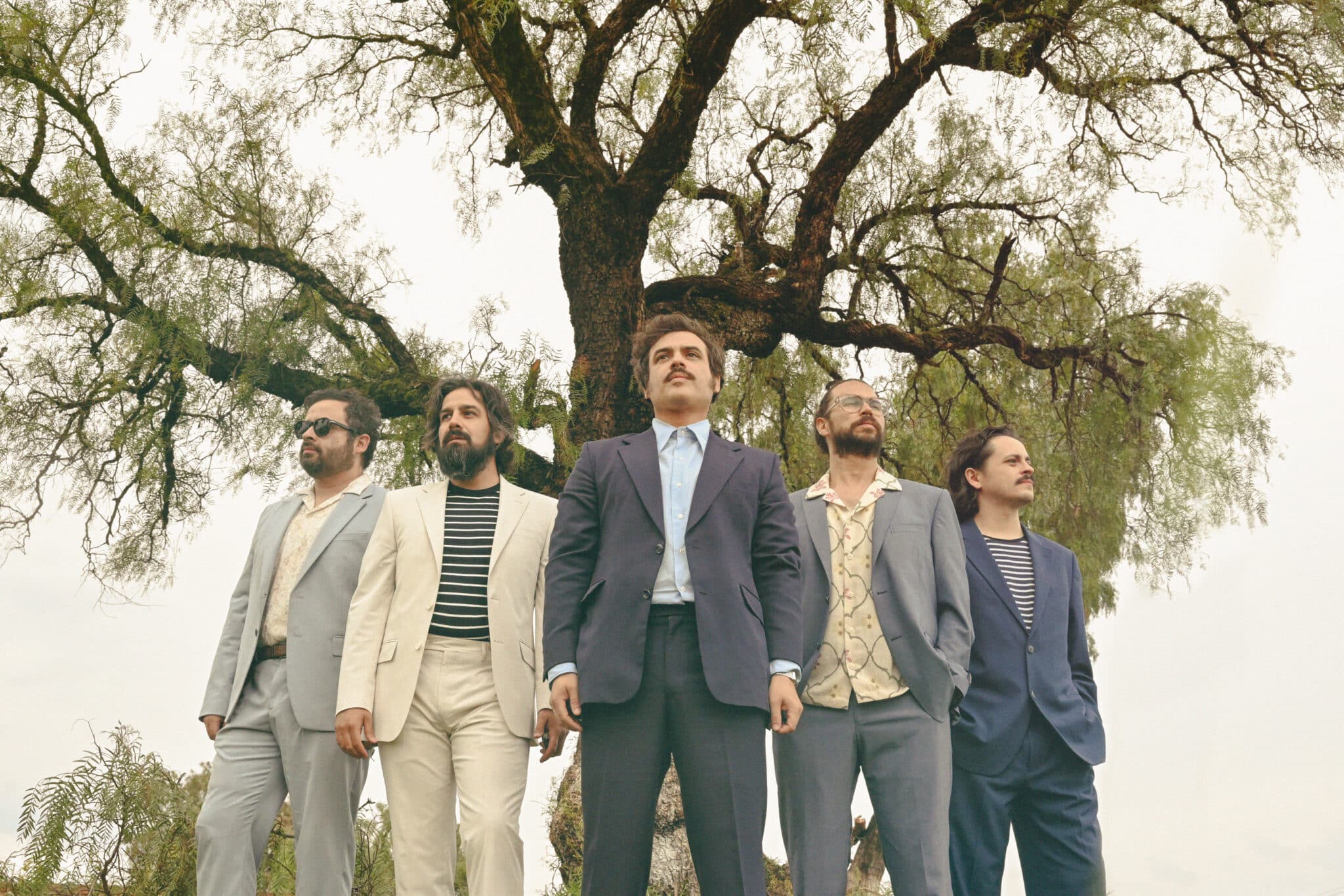
here is a moment in every long-running band’s life when the past loosens its grip, and something quieter begins to rise. I felt it while speaking with Enjambre’s frontman, Luis Humberto Navejas, as he described the strange alchemy behind “Daños Luz”. The album carries the warmth of 50s and 60s rock and the ache of lived experience. It also holds something else. A willingness to sit with the emotional fallout that accumulates when a life expands through family, distance, and the invisible pressures of a generation trying to stay sane in a world moving too fast.
Enjambre has always lived in the space between worlds. They formed in Santa Ana after the Navejas brothers left Fresnillo. They shaped their career in Mexico. They built a following across borders. Their sound has grown with them, moving from electrified indie rock to sprawling atmospheres, always threaded with a melodic longing that is unmistakably theirs. But “Daños Luz” feels different. Not louder. Not darker. It just feels truer.
“The damage that happens through time and its velocity, for better or worse, and what one learns on the way,” Navejas told Crema when I asked him about the album’s central idea. “Each song has its own meaning, although there is a common denominator between one and another.”
The record carries that duality: You can hear the bruising and the light.
When I pressed Navejas on the album title, he returned to the same idea with steady conviction. The songs circle the ways time presses against us, stretches us, and distorts us. He did not frame it as philosophy but as survival.
This is the first time he writes openly about anxiety and depression, according to the band’s press materials. You can feel that in the writing. Some songs move like confessions whispered into a tape recorder. Others swing outward with the theatrical vulnerability of classic rock ballads. The emotional stakes sit closer to the surface than in past albums, but they avoid melodrama. Everything is measured, observed, and almost tender.
Enjambre’s world has shifted in practical ways, too. The band members now live with families. Schedules splinter, and life demands balancing. “Before we had smaller families or some of us were single without children, and now we are all family people,” Navejas told me. Composing required intention and gathering required planning. The results, he said, feel richer. “When we did get together, the time was well used because we still have a deep passion for composing, and that can be heard in the recordings.”
There is something moving about a band finding new discipline, not because the industry demands it, but because life demands it.
Enjambre has always started from rock. Everything grows from that root system. Yet within “Daños Luz”, the branches spread into new directions. Navejas described songs that lean toward synthesizers, others toward balladry. The band’s instinct for exploration remains intact.
“We start from rock, and suddenly some things begin to go in a direction more toward synthesizers, others more toward ballads,” he said. They have never been interested in repeating themselves. The search for something original continues, and in this album, that search feels like part of the message.
When I asked how “Daños Luz” differs from past work, Navejas did not hesitate. “Each album is an ambassador of the era in which we find ourselves,” he said. This era confronts a world marked by mental health crises and constant overexposure to information. According to him, it shapes a generation with a “very peculiar personality.”
“Daños Luz” responds to that environment. It mirrors fragmented attention. It mirrors emotional overwhelm. It mirrors the attempt to reclaim meaning inside a noise-heavy world.
The four singles that introduced this era form a constellation. “La Diferencia,” “Angustias,” “Vínculo,” “Juguete”… Each moves through a separate psychological room.
In our conversation, Navejas walked me through the emotional terrain inside them. “‘Juguete’ speaks a little of what depression is,” he said. “‘Angustias’ speaks a little of what trauma is. ‘Vínculo, a little of what it is to live in a situation where time does not exist.’”
He quoted a line from “Vínculo”: “Esto es un vínculo sin eras.” A bond without eras. A connection unbound from linear time. He clarified that these ideas are not meant as scientific treatises. They live inside a metaphor. They live inside sensation.
Each song stands alone, but he acknowledged that the title “Daños Luz” ties them together by their shared fundamental concern. How does time leave marks on us? How do we make peace with them? How do we turn them into illumination?
When I asked which track defines the album, he refused the premise with gentle certainty. “The sum of the songs is what gives the album its identity,” he said. If he began naming one, he would end up naming all of them.
The cohesion is intentional. The band built this record as a full emotional cycle, not a collection of singles disguised as an album.
The visual universe surrounding “Daños Luz” emerged from collaboration. The band faced limited time, so they entrusted director Luis Fernando Pacheco, a longtime creative partner, with shaping the trilogy of videos for “Vínculo,” “Angustias,” and “La Diferencia.”
“He presented the visual concepts to us, we liked them, and he was the one who took charge,” Navejas said. The trilogy moves through shifting palettes and surreal imagery. It does not explain the songs. It extends them.
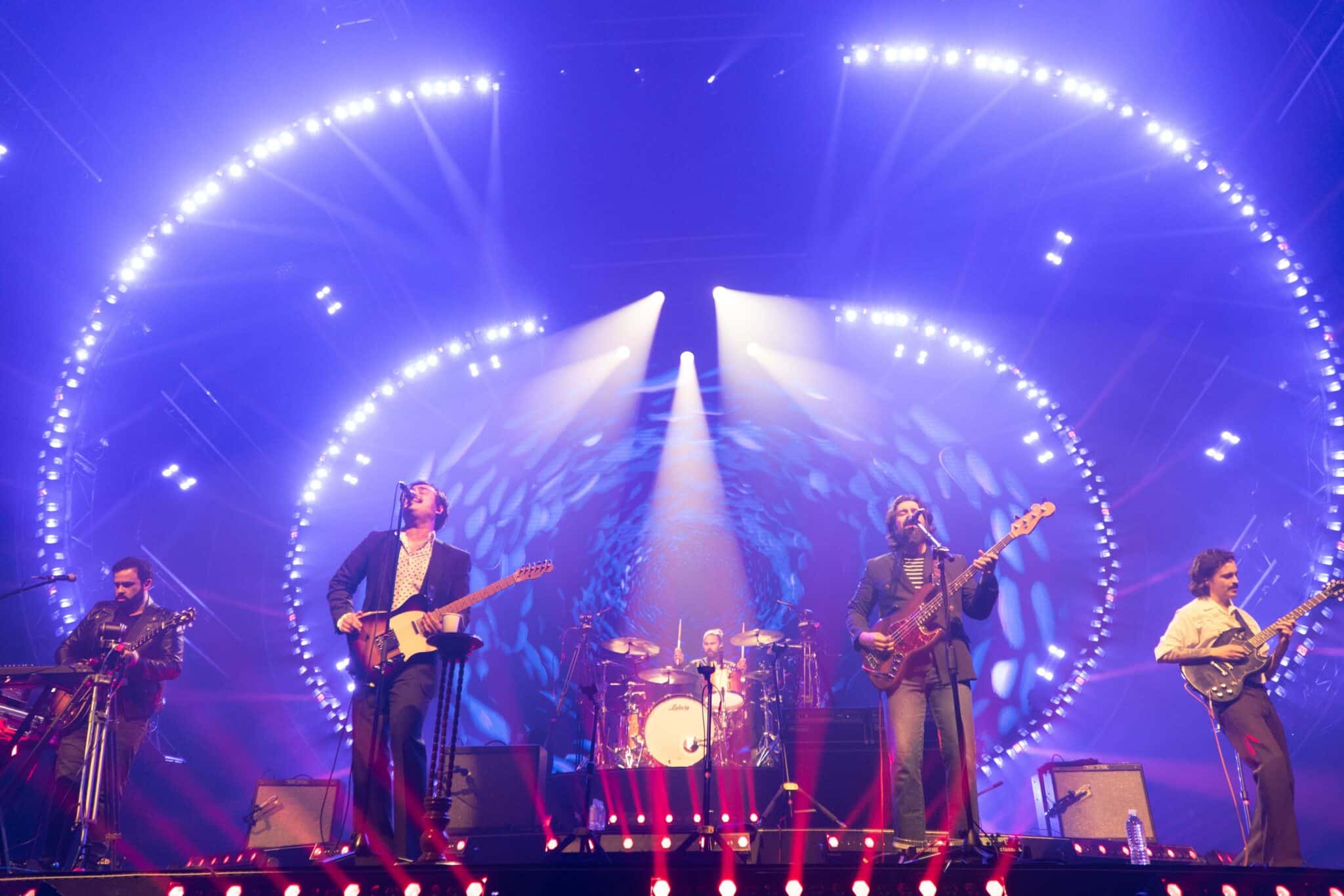
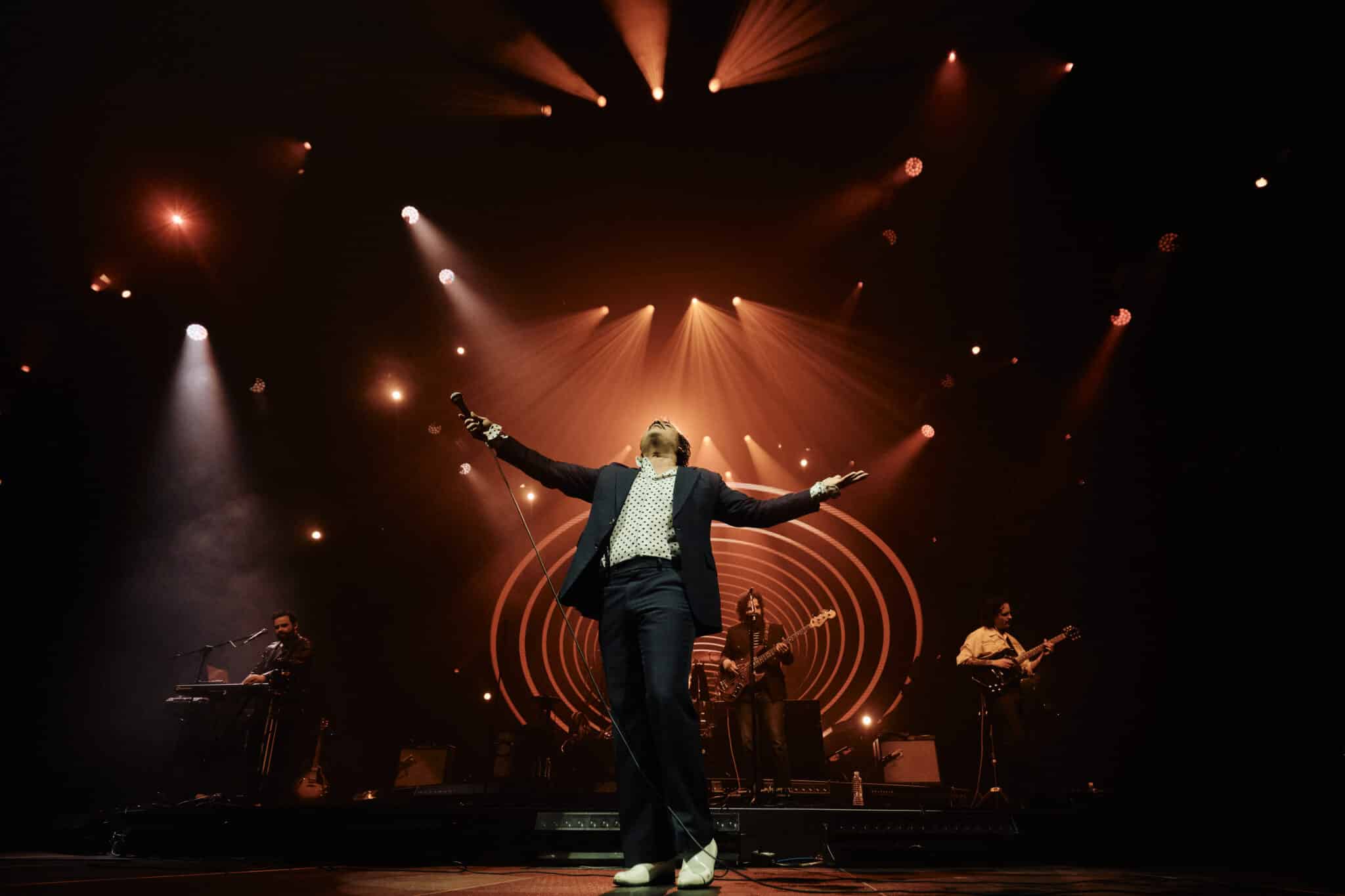
Onstage, Enjambre explores a different visual architecture. Navejas described a tunnel made of light where patterns shift, and colors bend. The stage becomes a corridor through time. Their intention is simple. The visuals should support the emotional current without overwhelming it.
“We are projecting visuals that allude to a tunnel that changes colors and shapes, and directions,” he explained. The result feels immersive, but not showy. It mirrors the album’s meditation on velocity and change.
The U.S. tour marks another turning point. When I asked what audiences can expect, Navejas centered the band’s relationship with their listeners. “Our concerts are characterized by the synergy we have with our audience,” he said. That exchange of energy shapes every performance. It turns the show into an experience that moves between dancing, shouting, memory, and release.
The Palacio de los Deportes show launched the tour. By the time they reach U.S. cities in 2026, the set will have shapeshifted through months of live experimentation. Yet the core concept will remain. The tunnel. The colors. The interplay between shadow and light.
“We are delighted with what we have chosen for the stage and the repertoire, and we are very excited to take it to as many places as possible,” Navejas said.
Festivals, he added, offer another kind of communion. They allow artists to perform for strangers who might never have sought them out. He spoke about the value of joining lineups filled with both established and emerging musicians. There is humility in his view of these spaces, and also pride. The success of rock festivals, he suggested, reflects the loyalty of listeners who still crave this sound even if mass media gives it little space.
It is easy to forget how long Enjambre has been building this world. Their history runs from childhood bands in Fresnillo to early years in California to platinum records and cultural recognition in Mexico. Their discography holds eras. Their soundtracks carry pieces of entire generations.
Yet nothing about their demeanor felt nostalgic. Navejas treated “Daños Luz” as proof that creativity does not slow when life expands. It simply requires more care. More honesty. More willingness to sit inside discomfort until it reveals something worth turning into music.
Perhaps that is the quiet brilliance of this album. It does not try to reinvent Enjambre. It tries to understand what time has done to them and what they can still offer back.
Near the end of our conversation, Navejas said something that summarizes the band’s present moment. “If things go well, people can identify with the songs and sing, and if things go better, dance.”
That hope carries no ego. It carries a kind of faith. The belief that music still reaches people at the exact temperature they need. The belief that damage and light can live inside the same structure. The belief that after so many years, Enjambre still has somewhere new to go.
And they do.