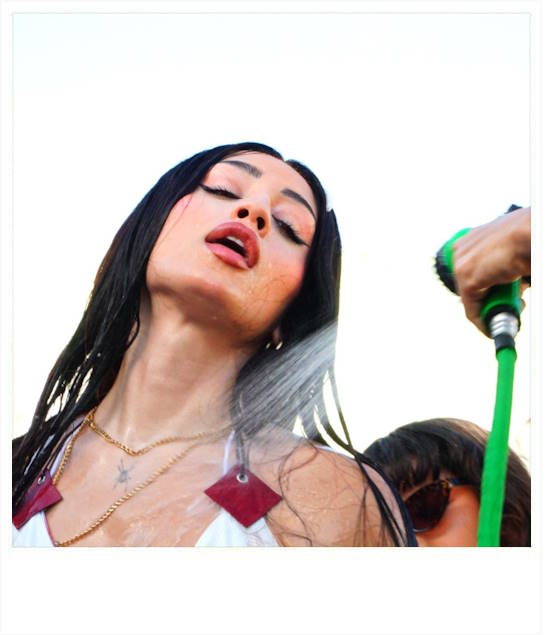
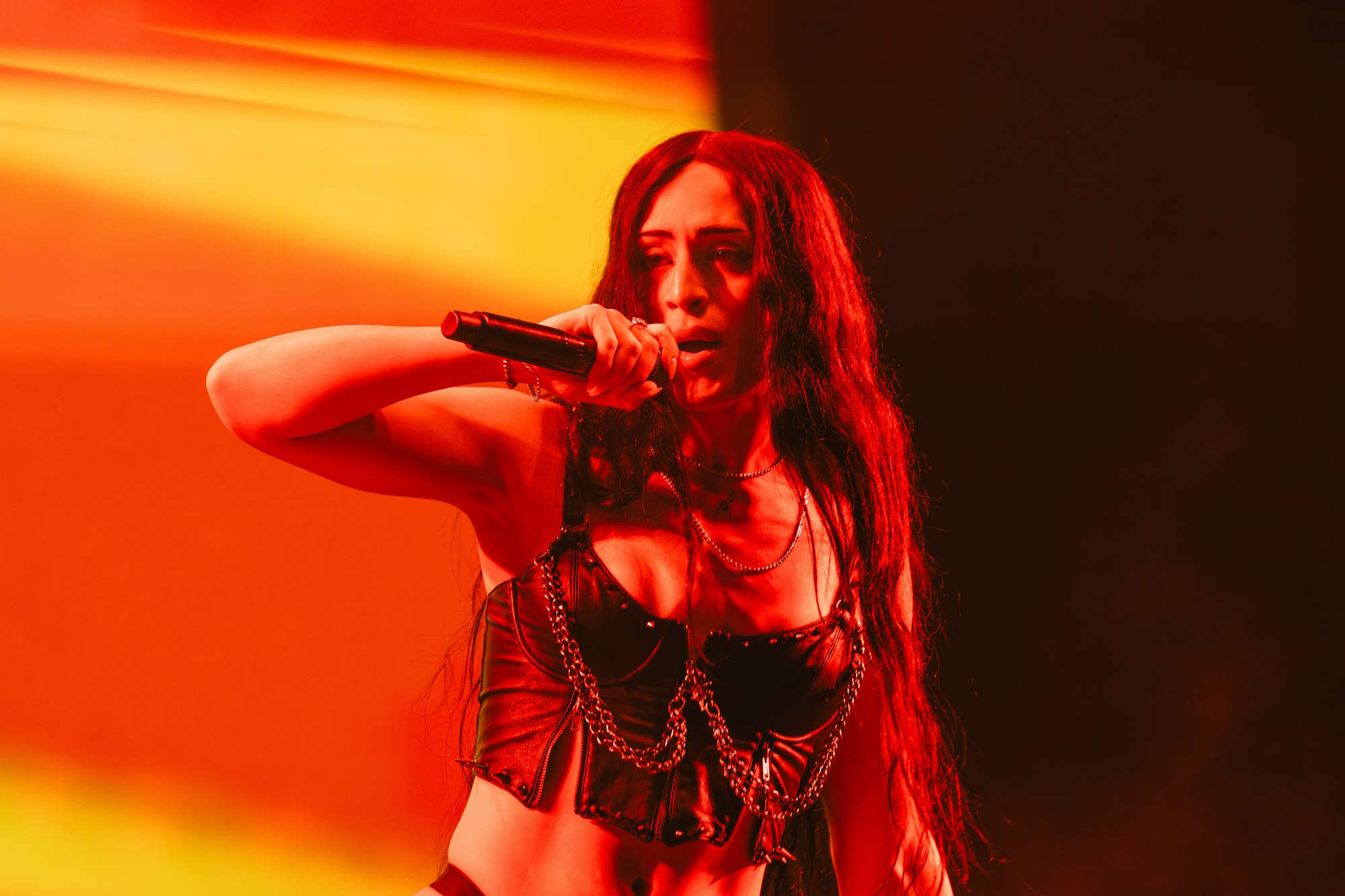
Villano Antillano has always sounded like she is doing two things at once: seducing the listener and interrogating the room.
People like to reduce her to a headline, a “first,” a controversy, a moment that can be summarized in one sentence. But when you actually sit with her work, you hear something else. You hear a writer with a fierce command of cadence. You hear Puerto Rico in the vowels. You hear a woman using humor as a blade and desire as a strategy. You hear an artist who understands that the body, in the public eye, becomes a battleground, whether you asked for that or not.
In our conversation, Villano spoke with the kind of directness that makes the industry nervous. Not because she is trying to shock. Because she refuses to perform comfort to anyone.
“Pichersita” is being introduced as a song full of attitude, sensuality, and power, and Villano meant every word.
“I think the music I’m making right now responds directly to a much more current chapter of my life,” she told CREMA. “Being ever increasingly socially perceived as female has catapulted me hypersonically into chaos and vulnerability… but like, I’ve managed to respond to all of that from a place of love and power, which requires incredible grit and strength.”
This way, Villano does not describe “becoming” as a soft glow-up storyline. She describes it as exposure and the vulnerability that comes when the world reads you differently, then acts as if it has permission to do whatever it wants with that perception.
“I’m just a vibe right now because everything is aligning, it’s more aligned than ever,” she explains.
It is rare to hear someone name chaos and alignment in the same breath and mean both, but again, Villana is not your regular girl.
People often talk about Villano’s provocative lines as if provocation were a byproduct. But in her own description, it comes from somewhere older than strategy.
“Not very, I think I’m naturally cynical,” she said when I asked how conscious she is of balancing seduction, humor, and confrontation. “It’s actually a part of my personality, but it’s also part of my culture. The first thing a Puerto Rican person will probably do in the face of something terrible is make an inappropriate joke, probably at their own expense, knowingly.” Therefore, provocation becomes a mechanism of survival. A place she operates from “while simultaneously ignoring, on purpose.”
“Sensuality and seduction and confrontation are in it because of power dynamics and beauty standards. Invoking desire and violence in others is sadly central to the trans woman experience, and I guess all I can do is laugh and keep a light spirit.”
Villano is from Bayamón, and she speaks about Puerto Rico the way people speak about home when home lives in their mouth.
“My wordplay,” she said, when I asked what Puerto Rico gives her music that the industry still does not know how to read. “I know the girls are ‘living’ on a global scale. But, the things that I say and the way that I say them inevitably hit ten times harder for the girls who share my native dialect with me.”
Then she gave an example from a line she loves. “Hay una línea en una canción del álbum, que es de mis favoritas, que dice: ‘me paré en tu canto made you watch me while I pissed it’.”
She then explained the underlying registers in that line. “And although I think anyone who speaks Spanish or English can read into it, I know the Bayamón girls will absolutely know what ‘tener un canto al que pertenecen y de donde son’ means, they’ll automatically grasp the level of disrespect I’m trying to convey.” Villano called rap “a display of wit,” then said, “The way we talk in the Caribbean is very ingenious. It’s charged with attitude and persona.”
Villano has spent years pushing against the way Urbano has traditionally framed women, queer people, and especially trans femininity. When I asked what it had cost her to occupy that space on her own terms, she did not romanticize the toll.
“It’s cost me mostly everything, but it’s also given me everything back,” she said. “Not following the rules because I inevitably exist outside most of them has done wonders for me personally and artistically, I’ve regained a sense of autonomy as a creator and have materialized much more acquisitive power as a woman.” She described the industry with a painful clarity: “However, the industry is naturally disrespectful and paternalistic towards women, and it’s been a terrible experience full of a lot of anguish to be at the mercy of absolutely deranged and greedy men on several occasions before I realized I didn’t have to be if I was willing to fight them. Which I am.”
There is a difference between being visible and being allowed authorship. Villano knows the porosity of that boundary, and she also refuses the expectation that she must manage other people’s projections.
“I fully believe this is something I am shielded from by design of my own perception,” she told me when I asked how she protects her narrative. “My lived experiences are solely my own; I have had to survive and to understand myself after the fact.”
Then she named what she will not do anymore: “I don’t wish to understand or control others’ perception of me because it usually requires a lot of unilateral labor on my part. Labor that the masses (as a third party, or as ‘the spectator’) are unwilling to do.”
And then, like a door closing, she said: “It’s curiosity and fetishization without the desire to humanize. I’m beyond it now. I don’t care that you cannot see my humanity when you are so obviously disconnected from your own. I’m above such things. I don’t beg.”
Villano’s work has always felt in conversation with desire. However, desire is a double-edged sword for women. On this occasion, she spoke about sensuality as something that deepened after she stopped performing femininity for the gaze.
“I’ve matured a lot in so many ways,” she said. “But I think fundamentally something that really helped me and happened simultaneously as my career was growing was that I stumbled upon my actual higher self in the process.”
“I was able to perceive her clearly for the first time, I noticed her on the other side… and she has walked with me ever since, quietly pulling me into the morph,” she explained. “Navigating that beautiful armageddon of ‘becoming’ has been key for me.”
Villano connected “becoming” to the abandonment of performance. “It immediately caused me to also abandon most of the performance I had internalized about femininity. Mentally exiting the male gaze psychosphere while being possibly most central to the male gaze in the physical realm was a crazy move on my part, but it was inevitable.”
“What emerged, who emerged, is actually ten times more sensuous, I would argue,” she continued, “because everything fell away and what was left after I confronted so many parts of my shadow self is a much deeper truth tied to my essence, which is feminine. I exist from that lens now.”
Being a trans woman in 2026 is almost an impossibility. Yet, survival is, in itself, a way of resistance. And Villana knows it first-hand. “It has been a while, and since then we’ve seen a global witch-hunt aimed directly at women like me,” she said.
She blamed the media’s incentives without hedging. “The media plays a direct role in this by coddling engagement over morals, I believe.”
“I can openly say I have suffered a great deal and have lost hope hundreds of times recently,” she said. “This past year I had to leave home and become an immigrant, out of necessity; I’ve been politically persecuted, I’ve been sexually assaulted by government officials multiple times… the list is long, and it all ties back to living as a woman such as myself.”
However, systemic oppression does not exclude what can arguably be the most painful human experience. “I had my heart totally and completely broken for the first time in my life, a very simple thing that is just tied to being human and loving,” she added, putting in evidence how state violence often becomes an abstraction of sorts when it comes to trans women, and erases the tenderness.
Villano, for her part, refuses both distortions. She insists on the whole human. “This unavoidable pain has re-humanized me in my own eyes,” she stated.
“It’s crazy, but the fact that I can go through all of that and still find my center to be an artist and hop on a beat and be the nastiest female model cyborg thing my home country has ever seen in urbano is bone-chillingly inspiring to me,” Villano said towards the end of our interview.
Then she turned the gaze back on the people rooting for her erasure. “No other person can do what I do, and I mean that in the cockyest way possible because the least I can do is actually flaunt my success in the face of people who are really rooting for my erasure and eradication.”
And then, with the kind of pride that comes from survival, she said: “Trans bitches are factually, truly, literally the baddest bad bitches. It is an honor for me to exist as one of us and to fight whatever fights I must. And we all do that. The minute we step outside, we’re all doing that.”
“That’s all this album helped me remember,” she concluded. “That even in the darkest nights, we continue to set the standards and to actually be who pushes art and human consciousness forward.”