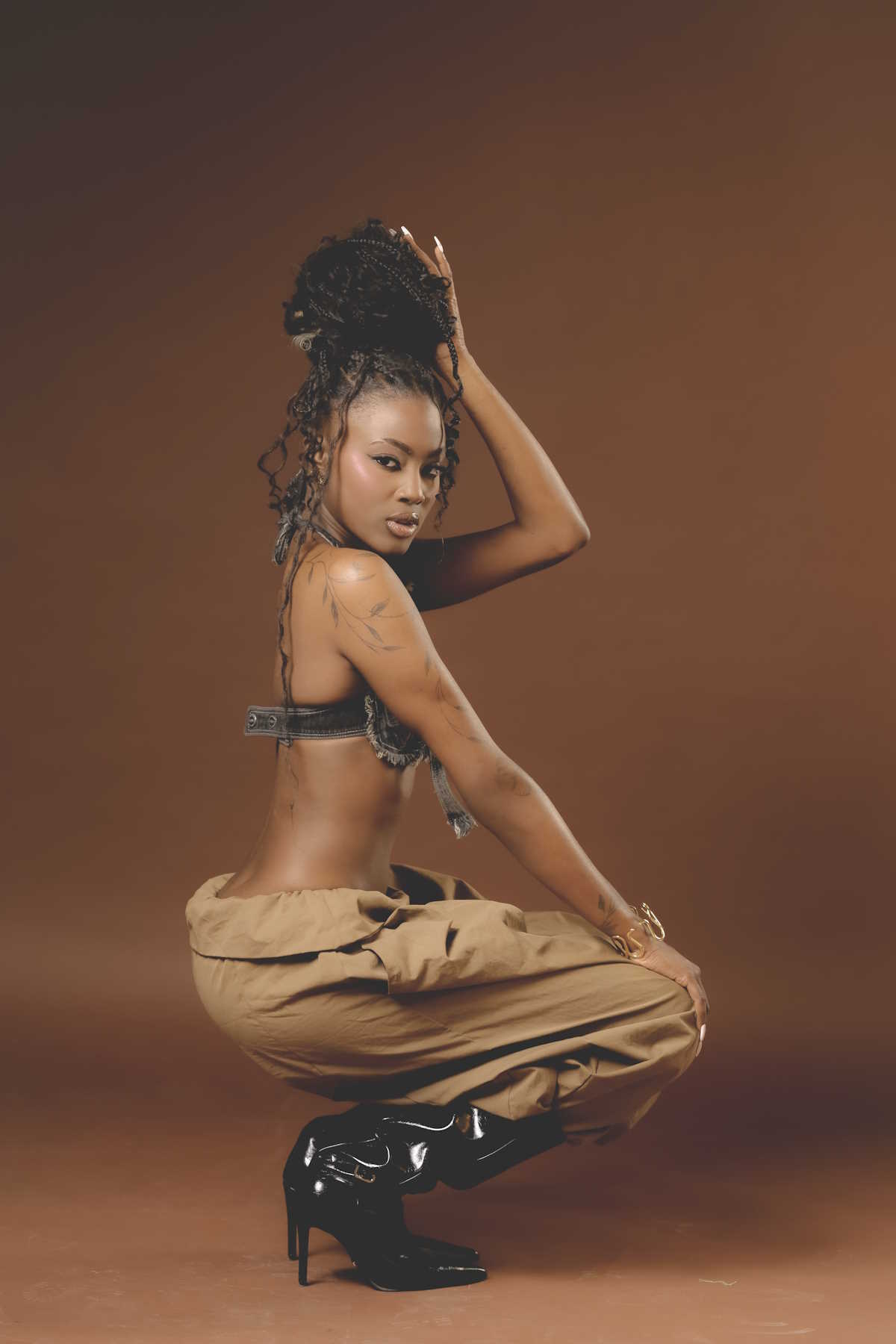
Ysa C has been performing her whole life. Long before the Premio Lo Nuestro nomination, before La Liga Femenina, before “No Llegamos Ni A Febrero,” there were the shows she put together in the streets of Cali with her cousins every time someone in the family came home from a trip. Her aunt organized neighborhood recreation activities. And by age seven, Ysa C already had many things to express.
Today, at 24, she is still trying to figure out where it all comes from. Yet, her conviction is unwavering.
Born in Cali and raised in a creative and artistic family, Ysa C spent her childhood on two tracks at once. Her aunt ran community recreation programs in the neighborhood, with classes and activities that kept the block together. When the family arrived from out of town, the cousins built full productions to welcome them. Choreographed dances, elaborate shows, the whole thing. Meanwhile, Ysa C’s serious ambitions, from age seven through eighteen, belonged to soccer.
“I really saw myself as a soccer player,” she says. It was her mother who redirected her. “Moms are always right,” she says, laughing. When graduation came, her mother told her, “I feel like you like soccer, but you’re something else. I feel like you can be more.” For the first time, she listened. She put down the cleats, picked up a guitar, and admitted what had been true the whole time.
At seventeen, without the financial resources to enroll in a formal conservatory, Ysa C joined a cultural foundation in Cali that offered musical theater, vocal technique, theater, and dance. It was not prestigious. It was formative.
Ysa C began writing songs that resonated with her, and the immediate genre was Afrobeat. She knew from the beginning. But the music industry has a way of making artists doubt what they already know.
“I told myself: people aren’t going to listen to me if I don’t do what everyone else is doing,” she explains. So she pivoted. She made reggaetón and even released an EP. And she felt, in her own words, completely out of place. “I said: This is not mine. I tried it. I gave it everything I had. And then I said: This isn’t the way.”
Then Hamilton arrived. The Afro-Colombian artist from Cartagena, who has since become one of the leading names in the genre, showed that there was another format, another concept, another way for Afrobeat to exist in Latin music. Watching that happen confirmed what Ysa C already knew. The lesson, she says, was simple and hard-won: “Look at what’s around you, feed yourself with what’s out there, but also listen to yourself. Because you’re the one who knows what you want.”
Ask Ysa C to explain the difference between Afrobeat and reggaetón, and she gets precise fast.
“Afrobeat is the root, the center, everything,” she says. “That’s where all of it comes from.” She draws a clear line between Afrobeat — the original, political, long-form tradition — and Afrobeats, the more commercial contemporary sound.
Unlike Afrobeat, which is a clearly defined genre, Afrobeats is more of an overarching term for contemporary West African pop music. The term was created to package these various sounds under a more easily accessible label, which was unfamiliar to UK listeners, where the term was first coined.
“What we make now is more danceable, shorter, with more current sounds,” she says. “But Afrobeats is the essence. That’s where the music comes from. That’s where we come from.”
As for reggaetón: “Reggaetón took from the roots,” she says. “It’s something a little more artificial.”
There is a question Ysa C has been asked before, about what it means to be a Black Colombian woman in the Latin music industry. And while she does not shy away from it, she is convinced we are now at a stage beyond those labels.
“I don’t come from a place of: I’m a Black woman in the industry,” she says. “I am a Black woman in the industry. I am the Black woman in the industry. And be careful, I’m coming with everything.”
Ysa C describes herself as always accelerated, a mind that rarely stops, even in sleep. And then comes the moment, at sunset maybe, or in a pause between everything, where it all just stills. “That’s what I want my music to be for people,” she says. “A little ray of sunshine, right at the moment they need it, depending on what they’re living through.”
That image is embedded in the title of her upcoming EP: Mientras Llega el Sol (While the sun arrives). “No Llegamos Ni A Febrero,” now streaming on all platforms, is the first door into that world, a smooth Afrobeat foundation with Caribbean Kompa influence, produced by Rafa Rodríguez (Honeyboos) and Pablo Rodríguez, built around the particular ache of relationships that end before they ever become what you imagined.