
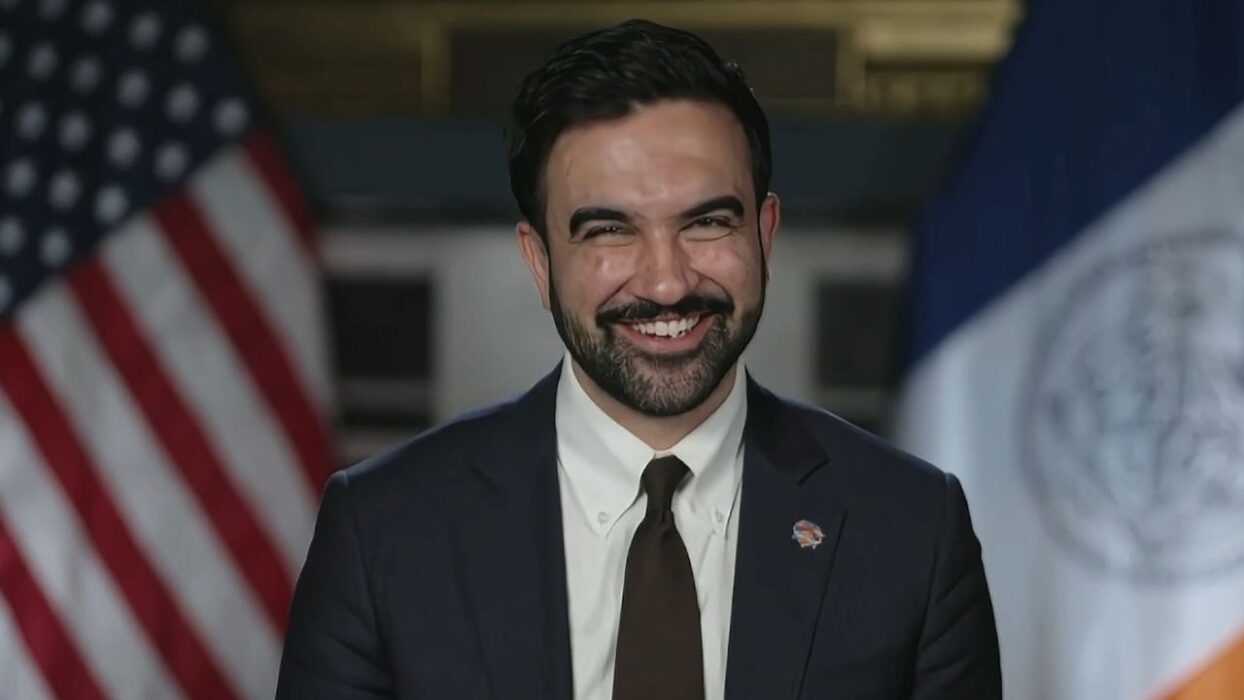
Exclusive: Zohran Mamdani on Why the World Cup Belongs to Immigrants
New York City is hosting eight World Cup matches starting June 11. Of the city’s 8.5 million residents, more than three million are immigrants. For NYC Mayor Zohran Mamdani, an immigrant himself, this tournament represents a moment when immigrant communities get recognized as the foundation of the city, not just its workforce.
Building Trust Through Small Actions, Zohran Mamdani’s Logic
When we spoke with Mamdani about how the city plans to support immigrant communities during the World Cup, he opened with a principle that guides his entire administration: if New Yorkers can’t trust government to do small things, they won’t trust it to do big things.
“If you’re trying to get a New Yorker to believe in the ability of city government to deliver on the most transformative vision for them, like universal childcare, something that would be a multi-billion dollar initiative that would provide free childcare for children now for the first time in New York City history at two years of age, then you also have to be able to fill in their potholes,” he said. “Because if they’re looking out of their window and they’re seeing a pothole that isn’t filled, then they’re asking themselves, ‘If I can’t trust them to do this, how could I trust them to do that?’”
This same approach shapes how the city is handling the World Cup. For his government, this goes beyond hosting matches. The economic benefits need to reach the immigrant-owned businesses that have built the neighborhoods where those matches will be watched.
The $26 for 26 Deal: 488 Businesses Across Five Boroughs
Mamdani created a partnership with 488 small businesses across New York’s five boroughs to offer $26 food and drink deals during the tournament. These are Dominican restaurants in Washington Heights, Colombian bakeries in Jackson Heights, Ecuadorian shops in Queens, and Mexican markets in Brooklyn.
“We want this to be a tournament where we remember more than just what happens on the field. We want this to be a moment when people from across the world come to our city, so that they actually get to experience the breadth and the beauty of our city,” he said. “So many of the communities you just mentioned, they have thriving small businesses across the five boroughs, and we want people to know about them, to enjoy them.”
The number keeps growing. When we spoke, there were 488 businesses. Mamdani is still signing up more.
Accessible Tickets and Youth Investment
Beyond the small business partnership, the city has secured 1,000 World Cup tickets at $50 each for New Yorkers. That’s significant when compared to average ticket prices, which can run into the thousands.
Mamdani also launched 50 soccer schools. These are free programs at public schools across the city where young people can learn the game, featuring community engagement and mural-painting components.
“We’re looking to make this a summer where we invest back in our people. Just as important as us securing 1,000 tickets at $50 a pop for New Yorkers for the World Cup is the fact that we secured funding to create 50 soccer schools,” he said. “These are soccer streets outside of public schools where we teach young people the game, we teach them how to play it, how to celebrate it, and also just painting murals about it.”
Housing and Long-Term Investment
The World Cup represents a moment, but Mamdani is focused on what comes after. When we asked what issues young New Yorkers should be paying attention to, he pivoted to housing. Last week, his administration released a housing plan called Block by Block, designed to ensure young people can afford to build their lives in New York rather than leaving for other cities.
He also directed us to nyc.gov/summer, a website with hundreds of free activities across the five boroughs that young people can access by filtering by age, zip code, or interest. Soccer, basketball, gardening, and photography. The infrastructure for young people to engage with the city, not just during the World Cup, but year-round.
Zohran Mamdani on Immigration and Belonging
When we asked what message it sends to have one of the world’s biggest sporting events in a city built by immigrants, Mamdani didn’t hesitate when highlighting recognition.
“Recognition of the fact that immigrants have helped to build this city, and of the eight and a half million people who call this city home, more than three million are immigrants. And I’m actually one of them,” he said. “This is a moment when New Yorkers get to live the fullest version of themselves, where they get to cheer for the place where they live, and also the place where they came from.”
Mamdani himself is an immigrant, and he knows what he’s talking about. His experience shapes his government’s approach to the World Cup, and the need for a platform that celebrates the communities that actually built the city.
The Contrast: What Other Cities Are Doing
Not all World Cup host cities are taking this approach, however. In Miami, for example, tourism reports show that international travelers are canceling bookings due to immigration concerns. The American Hotel and Lodging Association found that 45 percent of Miami hotel owners are reporting shortfalls. Similarly, Civil rights groups have issued travel warnings to international visitors about detention risks.
New York’s strategy stands in evident contrast. The city is actively promoting immigrant communities as central to the World Cup experience. According to Mamdani, this approach is deliberate and grounded in how the city actually functions.
Soccer as a Unifying Language
When we asked Mamdani about the role sports can play in building community during isolating times, he spoke about how shared investment in a team creates collective identity.
“Sports have a critical role to play. It feels like the entire city has come alive, and we are all thinking about the same thing. We’re all praying for the same thing, and there’s a real sense of community that comes out of that,” he said. “We hope to see the same thing in the World Cup.”
He also emphasized soccer’s significance for communities where English might not be the first language. “Oftentimes, when you’re speaking to someone who speaks a second language or a third language, and you’re speaking to them in something that isn’t their first language, you realize that you’re talking in some ways to a shadow of them. Soccer, in some ways, is a language that can unlock the fullness of each person, whether yourself or someone else, and create a new thread between the two of you,” he said.