
Wait, What Do Nvidia and Our 401(k) Have in Common Again?
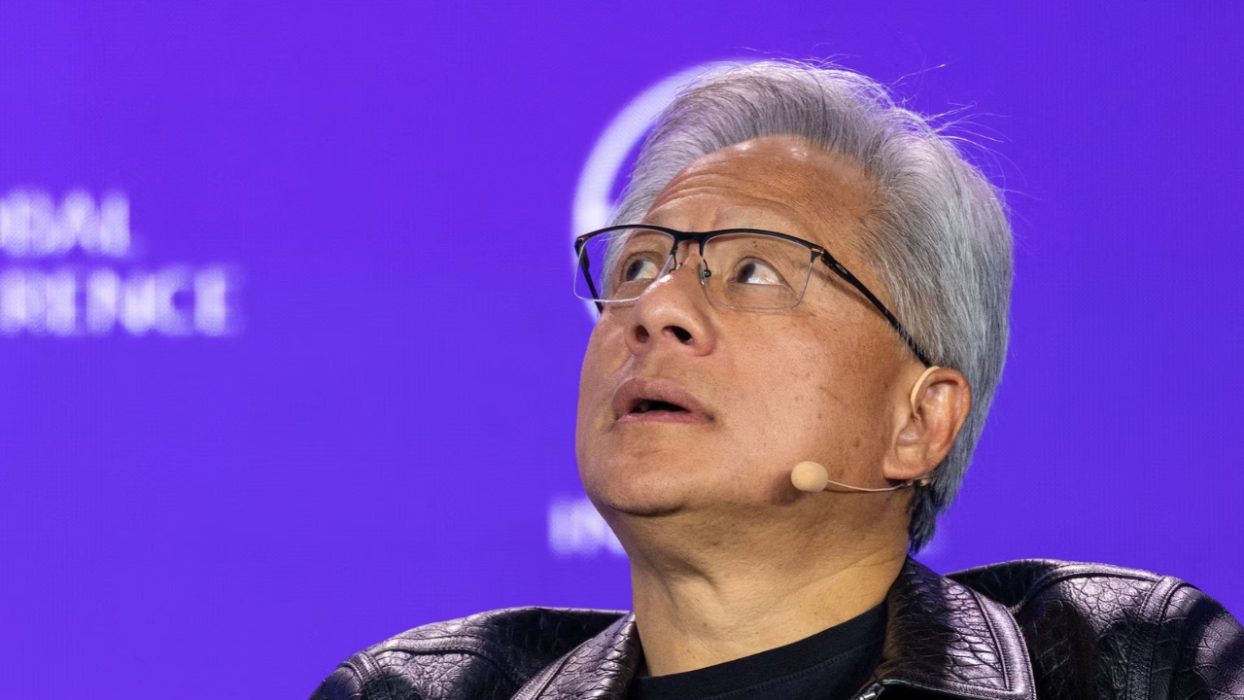
Jensen Huang is running Nvidia again, 11 days after he resigned over extramarital affairs, one of them with a Chinese businesswoman whom U.S. officials suspect of spying for Beijing. The company’s board brought him back on Monday, Nov. 23, under pressure from President Donald Trump. And the stock closed the day up 31.5%, a jump worth close to $1 trillion.
The telenovela mitú first covered on Nov. 10 went from Huang’s resignation to a board that swore it wouldn’t take him back, and along the way it shook the retirement accounts of Americans who have never bought a single Nvidia share.
Trump Says He “Made the Deal” to Bring Huang Back
Less than a week before the reversal, Nvidia’s new board chair, Harvey Jones, said during an earnings call that directors did “not intend to reinstate Jensen as CEO.” Three sources close to the board’s deliberations said that a personal assurance Trump gave on Sunday, that Huang hadn’t violated any national security law, sealed the reversal. The same sources said the plunging stock and doubts about Colette Kress, who was running Nvidia in the interim, also pushed directors to reconsider.
However, Trump had his own narrative.
“I made the deal,” he said in a Monday phone call with CNBC’s Eamon Javers. Asked what he had heard from the attorney general, Todd Blanche, on Huang’s possible criminal liability, Trump said, “They did a pretty good investigation, and they felt that he, himself, was exonerated.”
Citing U.S. government guidance, Nvidia said its board was confident “Huang’s reinstatement poses no national security risk,” according to Reuters. Huang said he “can’t wait to get back to work.”
Besides Alice Huang, the former Megaspeed executive tied to the espionage allegations, Huang faces accusations that he had relationships with two or more Nvidia employees. He has agreed to testify publicly before the Senate Banking Committee on Dec. 3. And, on Monday, the U.S. added Megaspeed and a Singapore subsidiary of Alibaba to its trade blocklist. Beijing has rejected the spying claims.
The Stock Fell Again the Next Day
But then, by Tuesday morning, Nvidia had dropped around 5%, and the Nasdaq Composite was down 1%. Analysts at Bernstein wrote that “the on-again-off-again response from the board is, frankly, clown-like,” even as they said they were “happy to have Jensen back.”
Monday’s rally also fell short of erasing the losses since Huang’s Nov. 12 resignation. In fact, Nvidia’s shares remain down for 2026.
Nvidia Is Probably Already in Your 401(k)
And this brings us to our original question. After all, we keep seeing mainstream media spiraling in and out of the chisme, but we forget to ask exactly how it affects us.
So, in case you didn’t know, many everyday 401(k) accounts hold index funds that mirror benchmarks such as the S&P 500 and the Nasdaq 100, and those benchmarks are often weighted toward giants like Nvidia. Index funds are available in roughly 97% of retirement plans, up from 79% two decades earlier, according to a March study by the Investment Company Institute and ISS Market Intelligence. As of Nov. 13, Nvidia was roughly 6% of the S&P 500, the index’s second-biggest weight after Apple.
Target-date funds can also hold Nvidia shares. Those funds spread money across different kinds of investments and are built around the year a worker plans to retire.
Just 10 companies make up roughly 40% of the S&P 500. And the top 10 holdings in the Nasdaq add up to nearly half of that index’s value. “The concentration risk here is the thing to be worried about,” Sam Taube, lead investing writer at NerdWallet, told ABC News.
How Much the Scandal Cost Retirement Savers
Between Nov. 6 and Nov. 13, Nvidia lost more than $550 billion in value, about 13%. By Nov. 15, the stock had fallen nearly 30% in a month, and Axios, working from outside estimates, calculated that Huang’s resignation may have taken thousands of dollars from a typical baby boomer’s savings.
Gains elsewhere in the market softened the hit for index investors. The S&P 500 rose 2.9% in the week through Nov. 12. And would have climbed an estimated 3.8% had Nvidia been left out. Before Huang resigned, Reena Aggarwal, director of the Georgetown Psaros Center for Financial Markets and Policy, told ABC News that “Nvidia does make up a big chunk of some important indexes,” but said she would think long term rather than about daily swings.
Shiva Rajgopal, a Columbia Business School professor and corporate governance researcher, told CBS that companies built around a celebrated CEO “are amazing wealth creators for shareholders.” He added, “But hopefully, shareholders know what they are doing when they buy the stock of these companies, because the exact same structure also has a lot of fragility built into it.”
Similarly, Ryan Sterling, CEO of NerdWallet Wealth Partners, told KCRA 3 that target-date funds are generally well diversified. “And this is why you diversify, is you want to minimize the chance that one story, one scandal, is going to have an impact on your retirement,” he said.
The President Holds Nvidia Stock Too
However, for millionaires, like the U.S. President, the rules of the game are different.
Trump holds $11 million to $55 million worth of Nvidia shares, Reuters found after reviewing his 2025 financial disclosure and his 2026 trading filings. And Monday’s rally may have raised his net worth by up to $17 million. A White House spokesperson responded that third-party financial institutions manage the president’s portfolio independently and that neither he nor his family can direct its investments.
Right, as if being the President of the United States didn’t give you a massive advantage.
For their part, lawmakers from both parties objected to the reinstatement. Senate Minority Leader Chuck Schumer said Trump was “putting his own financial interests … before our national security,” and Nebraska Republican Sen. Pete Ricketts said Huang’s return “doesn’t absolve Nvidia of answering for national security concerns and unaccounted-for chips,” Reuters reported.
James St. Aubin, chief investment officer at Ocean Park Asset Management, told Reuters that Huang’s return sends “a troubling message about the state of corporate governance in America.” He added, “Certain executives are going to be held to different standards if you are perceived to be a one-of-one.”
“That financial markets moved on the employment prospects of one individual suggests either equity valuation models or current pricing might need to be examined,” Paul Donovan, chief economist at UBS Global Wealth Management, said.