
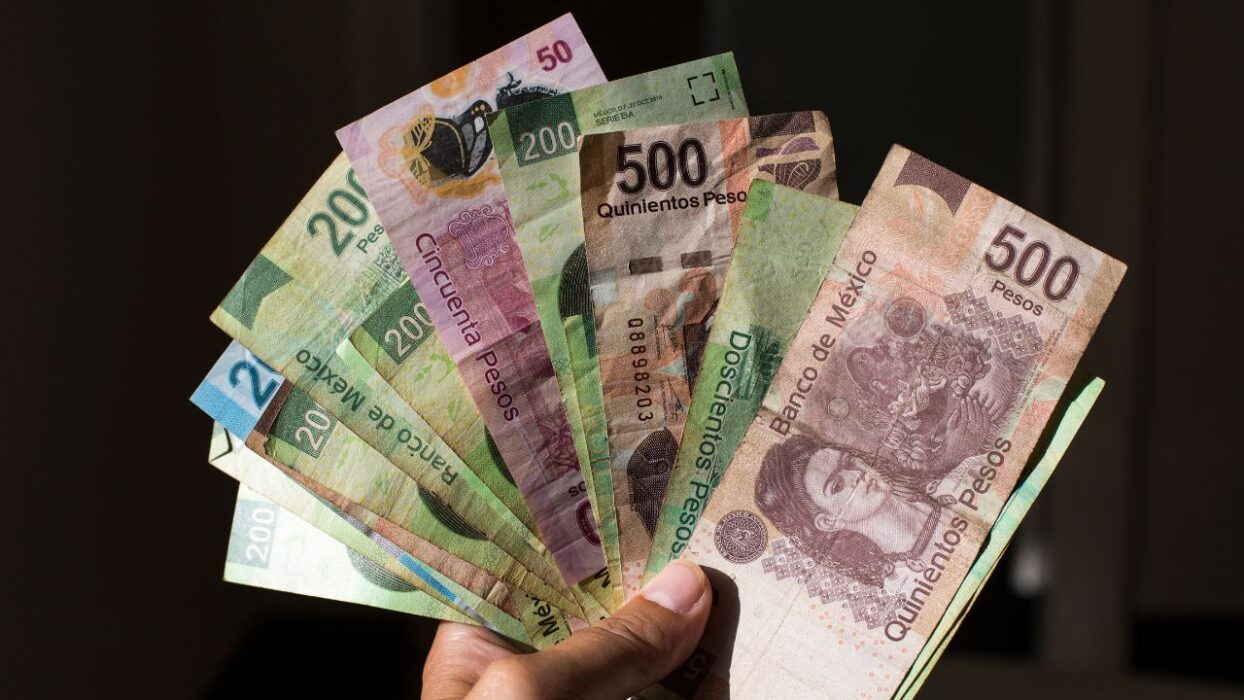
Mexico Beat America on Inflation for the First Time in 50 Years. Here’s What That Means
In June 2026, Mexico’s annual inflation came in at 3.37 percent, according to INEGI, Mexico’s national statistics agency. The United States, in that same month, sat at 4.2 percent, a gap of more than three-quarters of a percentage point running in a direction that has not been true since the 1970s.
Mexico’s prices are rising more slowly than America’s, and the trend is still moving. By early July, Mexico’s consumer price index had dropped further to 3.10 percent, the lowest it had recorded since December 2020, and comfortably inside the Bank of Mexico’s target range of 3 percent, plus or minus one percentage point.
If you grew up in a Mexican American household where teachers and politicians alike always described your parents’ homeland as the unstable one, the violent one, the country sending its problems north, sit with that number for a moment.
Read It Again: For the First Time in 50 Years, Mexico’s Inflation Is Lower Than the U.S.
For decades, Mexico’s inflation ran significantly higher than the United States’, a gap that defined the economic relationship between the two countries.
Before the 2000s, Mexico’s rate was often more than ten percentage points above the U.S. rate, according to Mexico News Daily CEO Travis Bembenek, who published one of the first detailed analyses of the crossover in July 2026.
In the 2000s, the gap narrowed to roughly five percentage points. Then, in the 2010s, it fell to about three percentage points. The direction, by any analysis, was unidirectional. Higher inflation produced a weaker peso; the weaker peso required higher interest rates; higher interest rates restricted investment; and slower investment compounded into lower productivity and stagnant wages, working like a tax on every Mexican family for fifty years.
The one exception came during the post-COVID period, when the same global supply chain disruption hit both economies simultaneously. And the United States briefly hit 8.0 percent inflation, compared with Mexico’s 7.9 percent in 2022. That convergence traced to a single external cause, not to any divergence in how each government managed its economy.
Now, in the first half of 2026, Mexico’s consumer price growth has moved steadily downward while America’s has climbed in the opposite direction, placing Mexico below the United States on inflation for the first time since the 1970s.
The Country That Was Always Supposed to Be the Unstable One
Inflation, economists across the political spectrum have long noted, functions as a form of invisible taxation. John Maynard Keynes called it “a method for governments to secretly confiscate citizen wealth.” Similarly, Warren Buffett described it as “a tax more devastating than any legislative action.” For his part, Milton Friedman named it “taxation without legislation.”
But the family paying rent in Houston, Boyle Heights, or Pilsen does not encounter those definitions in the grocery aisle or at the gas station. They feel it in the moment the paycheck that covered last month’s bills comes up short this month. However, when that norm is more prevalent in one country than in another for fifty consecutive years, it shapes how the world perceives both places and how people from each place understand themselves.
Now, back to the facts. Mexico’s debt-to-GDP ratio currently sits at 45 percent and trends downward, according to Mexico News Daily. The United States’ ratio is 123 percent and continues to rise, nearly three times higher. Banxico, Mexico’s central bank, held its benchmark interest rate at 6.5 percent in a unanimous decision at its June meeting, per Reuters, signaling measured restraint in a volatile global environment.
Mind you, Mexico reached its current inflation numbers while absorbing Trump tariffs and the commodity price spikes that the Iranian and Ukrainian wars triggered, Bembenek noted, without those pressures pushing its rate back above the United States’. The country Americans spent fifty years describing as economically unreliable just hit its central bank target. Its northern neighbor, the one that spent those same decades holding itself up as the standard, did not.
What Mexico Got Right While the U.S. Looked the Other Way
Reuters reported on July 9 that Mexico’s June inflation came in below analysts’ forecasts, at 3.37 percent versus a Reuters poll estimate of 3.52 percent. Capital Economics analyst Kimberley Sperrfechter said the decline “will be welcomed by Banxico and means that interest rates will remain on hold in the near term.” By early July, Reuters reported on July 23 that Mexico’s 12-month inflation had decelerated for an eighth consecutive fortnight, reaching 3.10 percent, once again below what economists had predicted.
Core inflation, which strips out volatile food and energy prices, returned within Banxico’s target range at 3.95 percent on an annual basis. The primary driver of the July deceleration was a 1.50 percent biweekly drop in fruit and vegetable prices, according to INEGI data reported by the Rio Times on July 31, with the peso’s relative stability preventing imported inflation from rising to offset the domestic gains.
Analysts at Itau warned that “the moderation in other services inflation appears to be driven by temporary factors rather than signaling a sustained improvement in underlying price pressure.” They flagged El Niño-related weather disruptions as a potential upside risk to food prices in the final months of the year.
The trajectory, however, seems immovable.
What This Means for Mexican Americans Right Now
Second-generation Mexican Americans grew up with a particular economic picture of Mexico, one reinforced by every news cycle and every presidential campaign: volatile currency, high interest rates, and violence.
Now, the June 2026 inflation numbers rewrite that picture.
Mexico, with lower inflation than the United States, may face less pressure to devalue its currency. Lower inflation could open the door to lower interest rates, reducing borrowing costs for Mexican businesses and families and making home loans more accessible. Purchasing power may improve for Mexicans, and investment in Mexico could grow more attractive to international capital.
Americans with dollars have spent decades expecting everything in Mexico to cost less. Sustained lower inflation in Mexico, running below the United States, slowly corrects that expectation while improving the purchasing power of Mexican families who earn and spend in pesos.
Today, the United States is running at 4.2 percent inflation with a debt load nearly three times Mexico’s, while directing considerable political energy toward blaming immigrants and trade partners for its economic debacle. Mexico is running 3.10 percent inflation with a shrinking debt-to-GDP ratio and a central bank that hit its target in one of the more volatile global environments in recent memory.
In other words, the American Dream might now be the Mexican Dream.