
‘Visibility Isn’t the Same as Acceptance’: What the Congressional Stunt Over Latina Power Really Means
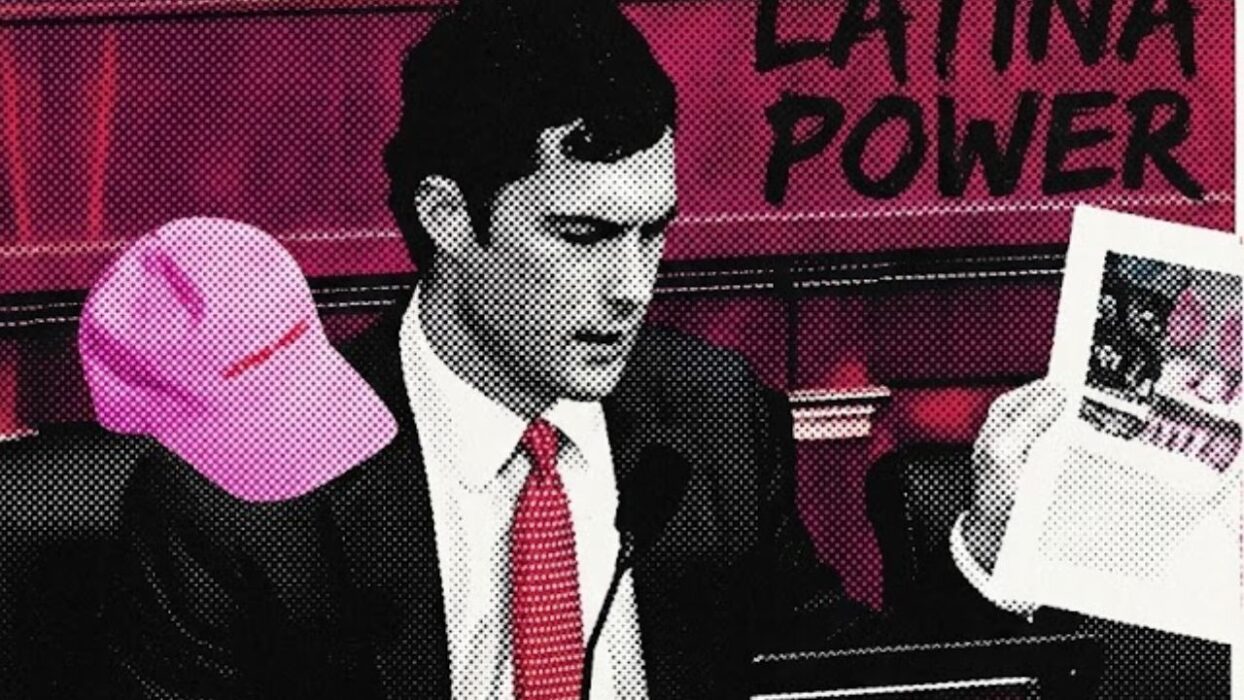
Rep. Brandon Gill sat in a congressional hearing room on July 22, held up pictures of a brand’s Latina Power products, and asked: “What is Latina power?”
He had to reconfirm several times that that was actually his question.
The director of the National Museum of American History, Anthea M. Hartig, replied: “The forces derived from being a Latina.” Gill then questioned whether it was “appropriate” for the museum to sell merchandise bearing those words. Hartig responded that she thinks it is.
The merchandise has been on that shelf for years.
The hearing, which Texas Democrat Jasmine Crockett called “the Republicans’ white pride rally disguised as a Congressional hearing,” came three weeks after the Trump administration’s Domestic Policy Council published a 162-page report describing the museum as suffering from “ideological capture,” per the Washingtonian.
The Hat Started in a Bedroom in Brownsville
The brand behind the merchandise is ShopJZD, a Latina-owned company. The “Latina Power” line launched in 2016. “It was born out of fear, hope, anger, and the deep desire to see representation,” the brand told mitú.
And despite what you’d think, the Smithsonian reached out to them. Not the other way around. “Seven years into building our brand, here was a federal institution putting a hat that says Latina Power on a shelf next to the rest of American history. That’s a beautiful thing for a brand that started in our small apartment, screen printing out of my childhood bedroom in Brownsville,” they said.
When asked who the Latina is that wears their products, they said: “She’s unapologetically herself. She could be nineteen, or she could be sixty. Above all, she’s proud of her cultura, proud of her people, and proud of who she is. When she puts it on, she’s saying ‘I know exactly where I come from and I’m not hiding it to make anyone comfortable.'”
They Have Always Done This
What happened in that hearing room on July 22 was not new. The American government has a documented, decades-long pattern of treating Latino cultural expression as a thorn on its side.
In the 1930s, the Hoover Administration targeted Mexican Americans as scapegoats for the Depression and facilitated the forced deportation of an estimated 400,000 to 1,000,000 people. Roughly 60% were U.S. citizens, per NPR and USCIS. Local governments in Los Angeles and Detroit ran the operation. Companies like Southern Pacific Railroad and Ford Motor Company sent people to Mexico by train, including their American-born children. No federal law authorized any of it. Decades later, California formally apologized in 2005.
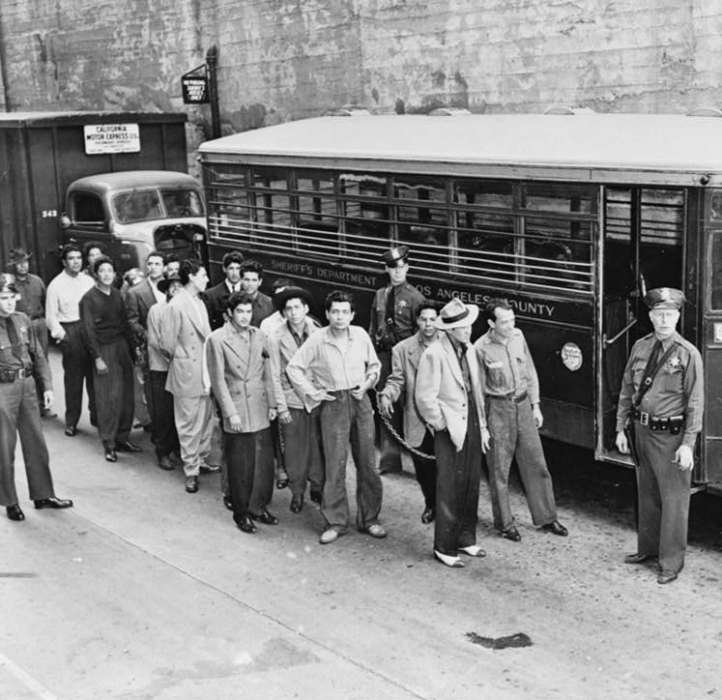
Similarly, in 1943, white service members spent more than a week attacking Mexican American youth in Los Angeles for wearing zoot suits. This garment had become a symbol of Chicano identity. The LAPD arrested nearly 600 Mexican Americans; almost no servicemen faced consequences. A later government committee confirmed that racism was the central cause of the riots.
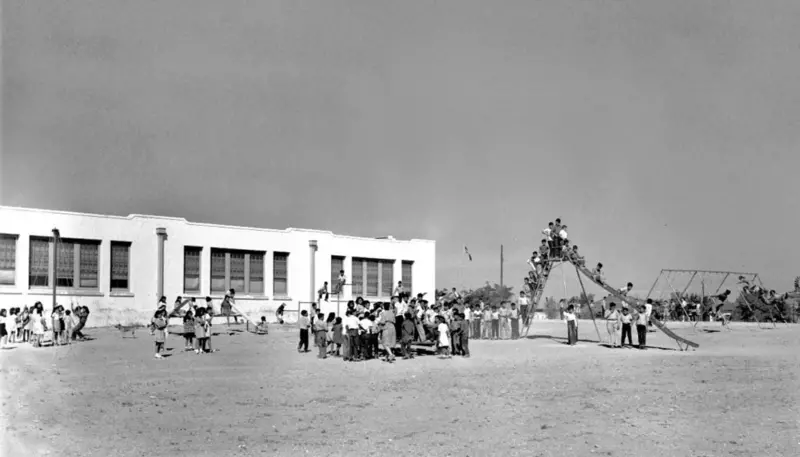
For much of the 20th century, schools across Texas and the Southwest banned children from speaking Spanish.
At the Blackwell School in Marfa, a segregated school for Mexican American children that operated from 1909 to 1965, faculty organized an event called the “Burial of Mr. Spanish,” in which students were made to write their favorite Spanish words on slips of paper, place them in a cigar box, and bury them at the base of the American flag. Students caught speaking their language faced corporal punishment and public humiliation. Decades later, many survivors refused to teach their own children Spanish out of fear.
Then, in 1988, California signed a law allowing local governments to ban lowrider cruising, a practice born in Pachuco culture in the 1940s and woven into Chicano identity for generations. It took 35 years, and a bill called “Cruising is not a Crime” to undo it. Lowriding became fully legal in California in 2024, per KCRA.
Six years later, California voters passed Proposition 187, which would have denied public schools, healthcare, and social services to undocumented immigrants. Federal courts blocked it immediately. A final ruling in 1998 struck down most of it as unconstitutional.
And then, in 2010, Arizona banned its Mexican American Studies program and removed books by Sandra Cisneros, Gloria Anzaldúa, Rudolfo Anaya, and Junot Díaz from classrooms. A federal judge later ruled the ban was enacted with discriminatory intent and violated students’ First and Fourteenth Amendment rights. The judge found the ban racially motivated.
It Is Getting Worse
Today, the Smithsonian is the last paragraph on a much darker chapter.
In 2025, the Trump administration proposed eliminating all federal funding for the planned National Museum of the American Latino, a Smithsonian institution that would have opened on the National Mall. The administration said it lacked confidence the museum would reflect “American exceptionalism,” per Hyperallergic and Roll Call. The proposed budget cut Smithsonian funding overall by 12%.
Similarly, across more than one-third of U.S. national parks, the administration removed or ordered the removal of exhibits and signage related to civil rights and diverse communities, per NPR and the Center for American Progress. A federal judge in Massachusetts ordered a pause, writing that plaintiffs had shown the effort was meant “to rewrite the Nation’s history with a white-out pen.”
For many of us, this is a page ripped off of a dystopian book. It is the same for the team behind ShopJZD as well. “Watching a Representative stand in a hearing room and ask, with a straight face, whether Latina Power is appropriate for a museum shelf is shocking and incredibly heartbreaking,” they told mitú. “It tells you pride is still treated as a threat when it comes from certain people and not others.”
They were not surprised. “It just confirmed something we already knew, which is that the work was never going to be finished just because a hat made it into a gift shop. Visibility isn’t the same as acceptance.”
“Somebody can hold your work up on C-SPAN like it’s evidence of a problem, and the honest answer is: good. Look closer. It’s still there, still selling. And still ours. Stay mad.”