
A New Report Found 152 ICE and Border Patrol Agents With Histories of Abuse, and That’s Just the Tip of the Iceberg
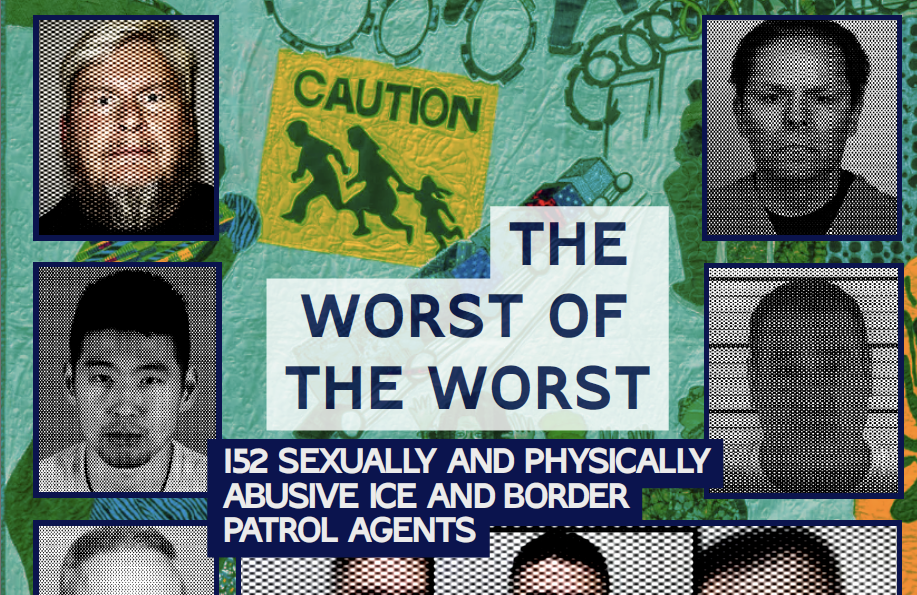
The Ohio Immigrant Alliance did not set out to write a report about rapists and killers wearing federal badges. They started by noticing a pattern of ICE agents in Cincinnati committing sexual and violent crimes against women, and asked a simple question: was this an anomaly, or something bigger? The answer, published last week in a report called “The Worst of the Worst,” is bigger than almost anyone would guess.
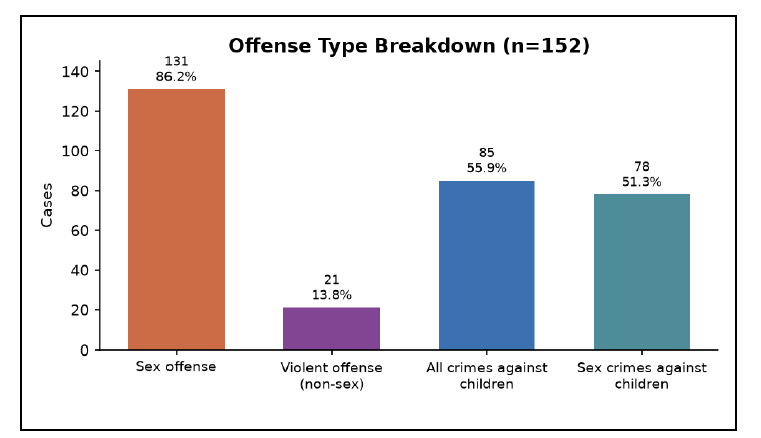
Across 152 documented cases of ICE, Border Patrol, and DHS-affiliated personnel charged with, convicted of, or sentenced for sexual or violent crimes, 86 percent involved sex offenses. What’s more gut-wrenching: 85 of the 152 cases, 55.9 percent, involved child victims. Read that twice. Then keep reading, because it gets worse.
The Numbers
Of the 152 individuals in the dataset, 131 (86.2 percent) have been charged with or convicted of sex offenses. Seventy-eight (51.3 percent) were charged with or convicted of sex crimes against children specifically, the single largest category on the entire list. Roughly 90 percent of all 152 cases were forms of gender-based and sexual violence, sexual abuse, child sexual abuse, and domestic violence, which OIA describes as rooted in the same culture of power, entitlement, and misogyny. The remaining 10 percent are mostly on-duty killings and excessive-force or civil-rights violations against immigrants or people believed to be immigrants.
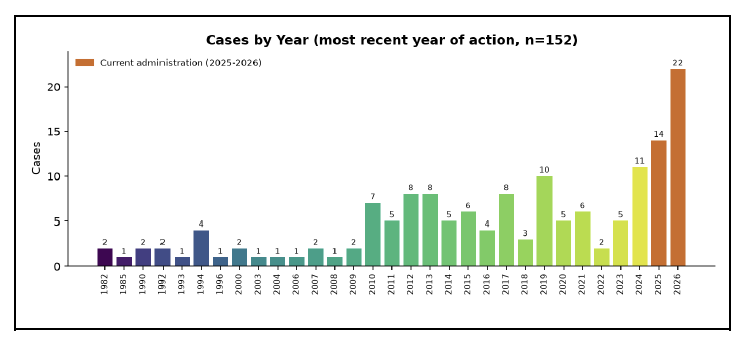
And the trend line is moving the wrong way. Cases documented in 2025 and 2026 alone already account for nearly a quarter of the entire 152-case list: 36 cases, with more than four months still left in 2026. 2025 logged 14 cases. 2026 has already logged 22, well ahead of 2024’s previous peak of 11.
The Badge Was the Weapon
For a large share of the men on this list, the job was not incidental to the crime but the gateway. In 69 of 152 cases, 45.4 percent, the offense was directly connected to the agent’s official duties: assaults on people already in custody, exploitation of immigrants encountered on patrol, abuse of youth programs an agent supervised, or crimes carried out with government computers, vehicles, and databases.
CBP agent Ramon Marquez used his role overseeing the Border Patrol Explorer Program, a youth activity, to sexually abuse a minor participant, with incidents documented at his home, on Explorer trips, and inside Border Patrol facilities themselves. Another agent used law enforcement databases to stalk a woman for years before killing his wife and himself while a minor relative was in the house. These agents intentionally abused the authority the government handed them.
Hired Anyway
Maybe the most damning finding in the entire report is who got hired, and who got to keep their job. Brashad Johnson, the person responsible for conducting background checks on DHS employees, was convicted of soliciting prostitution involving a minor. Dana Ray Thornhill was first arrested for sexual assault of a child at age 13 and served time in Arizona’s juvenile corrections system, yet the Border Patrol hired him anyway. He worked there for nearly 20 years before he was caught again, this time for child molestation and sexual exploitation of minors.
Then there’s the case that launched the report in the first place. Samuel Saxon, an assistant field office director at ICE’s Cincinnati office, had police called to his home 23 times in 18 months over domestic violence, strangled his partner more than once, and broke her nose and pelvis. “There’s no way ICE was unaware of Saxon’s history of violence… One of his bosses even called the police to do a welfare check when he didn’t show up for work, and they found him holding a knife. His supervisor admitted he was a ‘loose cannon.’ This went on for years, ICE knew about it, and they kept promoting Saxon instead of firing him,” OIA’s executive director Lynn Tramonte told Ohio Capital Journal.
Border States Bear the Brunt
Texas leads the country with 47 documented cases, 30.9 percent of the entire list, followed by Arizona with 30 (19.7 percent) and California with 20 (13.2 percent). Together, Texas and Arizona account for more than half of all cases on the list. Florida and New York each have 7; Minnesota and Michigan each have 6; Washington and New Mexico each have 3; and Louisiana and Ohio each have 2, with the remaining cases spread across more than a dozen additional states. Minnesota, Michigan, Louisiana, and Ohio’s numbers are the ones OIA flags as particularly startling, given how small those states’ federal immigration forces are compared to Texas, Arizona, and California.
Why This Is Accelerating Now
ICE and Border Patrol agents have committed crimes under every presidency, and growing the agencies’ budgets has been a bipartisan habit. But the data doesn’t stay neutral once you look at timing: the two Trump presidencies combined account for 62 of the 152 cases, 40.8 percent, despite covering only 5.5 years total. The second Trump administration alone is pacing 24 cases a year, four times the rate of any other administration on record.
Lilian Serrano of the Southern Border Communities Coalition, which has tracked Border Patrol-connected deaths for years, says the pattern extends well beyond who gets abused inside these agencies. “Of those cases that we have documented over the years, when we’re looking at nationality, we don’t have a nationality for all of them,” she said. “But of those that do have a nationality, the number one nationality would be Mexican, but it’s immediately followed by US citizens. So we have known that this violence is beyond just this idea that they’re just enforcing immigration law. It’s really about the impunity that exists within the system.”
Lisalyn R. Jacobs, a violence-prevention expert with Just Solutions, sees the same rot reaching well past the two agencies named in the report. “Whether it is the ‘Secretary of War’ and his focus on wanting testosterone injections for the troops, and the fact that he has been winnowing out senior women personnel, senior personnel of color, etc., or whether it was the whole very strange incident of the president distributing Florsheim shoes to his senior cabinet members and allegedly them all lying about their shoe size, there’s something well beyond toxic in this administration,” Jacobs said. “I think that has actually seeped into their approach to how they are handling and hiring both Border Patrol and ICE.”
The Fix Ohio Immigrant Alliance Is Asking For
The report’s central recommendation is almost aggressively simple: stop letting armed agents enforce paperwork. Peter L. Markowitz of Cardozo School of Law argues the entire model is a historical outlier, not a necessity. “The mass detention and deportation strategies of our federal immigration authorities seem intuitive and maybe even inevitable to many Americans,” he said. “But it’s important to lay bare how they are such a sharp break, not only from historic norms, but also from the way that other law enforcement agencies enforce the laws that they’re charged with. They’re neither the only nor the most effective ways to enforce immigration laws. Prior to 1980, there were no standing interior detention facilities in the United States. And for most of our history, deportation proceedings were initiated with a notice in the mail, not with handcuffs.”
Lauren Bonds of the National Police Accountability Project points to how far current ICE tactics have drifted from what policing professionals themselves consider acceptable. “There is a consensus in the policing community, not from people like me who are civil rights lawyers, but people who are former police chiefs or current police chiefs who are saying, you should not do a PIT maneuver to stop a vehicle unless there’s some dangerous felony afoot,” she said. “We’re seeing ICE do that just to serve immigration warrants and to detain people.”
Tramonte’s proposed solution is, actually, genius, albeit naive.
“The quickest fix to deal with a huge part of this problem, in my opinion, would be to take the civil enforcement side of ICE and make it a desk job,” she said. “Any other agency that enforces civil laws does it behind a desk with paperwork; it’s done through the mail, it’s done in conference rooms. It’s an office job. It’s not on the streets with guns, playing a game like how these guys feel like they’re doing. Those kinds of jobs, bureaucratic jobs, are not attractive to the David Brouillettes of the world.”
That last reference is to David Brouillette, the ICE agent whose ex-wives spent years warning anyone who would listen about his documented history of violence, brain injuries, and threats, warnings no one at DHS apparently checked before he murdered a father named Johan Sebastian in Maine.
Who Actually Caught These Men
Almost none of it was DHS. Immigrant women sexually abused by ICE officer Andrew Golobic reported him themselves, triggering the investigation that sent him to prison and onto the sex-offender registry. A 15-year-old girl abducted by CBP agent Aaron Thomas Mitchell reported him after she got free, and her courage led to his 27-year sentence. It was Brouillette’s own ex-wife who told the press what he was capable of, after the killing had already happened, not before.
“We wouldn’t even have this list of 152 if it wasn’t for brave immigrants, women, and children who reported them,” Tramonte said. “Immigrants who were caught by Border Patrol agents in the desert reported these guys to their superiors. A teenager who was raped by one of these agents, when she got free, she immediately ran and told on him. These government institutions are not keeping us safe. And women, immigrants, and children are the ones who are doing something about it, and that’s not okay.”