
Raúl Àvila Has Spent Nearly Two Decades Dressing the Met Gala’s Rooms. Look Closely, and You’ll Find Colombia in Every Single Detail
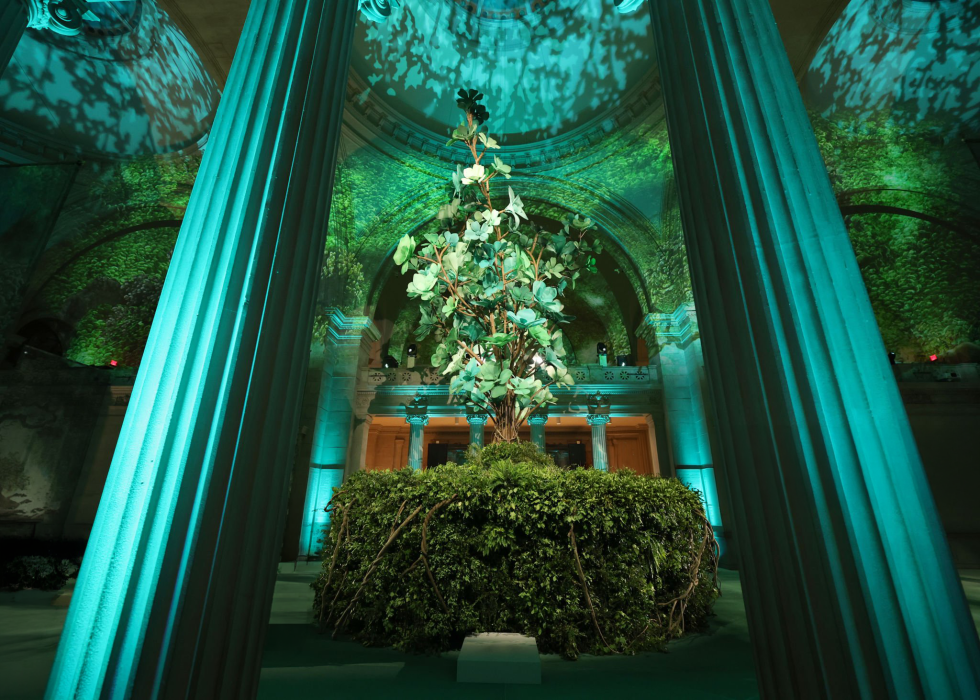
Each year on the first Monday in May, the Met Gala takes over the Metropolitan Museum of Art’s Great Hall. “Everyone looks up at the twenty-foot archways, the canopy, or the focal sculpture in the center of the Great Hall,” says Raúl Àvila, the Colombian floral and event designer behind the Met Gala’s decor. “But if you look at the base of the pedestals, the perimeter plinths, and the shadowed corners, you’ll find wild mosses, cascading Colombian ferns, and deep root textures. In European floral design, the base is often masked or polished away. In my rooms, the ground looks like the floor of a forest. That foundation grounds the fantasy in something real, untamed, and unmistakably South American.”
Àvila has led the gala’s design since 2007. For this year’s gala, whose dress code was “Fashion is Art,” he worked with the filmmaker Baz Luhrmann and the set designer Derek McLane on a concept drawn from Northern Italian gardens, with Italian shrubs at the entrance, wisteria draped overhead and down the walls, and a carpet painted by hand to resemble stone covered in moss. Ahead of the gala, he also launched “Behind the Bloom,” an archive of his flowers for the event going back to 2007.
If his rooms look familiar, his portfolio also includes the Tony Awards, the Oscars, and events for Spotify, Zimmermann, and Savage X Fenty.
In Colombia, Raúl Àvila Learned That Nature Isn’t Delicate
Àvila grew up surrounded by plants and flowers of every color, and he got his start in Bogotá. However, he has called New York his home since 1984. He settled in New York in 1984. “I only had a high school diploma, so I knew I had to learn technique,” he said.
“I carry an innate relationship with abundance. In Colombia, nature isn’t delicate or ornamental; it’s a living, overwhelming force of greenery, texture, and humidity,” Àvila says. “It taught me early on that plants are architecture, not accessories.”
Robert Isabell Taught Him That Luxury Requires Military Precision
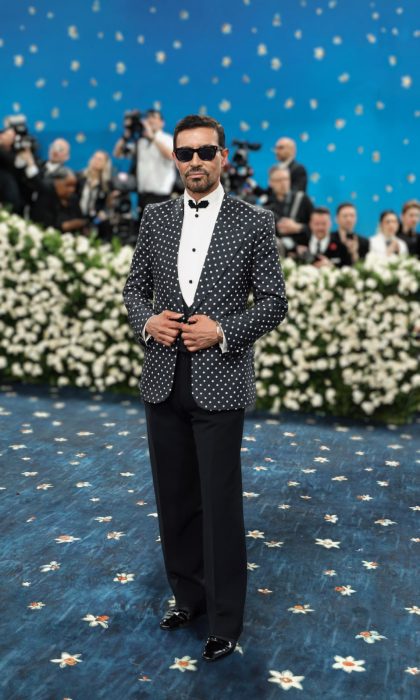
In New York, Àvila trained under the event designer Robert Isabell, and worked for him for 14 years before founding his own firm. Isabell designed the Met Ball for Vogue for more than a decade before he died in 2009. Through him, Àvila met Anna Wintour, who eventually changed his career trajectory. Their collaboration now spans more than 25 years.
“Robert was a singular genius. What I use from him every single day is spatial discipline and logistics,” Àvila says. “Robert never saw an event as floral design; he approached it as architecture and theatrical set design. He taught me how to read the proportions, how lighting dictates color perception, and that luxury requires military precision. With Robert, there was no panic, only preparation.”
“To find my own voice, I had to allow warmth and emotional generosity into the room. I chose to embrace raw color, layered biodiversity, and the sensual richness of my Colombian roots,” he says. “I took his architectural backbone and wrapped it in Latin soul.”
For Most of His Career, Raúl Àvila Measured Success by Going Unseen
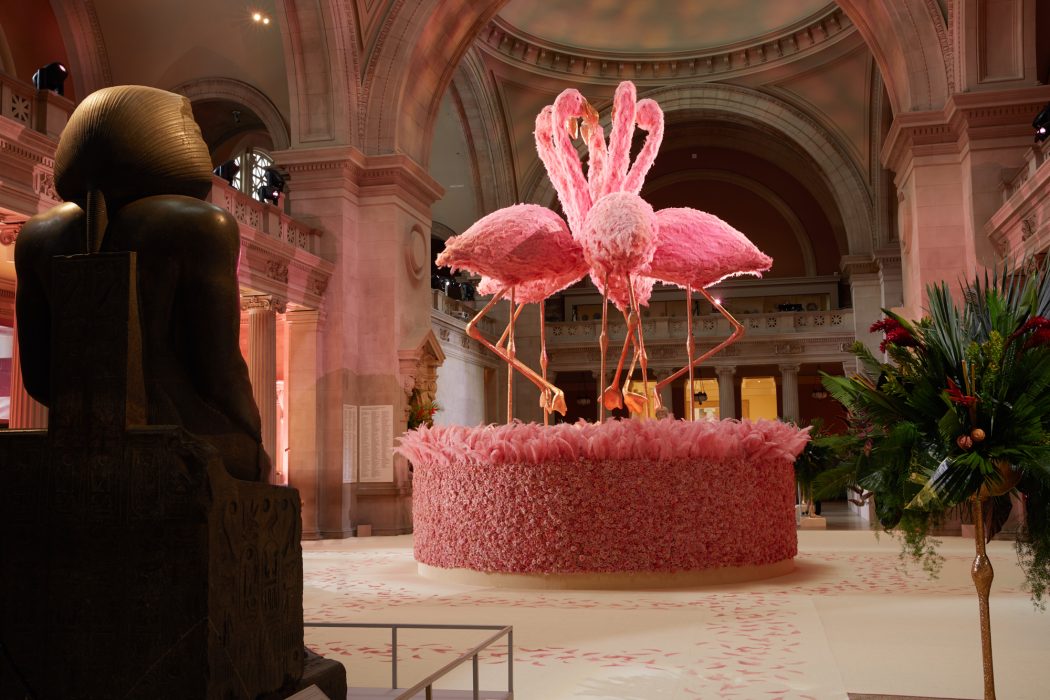
The whole installation at the Met has to go up in under 18 hours. “For most of my career, invisibility was the ultimate measure of success,” Àvila says. “If a guest walked into the Met or a private ballroom and thought, ‘This magical world just exists,’ without thinking about the crane, the structural riggers, or the thousands of water tubes keeping every stem alive, I had done my job. We operate like ghosts in the dark, loading in at midnight, engineering a world before sunrise, and stepping back so fashion and art can take the spotlight.”
“My relationship with that invisibility has shifted with time,” he says. “I realized that when Latino leaders in luxury remain invisible, our communities only get recognized for the physical labor, never the vision, the intellect, or the creative direction. Staying behind the curtain is no longer an option when you realize that young designers need to see themselves in these rooms.”
“Behind the Bloom” Shows the Months That Go Into One Night
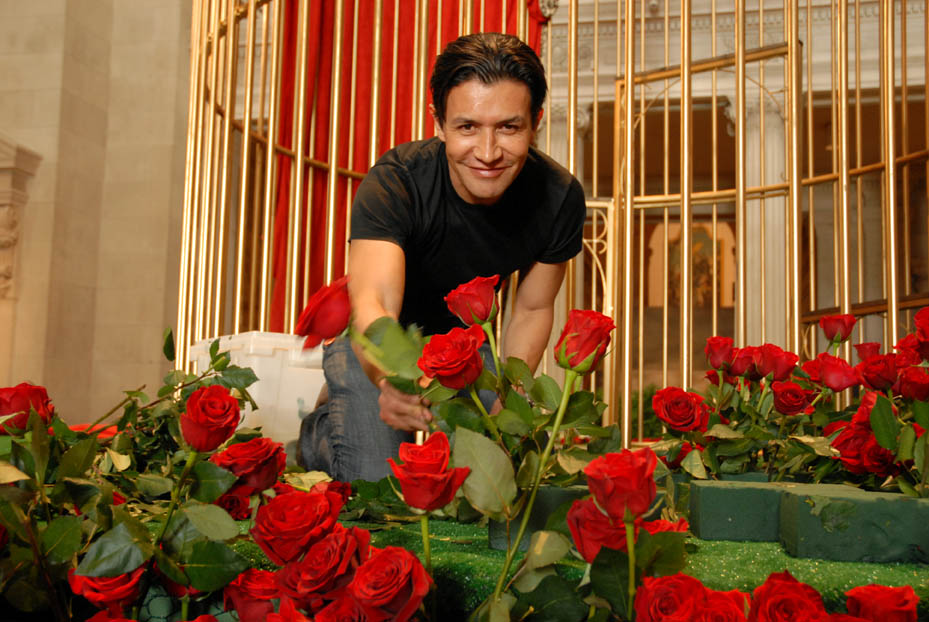
The retrospective, which Àvila shared on social media, includes archival photos and time-lapses of the Great Hall’s transformation. “There is a quiet poetry in creating something that only lives for a couple of hours,” he says. “Like a flower at its peak bloom, the fact that an installation cannot be bought, saved, or repeated is precisely what makes it unforgettable. It exists in memory, in photographs, and in how people felt standing inside it.”
“But while the flowers disappear at dawn, the craft and the people behind it shouldn’t. For nearly twenty years, the world saw only the final result on television,” he says. “With Behind the Bloom, I wanted to lift the curtain on the months of technical engineering, the scale models, the sleepless nights, and the hands of hundreds of carpenters, welders, and florists who make the impossible happen on the first Monday in May. I opened the archive because the work deserves its place in history, and I want young designers everywhere to see that the impossible IS POSSIBLE.”
Raúl Àvila Wants Young Latinos to Know They Can Build the Room
“Immigrants are constantly discussed in abstract political debates, reduced to numbers, or stereotyped as existing only at the margins,” Àvila says. “Sitting at the table with the most powerful figures in global fashion and directing the atmosphere of the most scrutinized room in the world is a quiet, indisputable statement: we do not just support culture—we build it, we define it, and we elevate it.”
“To every young Latino looking at spaces that feel shut off to them, my message is direct: Do not dilute who you are to make the room feel more comfortable,” he says. “Your roots, your perspective, and the work ethic passed down by your families are your highest competitive advantages. Master the discipline of your craft until your talent cannot be questioned. When you walk through those heavy doors, hold your head high because you didn’t ask for a seat; you earned the right to build the room.”