
Move Over, K-Pop: New Doc ‘Q-Pop’ Follows Lenin Tamayo’s Fight to Keep Quechua Alive
For most of her childhood, Peru was where Adri Murguia went on vacation. Her father worked for the United Nations, so the family moved often, and she grew up mostly in Geneva before settling in New York and, later, Los Angeles.
“I just remember always feeling very confused about why people of Quechua descent or people who spoke Quechua were discriminated against so openly,” Murguia says.
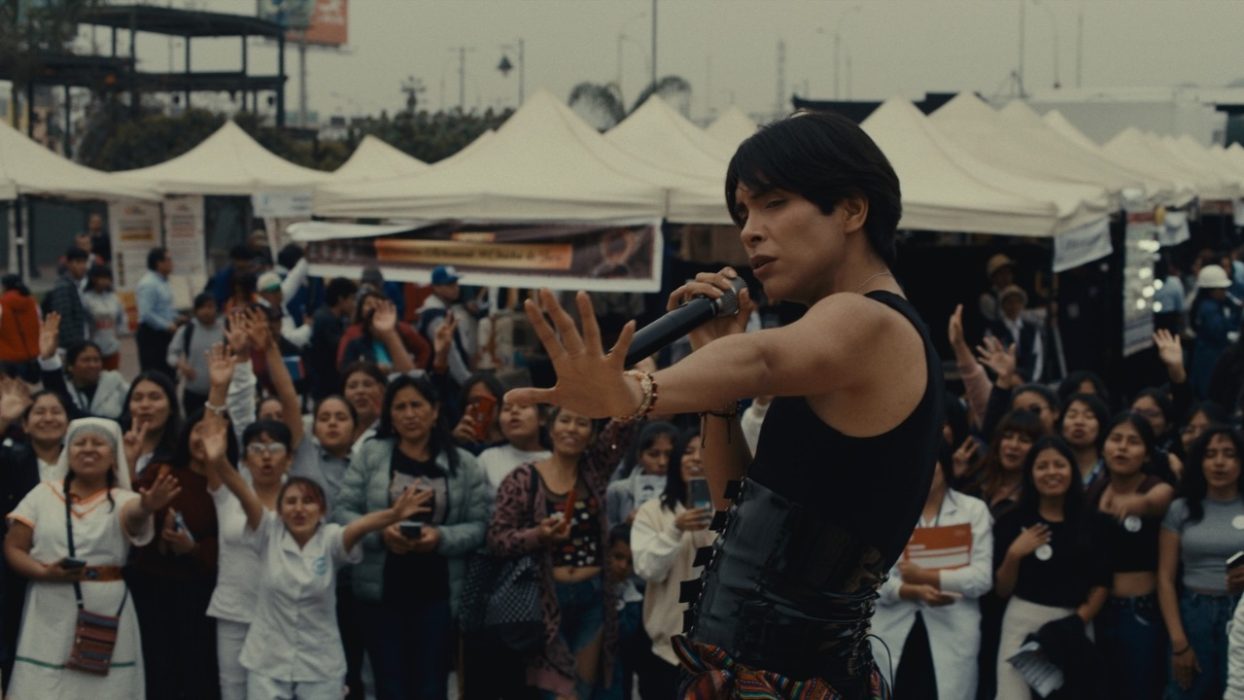
She understood the history of colonization, she says, but wanted to explore Quechua culture and the roots of that discrimination “through a non-historical lens.” That search led to Q-Pop, Murguia’s short documentary about Lenin Tamayo, the Peruvian artist who blends K-pop with Quechua, the Indigenous language that 3.8 million people in Peru reported as their mother tongue, according to the country’s 2017 census.
The film, with Jamie Rogers Caballero as producer and Benjamin and Peter Bratt as executive producers, premiered at DOC NYC in New York on Nov. 14, after earlier screenings at Toronto’s Inside Out 2SLGBTQ+ Film Festival and Lima’s international film festival at PUCP.
A Viral Q-Pop TikTok and a Cold Pitch
Murguia found Tamayo on TikTok. His first viral video, she says, was “just basically him pitching what Q-Pop could mean for Peruvians.” She reached out, introduced herself as a filmmaker, and asked whether he’d be open to filming for a day or two on her next trip to Lima.
Tamayo faced heavy backlash at home at the time, Murguia says. In her telling, commenters told him things like “Don’t try to make Q-pop a thing” and “No one wants to know Quechua.” Tamayo was still refining his choreography and had only a couple of tracks out, she says, and she believes the backlash is part of why he trusted her.
“I feel like there was this vibe of, this person I think might see what I’m trying to do here,” Murguia says. “And I think that he wasn’t getting that from that many people at the time.”
The crew filmed with him in three short windows, and his career grew significantly between shoots, Murguia says.
A Mutual Friend and a Long-Awaited Peruvian Project
Rogers Caballero met Murguia through the film’s cinematographer, who had worked with both of them. “He was like, ‘You’re both Peruvian documentary filmmaker people. You should meet,'” Rogers Caballero says.
She was born and raised on Long Island, New York. “My mom is an immigrant from Peru, and she was the first of her family to come here, which comes with obviously an exceptional amount of pressure,” she says. Relatives in Peru came to live with them over the years, and the family visited periodically.
Rogers Caballero says it was the first Peruvian story for both of them, and one they had each hoped to tell for years. On childhood visits, she saw the same inequality Murguia did. “There’s this kind of ingrained social hierarchy there that’s just accepted, that’s just the way of life, and it’s terrible,” she says.
His Mother’s Stage and His Great-Grandmother’s Language
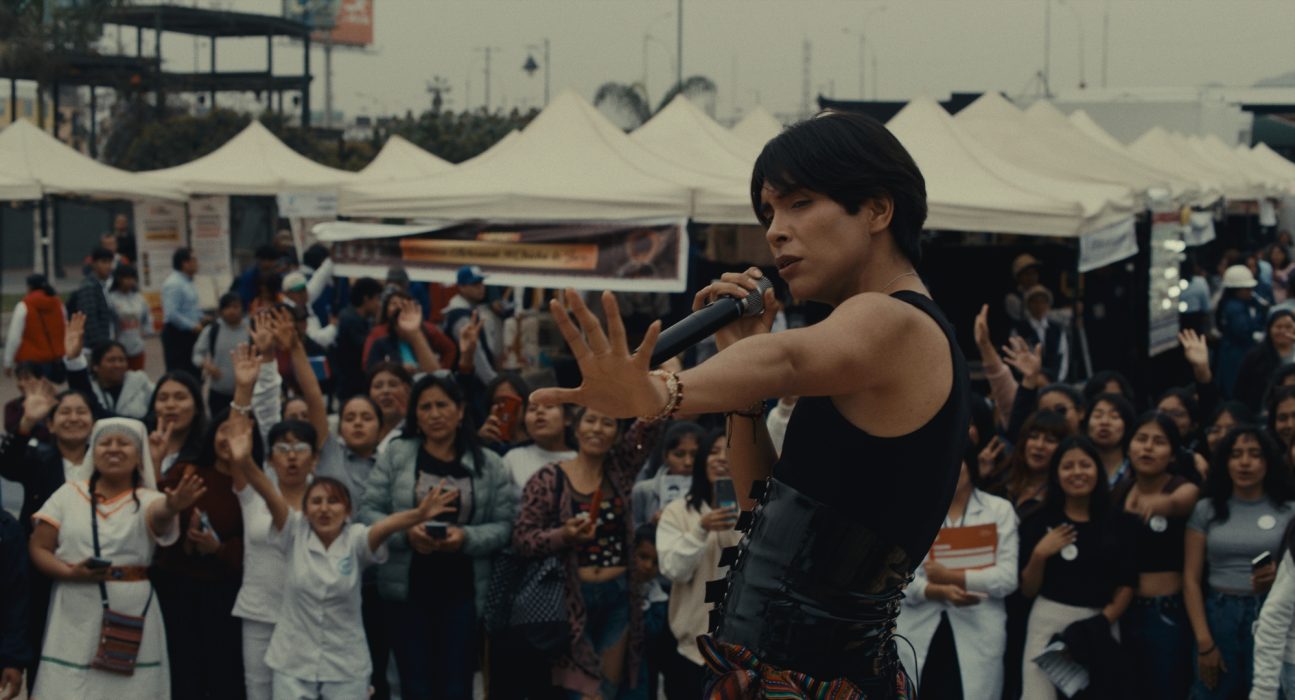
Tamayo is from a working-class area on the outskirts of Lima, according to the film’s press notes. He is Yolanda Pinares’ only child, Al Jazeera reported, and she is an Andean singer who performs in both Spanish and Quechua. Murguia says he opened for his mother’s shows from early childhood.
Pinares, who also manages his career, is a central figure in the film. “It’s obviously his mother, but it’s also his best friend, and it’s also his confidant, and she’s also his manager,” Murguia says. “That is probably the most important relationship in his life, and that’s why it was so important for us to include her in the film, because it informs so much about who he is.”
“His mom was really the person who championed him learning Quechua and keeping that, ’cause she’s from Cusco originally, and she had this strong relationship with her grandma, who knew Quechua and taught her Quechua,” Rogers Caballero says.
Murguia recalls that during the shoot in Korea, Pinares told her son to get off his phone after he had spent a night reading comments about himself. “Of course you’re gonna read the comments,” Murguia says. She came to see his art as his outlet. “This was the only way for him to have something that showed the world who he was and that he was alive,” she says.
From Watching Arirang to Performing Q-Pop on It
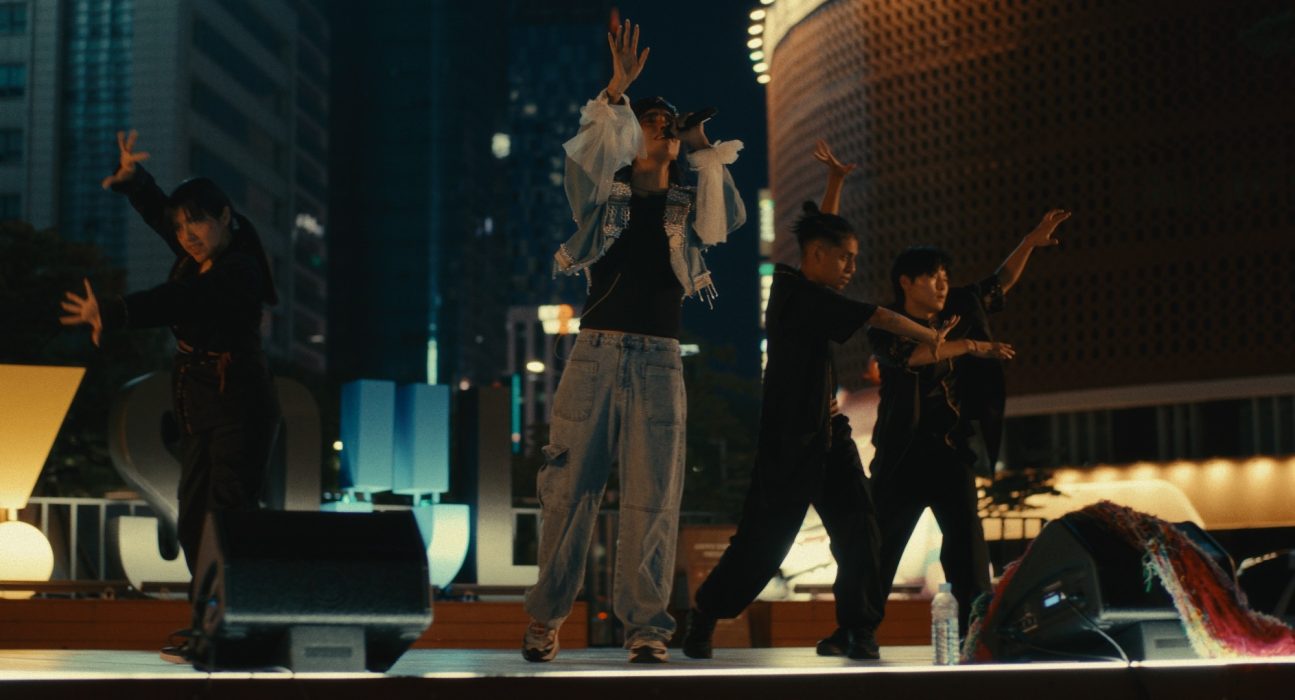
When Murguia first filmed with Tamayo, he showed her K-pop videos he loved, including one of a group performing on Arirang, the Korean broadcaster. By the time the crew reached Seoul, he was performing on Arirang himself. Peruvian outlet Exitosa reported in October 2024 that he appeared on the channel’s Simply K-Pop Con-Tour.
“It was like he truly manifested it,” Murguia says. “People in Korea were so excited about what he was doing. They were incredibly supportive.”
Most of Tamayo’s songs are in Quechua, but he works Spanish phrases into them so listeners can follow along, Murguia says. Rogers Caballero points out that he also posts lyric videos on YouTube, usually translated into Spanish and sometimes into English.
Young Q-Pop Fans and a Question at DOC NYC
“The thing that kind of surprised and honestly was kind of heartwarming for me was how much the young people in Peru are really craving this type of a connection with their heritage,” Rogers Caballero says. The film includes a scene of young fans learning Tamayo’s dances and saying they want to learn Quechua because of him.
“No one in my family was speaking about Quechua,” she says of her own childhood.
The film’s team says DOC NYC marked Tamayo’s first visit to the United States, and he traveled with his mother. “Being at DOC NYC now, people are like, ‘What’s Quechua?'” Rogers Caballero says. The team invited NYU’s Quechua professor to their screening.
“Honestly, I just want as many people to see it as possible, and I would love to be able to show it more in Peru, especially in areas where maybe they wouldn’t have access to a film like this,” Murguia says.
Rogers Caballero would like to screen it for Indigenous communities in the U.S. whose languages are endangered. “Who knows what Lenin’s work can inspire for other indigenous communities as well,” she says.