
Patricio Campillo Is Back at New York Fashion Week, and Mexican Craftsmanship Is Running the Show
You probably saw him wearing a plain white cotton tee printed with black text that read “El Golfo de México.” The image went everywhere online in February 2025 after Patricio Campillo wore it to close his own show. It was his response weeks after President Trump signed a January 20 executive order renaming the Gulf of Mexico the “Gulf of America.”
Most of the people who shared that photo had no idea that the man wearing the shirt had already spent close to a decade building one of the most serious fashion projects to come out of Mexico in a generation.
And this week, he proved it once more in New York.
A Life-Long Passion For Runway Shows
Campillo was born and raised in Mexico City. Still, the imagery that eventually defined his work came from time spent as a child in the small town of Zacualpan, where charrería, the horsemanship tradition built around ranching, riding, and rodeo that runs deep through rural Mexico, shaped how he saw the world.
In his early twenties, Campillo was working in politics when a summer job changed the course of his life. “It was always very important to me to decide how I wanted things to look, and that included my own clothing,” Campillo told HOLA!. “I never considered working in fashion until I was 19 or 20 years old and working in politics. I spent all my time watching runway shows, Tim Blanks reviews, and buying magazines, which had nothing to do with my summer job. My boss caught me watching runway shows on the computer for the umpteenth time and told me, ‘I don’t know what you’re doing here; you should dedicate yourself to something you like.’ He was completely right, and that’s when I started considering it as an option.”
He studied in Madrid, came home to Mexico City, took a job at a communications agency he didn’t love, and then the chance to start his own label found him instead. While he never formally studied fashion design, his process was intuitive. He worked with his hands and pinned fabric onto a mannequin until something clicked. He ran the label for years under the name The Pack before it became simply Campillo, the name under which it now shows at New York Fashion Week.
Charro Culture Is the Blueprint for Every Campillo Collection
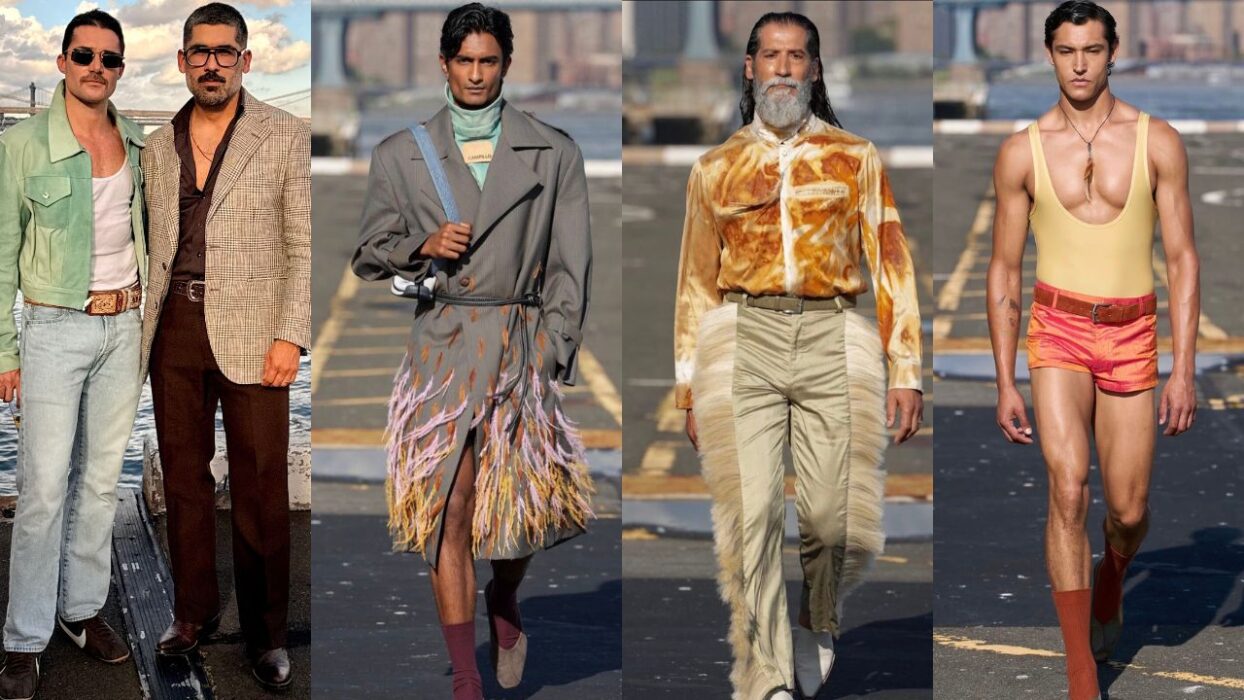
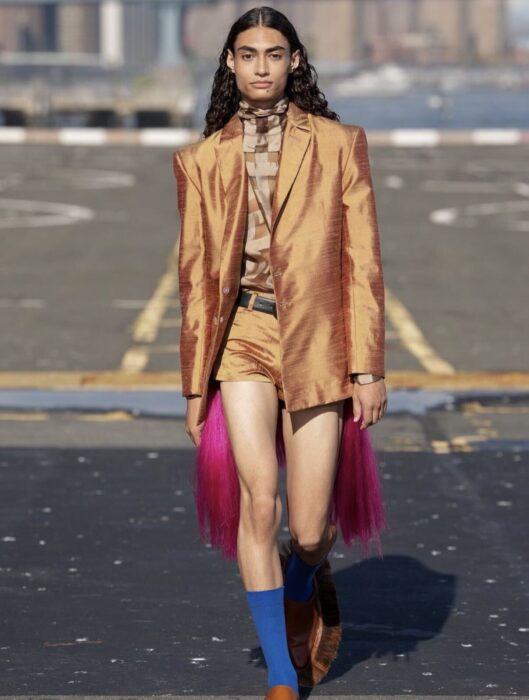
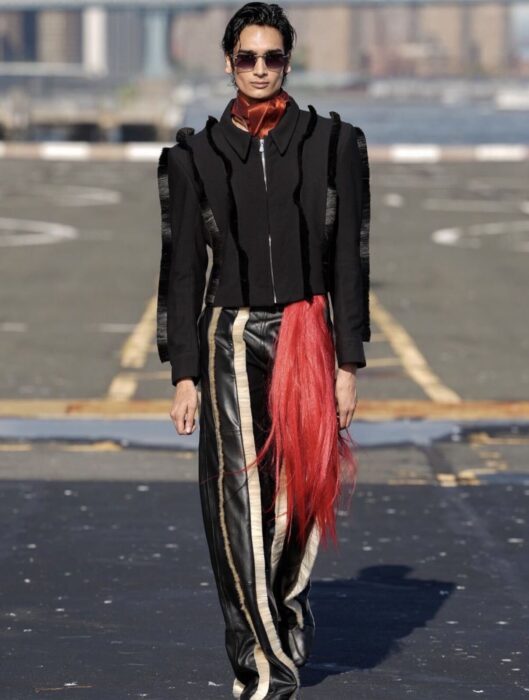
What Campillo does with that instinct has made him stand out on the international circuit, earning him a semifinalist spot in the LVMH Prize, one of the fashion industry’s most prestigious awards for emerging talent. His reworking of charro codes has evolved show to show, from the sombrero-inspired silhouettes, coffee-flower embroidery and cowboy boots on his Fall/Winter 2025 runway to the fitted jackets, statement belt buckles and fringe he showed for Spring 2027, with horsehair detailing dyed in vegetable pigments running through both as one of his enduring signatures.
For Campillo, that consistency is self-reference. “One of the most important resources to create the brand has been self-reference,” he told Fashionista’s Catie Pusateri. “Through self-reference, you’re able to evolve without necessarily changing the DNA or the identity [of the brand].” He arrived at that idea by studying how isolated communities in Mexico carry their traditions forward across generations, adapting them, and guaranteeing the endurance of identity.
Most of his materials, he said, are sourced from Mexico to keep the brand’s carbon footprint down, and much of his leather is dyed with vegetable pigments instead of chemical ones so the wastewater stays cleaner. Durability, he added, is one of fashion’s biggest blind spots. He highlights how a garment gets worn once or twice, then discarded and never picked up again, whether because of its price or its quality.
Spring 2027 Is Campillo’s Study of Nostalgia
That same idea, an object built out of memory rather than erased by it, is what shaped Campillo’s Spring 2027 collection, “In Media Res,” which he presented in New York this past Sunday in partnership with Tequila Don Julio. The Latin phrase describes a story that begins already in motion, and Campillo built the entire collection around what it means to catch something mid-story.
“The show is inspired by the Latin term, in media res, which is a term that refers to something that is in the becoming,” Campillo told mitú. “It’s about creating an object that is within a process, and also being able to freeze a moment in time that just brings you joy and brings you happiness. These unexpected things that are merely ephemeral, but trying to create an object out of that, that will most likely survive the creator and the spectator.”
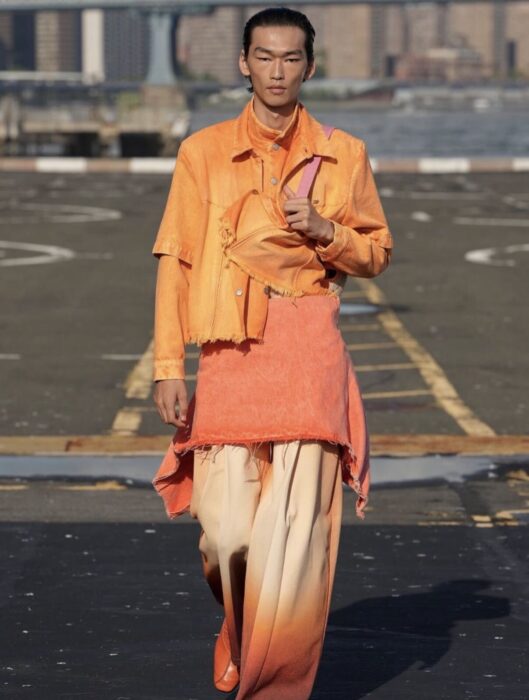
The collection translated that idea into a solar-inspired palette of gold, burnt orange, and red, styled to look like a sunset caught mid-fade. Campillo has also shifted his design process, relying less on sketching and more on live, on-model fittings that let proportions shift in real time. That same restlessness showed up throughout the collection in a skirt built to mimic a blazer wrapped around the waist, in denim tops worn backward, in pants layered in double panels. “The inspiration is to make those moments that look unintentional, intentional,” Campillo said.
Even Bacteria Made Its Appearance
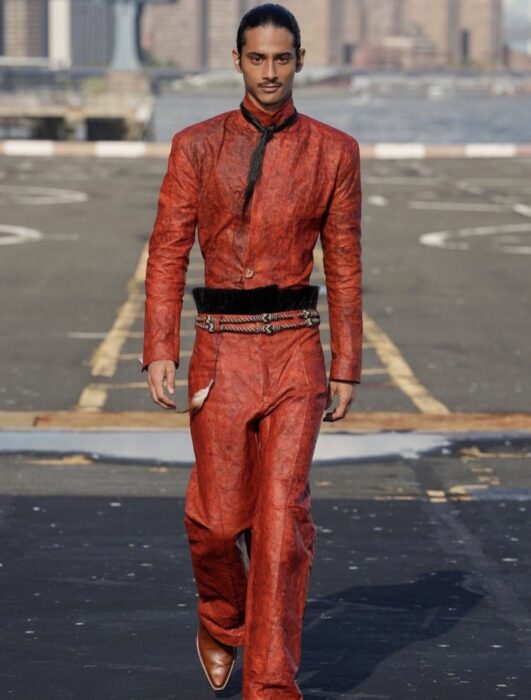
The collection’s closing look, a textured red jacket and trouser set, looks like a full leather ensemble until you learn that the fabric is actually a biologically derived polymer grown by bacteria. This material choice folds Campillo’s sustainability commitments directly into his most experimental design of the season. It shared the runway with pieces built from silk and crepe, and with jewelry in silver and onyx, materials chosen, per Design Scene, specifically for the contrast between the static and the motion.
A bacterial jacket and a charro belt buckle come from the same place for Campillo, the same instinct he returns to in nearly every interview he has given since he started the brand. “I am proudly Mexican, and I was raised with those stimuli and with those references, so I think it’s inherent to my work that this happens,” he told mitú. “I’m very proud of where I’m from, and I’m trying to include different artisanal elements that are particular to Mexico in the collection.”
A Tequila Bottle Built Like a Bridge for the Dead
The Tequila Don Julio partnership also became part of his ethos. The product was an object in its own right: a new Tequila Don Julio 70 Añejo Cristalino Artist Edition bottle designed by Campillo. Design Scene reported that it debuted during the runway show against a backdrop of the East River and the Brooklyn Bridge. Its design draws on El Puente Eterno, Campillo’s own Día de Muertos campaign, and the cempasúchil bridge believed in Mexican tradition to guide the souls of loved ones home.
The collection’s footwear told a similar story of cross-border collaboration, built with Mariano Shoes, part of the Portuguese Footwear Association, using Portuguese leather, with select looks finished in Nike.
Beyond the international collaboration, Campillo’s own ambition for the brand stays fixed on Mexico. “The dream is to become the first Mexican luxury house, developing everything in Mexico,” he told HOLA! in 2024. “The mission is to make sure the shoes made in Mexico have the same quality as the ones made in Italy.”
Campillo told mitú that he wants his clothes to survive both their creator and their spectator, beyond political statements. And building on the work of a decade spent proving that a charro belt buckle and a jacket grown from bacteria can come from the same country, the same designer, and the same pursuit of identity.