

Jenna Ortega on Klara and the Sun: ‘It Felt Like a Good, Sweet Thing to Put Out Into the World’
At some point, every child decides what the sun is for. Klara, the narrator of Kazuo Ishiguro’s novel Klara and the Sun, decides from inside a shop window. She is an artificial friend, a solar-powered companion built for lonely children, and as Ishiguro described the scene to NPR’s Fresh Air in 2021, she looks out at the street, sees the sun falling “in shafts” between tall buildings and notices that people are happier when it comes out. She concludes that the sun nourishes everyone and watches over them, and she holds on to that belief.
Ishiguro, who won the Nobel Prize in Literature in 2017, published the novel in 2021 and often said he wanted Klara’s innocence to last throughout the book. “I wanted her to remain, like, a very optimistic character who has a childlike faith in the presence of something good and protective in the world, even as she learns all these other things, darker things about the human world that she occupies,” he said. That faith now reaches theaters in a film adaptation starring Jenna Ortega as Klara, which opens in the U.S. on Oct. 23.
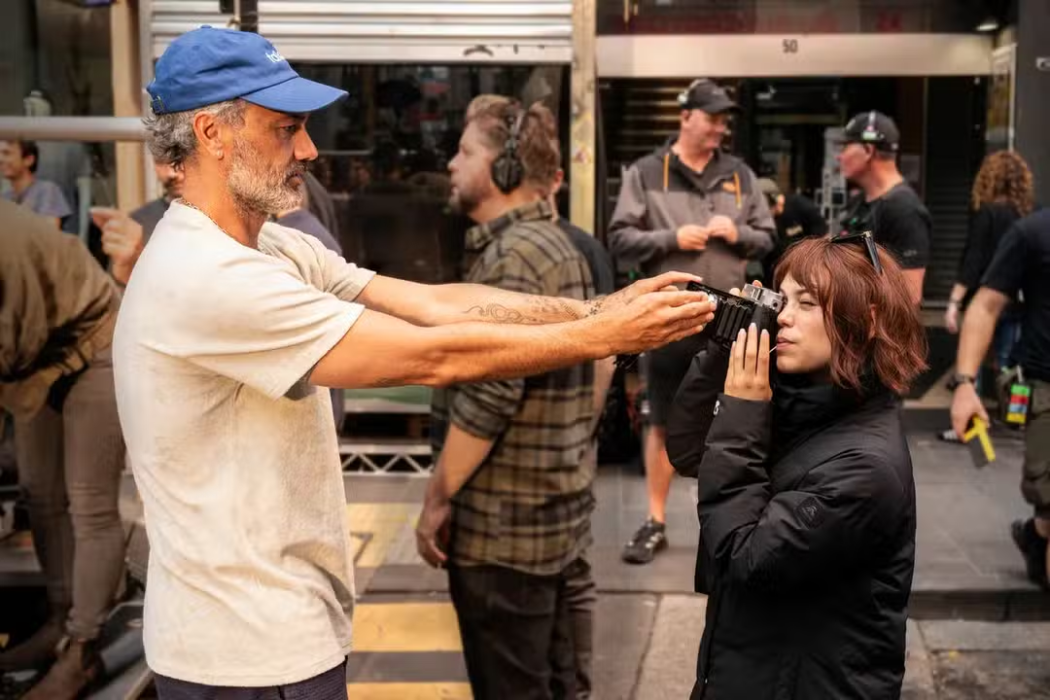
mitú briefly sat down with Ortega and director Taika Waititi to discuss the movie, artificial intelligence, and empathy.
First, The Book Behind Klara and the Sun
Ishiguro’s novel is set in a future where machines have pushed many people out of work, and those people are known as the “substituted.” Classrooms have given way to screens, and wealthy families can buy an AF, an artificial friend, to keep their children company. Klara goes home with Josie, a gravely ill teenager, and the reader sees that household only through Klara’s eyes. The general consensus among critics and fans is that Ishiguro’s 2021 novel is simply a masterpiece.
As Klara’s trust in the sun deepens, it begins to resemble faith. “When she needs to save the family that she lives with from impending heartbreak, the sun is naturally the person that she turns to,” Ishiguro explained. He said he wasn’t trying to criticize religion. He wanted to see that instinct in “this rather pure, naive, artificial being,” and he felt “there should be something rather touching about it.”
When Gross told him Klara was the book’s most sympathetic character, Ishiguro wasn’t surprised. “It shouldn’t be that surprising, really, though, that an artificial creature could actually solicit our sympathies as much as a human one,” he said. “I mean, because after all, you know, characters in books are artificial.”
Therein lies what would soon become Jenna Ortega’s most wonderful challenge. And Waititi’s cornerstone.
A Klara Who Learns Only From the People in Front of Her
I asked Waititi whether that idea, or the long history of artificial beings on screen, had been on his mind while making the film. “Not so much,” he says. He describes his Klara differently. “I’d probably describe Klara as artificial innocence,” he tells me. “She’s just seeing the world more as a child who comes into it.”
He separates her from the AI people use today. “AI as we know it relies on the internet and access to all the information in the world, and she has no access to any of that,” he says. “She’s just learning from the people standing in front of her, and what she sees and observes.” In fact, Natasha Lyonne’s store manager explains that the internet disappeared after World War III.
The adaptation, which Waititi co-wrote with Dahvi Waller, does depart from the novel in places. Many noticed “significant alterations,” among them a robot scarecrow, played by Jesse Griffin, that doesn’t appear in the book. Amy Adams plays Josie’s mother, Mia Tharia plays Josie, Aran Murphy plays Rick, and Rachel House plays the housekeeper Melania, with Steve Buscemi also in the cast and a score by Michael Giacchino.
Klara and the Sun Is Far From a Cautionary Tale, Says Its Director
Waititi says AI was barely part of the conversation while they were making the film. “When we were making the film, it wasn’t even really a big conversation piece, the AI,” he says. “I think ChatGPT was sort of just starting to be used.” What he wanted, he says, was “to make a film about a robot who came and saved a family by being more human than they were.”
Ishiguro had a similar experience with the book’s timing. After all, his dystopian universe came to life right before the COVID-19 pandemic. “If there are any reverberations, they’re purely coincidental,” he told NPR.
So I asked whether Klara and the Sun is about empathy more than the dangers of technology. “I never saw it as a cautionary tale, ever,” Waititi says. “I saw it as an emotional film about humans connecting and being reconnected.”
Jenna Ortega’s Performance, and The Power of Empathy
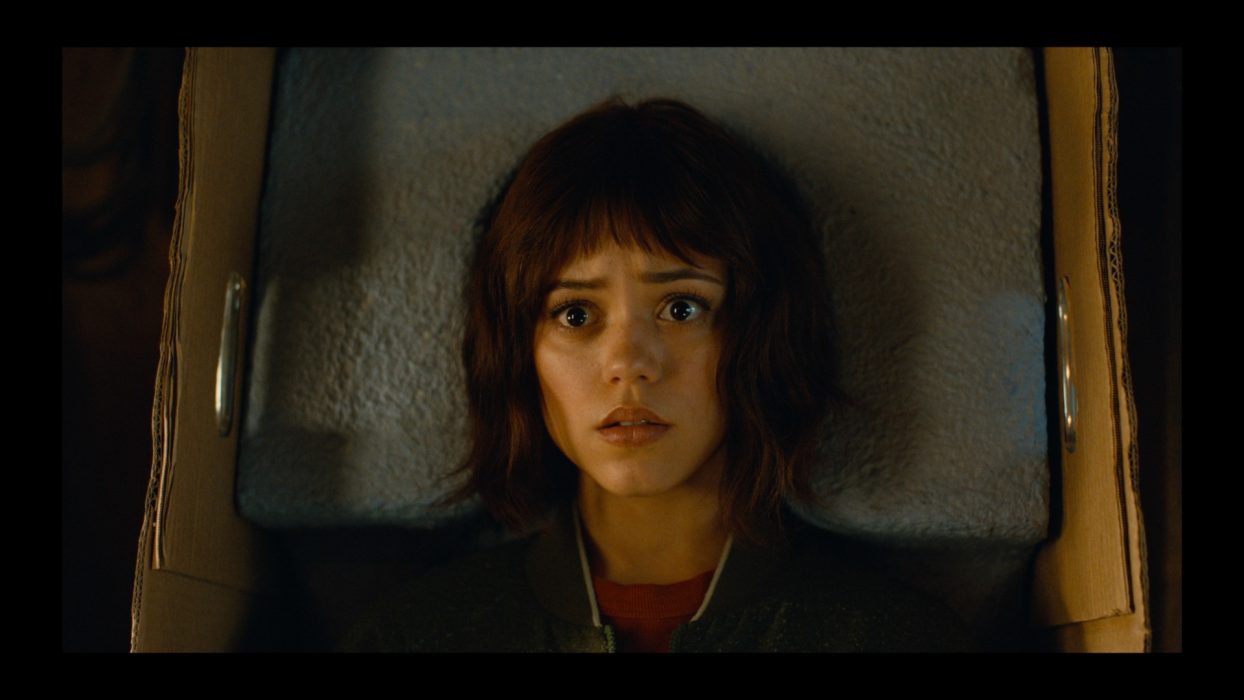
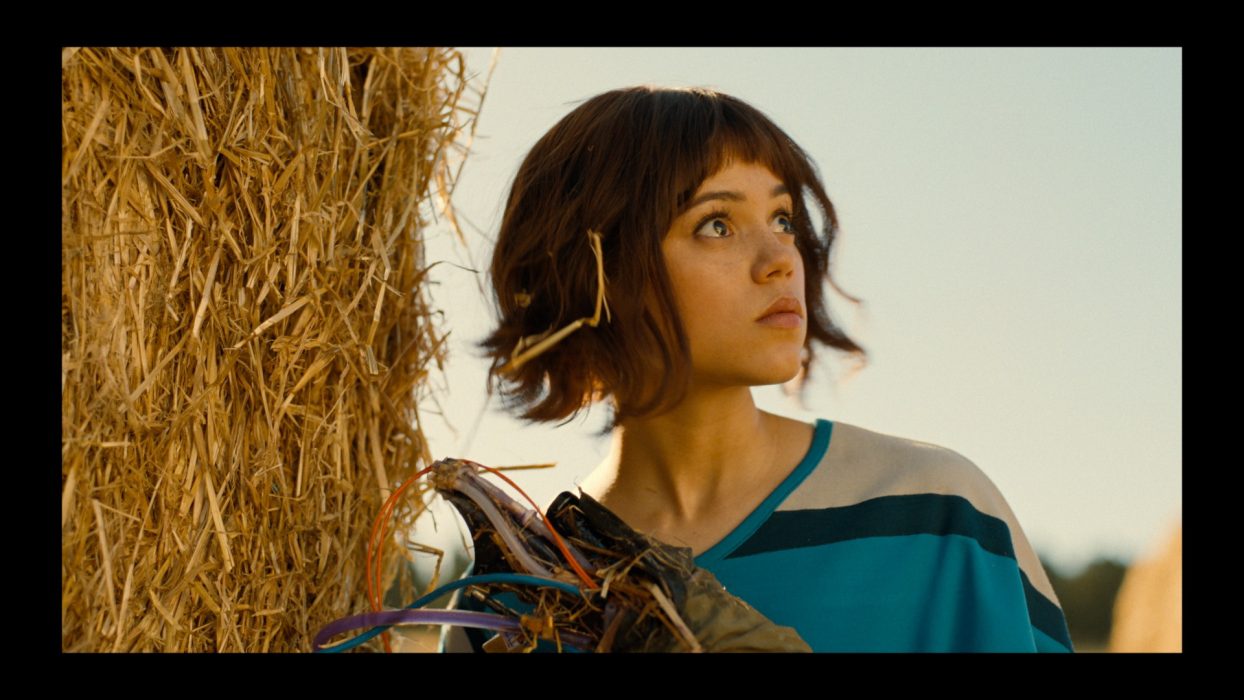
Ortega is widely known for playing Wednesday Addams, a character defined by her deadpan. Her Klara, on the other hand, is open and curious. She stands on one leg like a flamingo, which sets her apart from the other robots in the store, and, in fact, plays a smiley robot “scorned for being ‘too empathetic.’”
Critics have been hard on the film, and their views of Ortega vary. Ultimately, the question is how we interpret sentimentality and empathy in a world structured to suppress both.
For her part, Ortega said she doesn’t want to put expectations on how audiences receive it. “I don’t like making assumptions, and I also think part of the wonderful thing about art is as soon as you make it and you release it out into the world, it’s entirely up for interpretation,” she tells me. “People are more than welcome to take different things from it, and I think that that’s the wonderful thing about the world: everyone’s different perspectives and ways of perceiving things.”
“You choose what matters to you and what doesn’t matter to you, and you move on,” she adds. “But to give people that foundation or to maybe inspire someone in a certain way or maybe the complete opposite, I think it’s just nice to be able to create.”
The Real Gift
At the end of our conversation, I asked whether making the film had taught them anything about empathy. Waititi joked that he was “already an expert.” But Ortega reflected further and said, “I don’t think I learned anything necessarily, but it was just refreshing to be a part of a story that celebrated that. And it felt like a good, sweet thing to put out into the world.”
War and division fill the news every day, along with growing anxiety about the technology we have built, and a story about a machine that chooses kindness can read as naive. Ishiguro wrote Klara that way on purpose. He let her learn the darker things about people without losing her faith that something good and protective exists in the world. Audiences will decide whether the film carries that belief as well as the book does, and the novel is there for anyone who wants to spend more time with Klara.
Klara and the Sun, rated PG-13 and running 1 hour 56 minutes, opens in U.S. and U.K. theaters on Oct. 23.