
Juan Gabriel: How a Queer Man Conquered a Community Built on Machismo and Homophobia
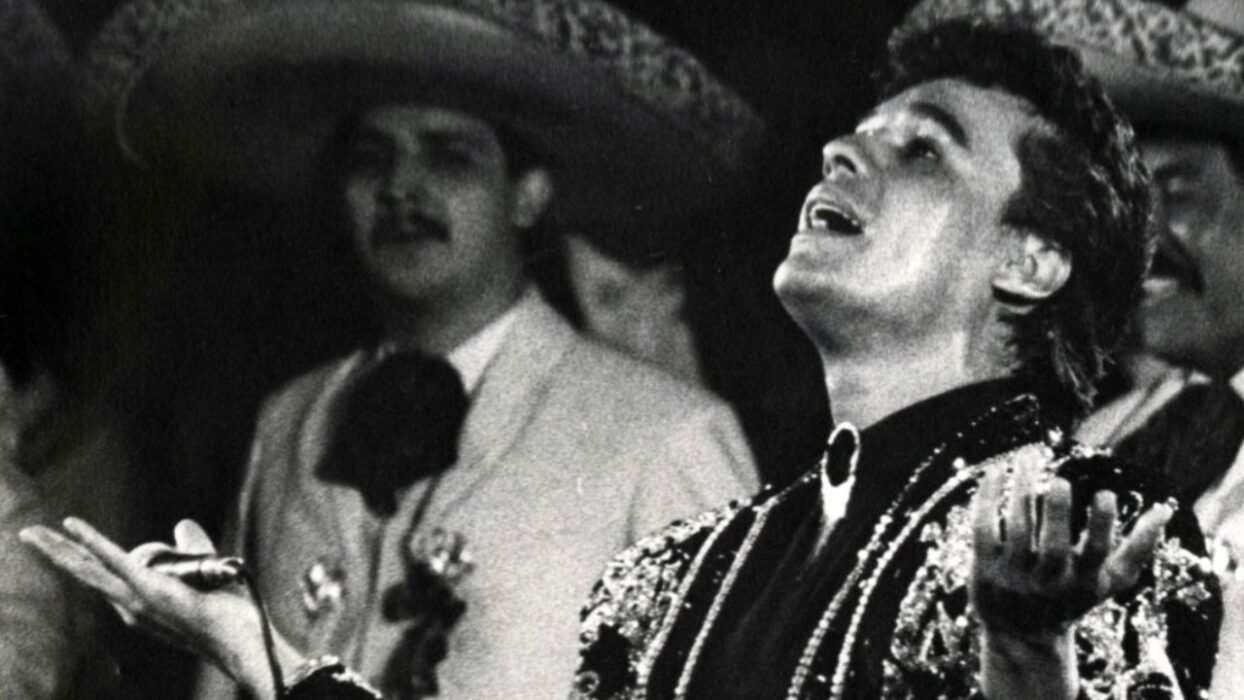
On August 28, 2016, Alberto Aguilera Valadez died in Santa Mónica, California. By then, he had been dead to the people who tried to kill him a thousand times over. He had survived the Mexican border, poverty so absolute it broke families, orphanages, prison sentences for crimes he didn’t commit, and the relentless machinery of an industry designed to erase men like him. Juan Gabriel had sold more than 100 million records. He had performed for presidents and in cantinas. He had built an empire of songs that people learned before they learned to read. And he had done it all while the entire Latin American continent asked the same question, year after year, and never got an answer.
When Juan Gabriel said goodbye, the whole world was in mourning. We were mourning the man who proved that you could be unmistakably, undeniably gay in the most homophobic region of the world, and still be loved by that very world—not in spite of your queerness, but because of it. Because he made us feel things we didn’t have names for. Because he walked into spaces where men weren’t allowed to cry, and he cried anyway, and they followed.
From Parácuaro to the Palenques, How Juan Gabriel Came to Be
Alberto Aguilera was born in 1950 in a peasant family in Michoacán. Before he turned five, his father had been institutionalized, and his mother had abandoned him at an orphanage in Ciudad Juárez. He stayed there for eight years, seeing his mother once a year if he was lucky. When he left the orphanage around twelve, he was already singing. He sold burritos and trinkets on the street. At fourteen, he was writing songs. He was arrested and imprisoned for eighteen months for allegedly stealing a guitar.
He had nothing. And then he decided he would have everything.
That journey from nothing to everything is the oldest story in Mexico, but Juan Gabriel told it differently. He didn’t hide the orphanage, nor did he pretend the prison sentence never happened. He built his entire career on the raw plausibility of his own story. His first hit was called “No Tengo Dinero”—I Don’t Have Money. It was the story of millions of Latinos worldwide.
But there was something else in that journey, something that would matter far more than the commercial success. There was a boy who had been abandoned by his family, and he learned that survival meant becoming someone larger than the person who had abandoned him. He understood that the stage was the only place that belonged to him. And that if you could make people feel your pain as if it were their own, they would protect you. They would love you and follow you anywhere.
And this truth would be his northern star for the rest of his life.
“Lo Que Se Ve No Se Pregunta”
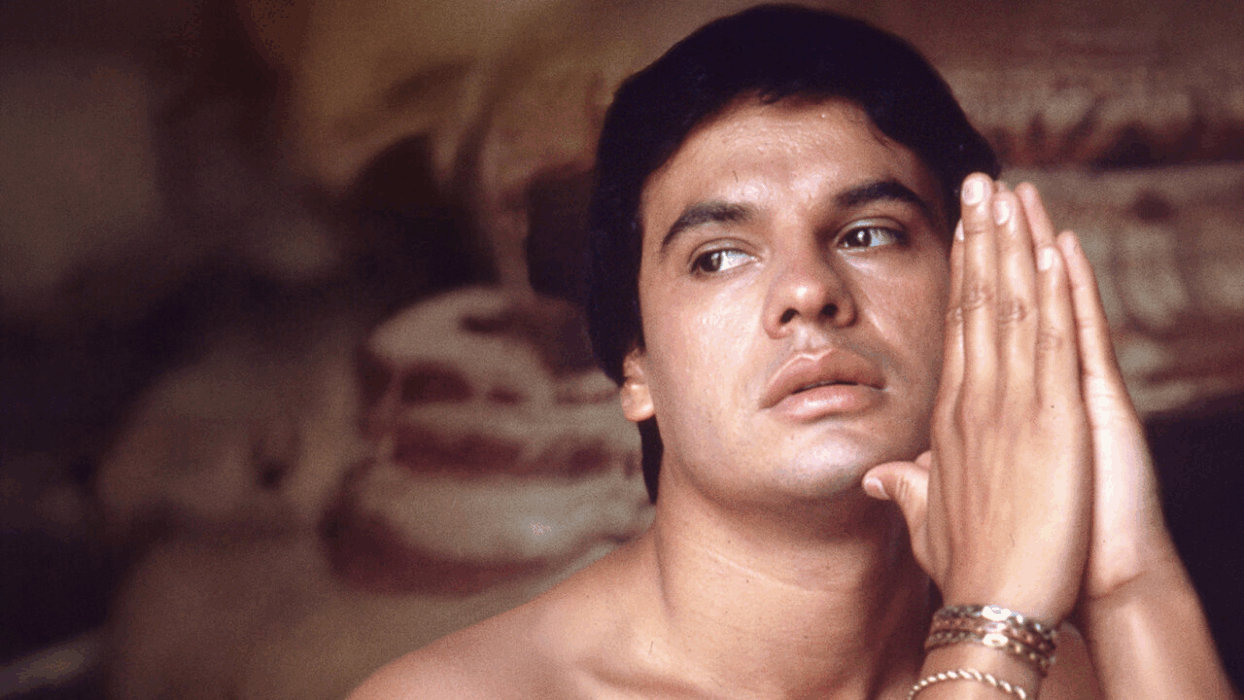
In 2002, journalist Fernando del Rincón asked Juan Gabriel directly: “They say you’re gay, but are you gay?”
The answer was immediate and perfect. “Lo que se ve no se pregunta.”
Seven words, one sentence, and the entirety of a strategy that would outlive him.
But the phrase was far from evasion. It was an act of translation. In a culture where men didn’t cry, express emotion, or acknowledge desire except through violence or consumption—a culture where homosexuality meant death—Juan Gabriel walked into every palenque, theater, and arena wearing custom-made boots (he had over 200 pairs), clothes embroidered with sequins and rhinestones, moving his hips, softening his voice, performing a femininity that was unmistakable. And when people asked what they were seeing, he didn’t deny it. He simply said, “Don’t ask me to explain myself in words. Watch what I do. Feel what I sing.”
The genius was this: he made it impossible to separate his homosexuality from his artistry.
They weren’t two isolated things. They were a whole cosmogony of the self. You couldn’t love Juan Gabriel the musician without loving Juan Gabriel the gay man. They occupied the same body, wore the same sequins, sang the same songs.
For a homophobic culture, this was revolutionary and almost impossible to comprehend. It wasn’t a coming out of sorts, but far more dangerous: it was a refusal to apologize. Juan Gabriel insisted that queer joy, pain, and vulnerability were not to be hidden in darkness, but to be on the brightest stage, under the brightest lights, where everyone could see them.
And the culture shifted. Not because it was El Divo de Juárez demanding it. But because he made it irresistible.
Musicologist Guadalupe Caro Cocotle explained that his ambiguity gave him a freedom that resonated with people accustomed to not verbalizing things. But more than that, he queerized the Mexican macho. For the first time, men in Mexico could cry in public. They could speak about love as longing rather than conquest, feel their own vulnerability without losing their masculinity, and be soft and still be men.
The Night They Opened Bellas Artes
To understand the universe Juan Gabriel condensed around his persona, you have to go back to May 12, 1990, at the Palacio de Bellas Artes in Mexico City.
At the time, Bellas Artes was sacred ground where the nation’s high culture lived. It was for opera singers, symphony orchestras, and the people who could afford to pretend that Mexican popular music didn’t exist. The idea of opening those doors to the King of the Palenques, to a man who performed in rural plazas and modest theaters, who wore sequins and moved his hips, was unthinkable.
The director of the Bellas Artes orchestra refused to conduct, and the critics were scandalized. The newspapers ran headlines: “Juan Gabriel Profanes Bellas Artes.” The people who controlled Mexico’s cultural institutions saw this as an invasion.
For his part, JuanGa appeared on stage in a black, fitted suit covered in bright gold studs. He stood beside the National Symphony Orchestra and the Bellas Artes chorus—the highest musicians in the land, on his stage, accompanying him. He looked out at the audience and said, “This is the happiest moment of my life.”
Then, he sang.
By the end of the night, the critic Carlos Monsiváis would describe, albeit in a sensationalist tone, the male audience’s reaction. When Juan Gabriel asked, “Who wants to marry me?”, the response was almost exclusively male. Tough men, the mayors, the dangerous men, the traditional machos, they all stood up and screamed: “Me, Juanga! You’re unique! Look at me! Here I am!” Monsiváis noted these were the same men who would have beaten a gay person to death on the streets. And now they were declaring their love for a gay man on the stage of Mexico’s most important cultural institution.
Juan Gabriel had broken open a cultural Pandora’s box. He had walked into the most sacred space and refused to make himself smaller. He had brought the Palenque to Bellas Artes, and Bellas Artes had fallen in love.
Don’t get me wrong, the homophobia was still there. The machismo was still there. But it was no longer absolute. It had been beautifully disturbed and exposed to its own irrationality. A man in sequins had proved that the culture’s most closely guarded prejudices were not laws of nature but simply habits—and habits could be broken by someone who sang well enough, felt deeply, and invited you to do the same.
What Juan Gabriel’s Silence Can Teach
For 21st-century purists, there’s a fly on this white satin story: Juan Gabriel never marched in a Pride parade. Not that we expected him to, but some might ask if, amid a global health crisis that stigmatized the gay community to death, he could’ve used his platform differently. After all, he never gave speeches about gay rights or demanded legal protections for the LGBT+ community, even in the last years of his life when he could have done so safely.
And yet, his life became the kind of explicit activism you hardly ever see in history.
Because Juan Gabriel didn’t argue about whether gay people deserved respect. He simply lived owning that respect. Juan Gabriel had children—adopted and biological— and built a family that didn’t match the traditional shape. He performed his queerness and made homosexuality part of the cultural fabric of Latin America.
A generation of gay men and women in Mexico grew up with Juan Gabriel as their educator. In the bars and clubs where they gathered—the semiclandestine spaces where they could be themselves—his songs played on constant rotation. “Querida”, “Amor Eterno”, “No Tengo Dinero,” even “El Noa Noa,” that eventually became a secret code for people from the community to recognize themselves in public. Juan Gabriel’s songs became a language for feelings that had no other expression in a culture that criminalized them.
But the larger truth is this: Juan Gabriel’s refusal to explicitly come out—his insistence on ambiguity—allowed the entire Latin American continent to absorb a lesson about human dignity without ever being asked to choose sides in a culture war.
As Caro Cocotle said, he domesticated Latino homophobia. And that, my friends, is a crusade in itself.
Two Days Before the End
On August 26, 2016, two days before he died, Juan Gabriel performed at the Hollywood Bowl in Los Angeles. He was 66 years old and dressed, as always, in sequins and rhinestones, surrounded by a full orchestra and a complete mariachi band. The arena was packed with more than 17,000 people who had come to see El Divo one more time.
Toward the end of the concert, as if wanting to give the perfect ending to the concert that was his life, he acknowledged the legalization of same-sex marriage, the JuanGa way.
“Congratulations to the people who are proud of who they are,” he said.
In that moment, in a Los Angeles arena filled with his people—people who had grown up with his music, who had learned from him how to feel, and understood with him that queerness was not something to hide—he finally said it.