
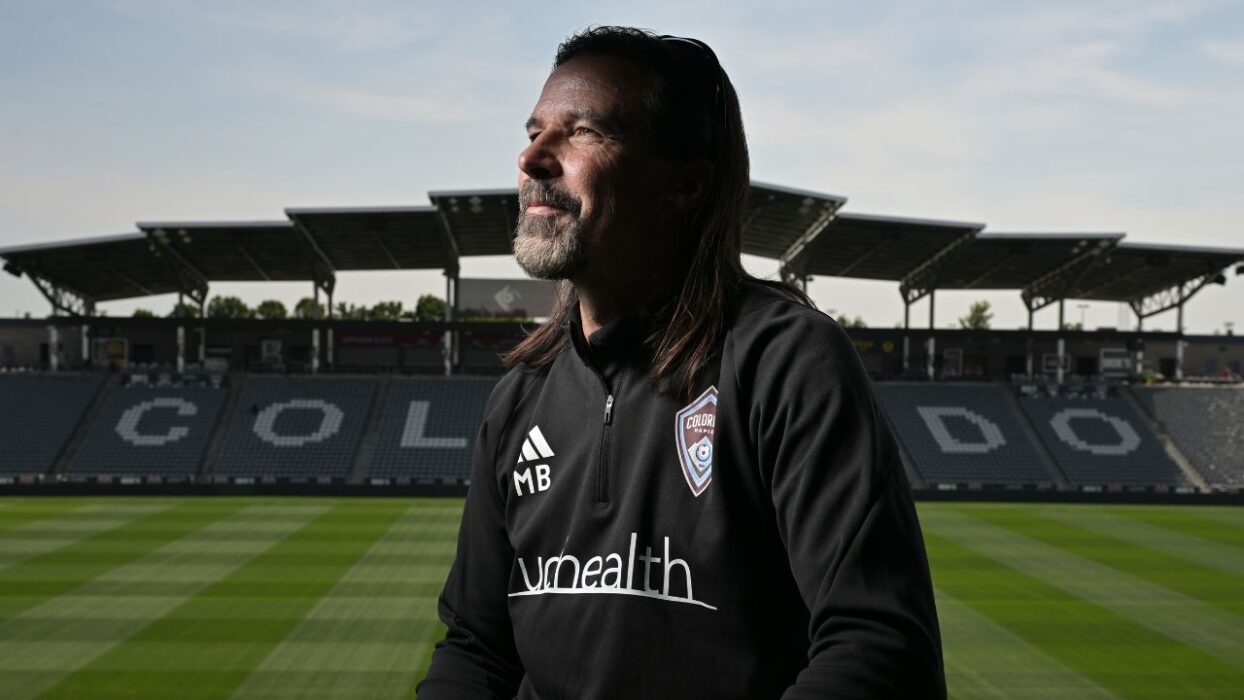
How Marcelo Balboa Changed What American Soccer Could Be
When Marcelo Balboa scored his bicycle kick against Colombia in the 1994 World Cup, most Americans saw it as a huge upset. Seven of the eleven players on the field didn’t even have pro contracts. They were college kids facing a team full of stars like Rincón and Asprilla. No one expected them to win.
For Balboa, a defender from an Argentine immigrant family playing for the United States against a team of Latino stars, the moment meant something else. “We didn’t realize the impact we were having at first,” he says now, looking back as an Apple TV soccer analyst thirty years later. “But over time, people started to recognize it.”
It clearly marked a change in who could represent American soccer.
A Family’s Journey, A Nation’s Question
Balboa’s story starts before he ever played in a World Cup. His father, Luis Balboa, was a professional soccer player in Argentina before moving to the United States in 1966. He believed his sons should stay connected to their roots while chasing their dreams in America.
“My dad would come home from work around 5 p.m., go to sleep for a few hours, wake up around midnight, and then take us out to practice every day,” Balboa remembers.
Growing up in Cerritos, California, Balboa was part of a strong Latino soccer community. But soccer wasn’t taken seriously in mainstream America. At that time, professional soccer was hardly discussed. The thought that a kid from an Argentine family could become a U.S. national team star seemed unlikely.
But that’s exactly what happened. By 1988, Balboa played his first game for the USMNT. By 1994, he was leading the American defense at the World Cup. When he scored that bicycle kick against Colombia, people started to talk differently about American soccer.
“After the 1986 World Cup, my dad got a call from the Argentine Federation asking if I was really Argentine,” Balboa says. “From that moment on, I knew I wanted to represent the United States. It was an easy decision very early on, and I’ve always felt blessed to represent the U.S. and to be part of the American Hispanic community.”
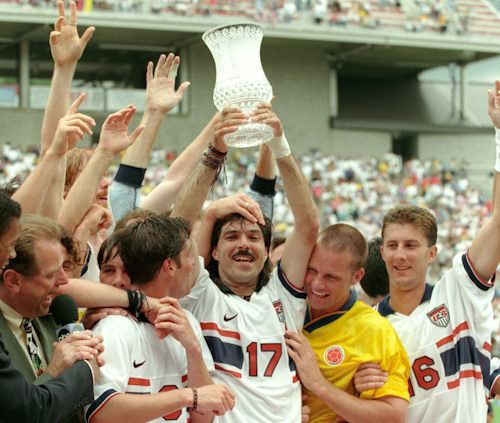
Marcelo Balboa And The Builders of a League
Two years after the 1994 World Cup, Balboa joined the MLS in its first season with the Colorado Rapids. The league was still trying to prove itself in American sports. Most people didn’t believe it would last. But Balboa saw something others missed: Latino communities were already supporting the game.
“When I joined MLS, I think about 50 percent of the fans in the stadiums were Hispanic,” he says. “I came back from playing in Mexico, and I realized how many people knew me because they watched Liga MX. But what was really important was having players like Tab Ramos, Carlos Valderrama, and Jorge Campos. All these Latino players were fan favorites whenever they came into town.”
These players were key to MLS’s growth. While most sports media talked about marketing and infrastructure, Balboa and others were quietly building a cultural bridge. They showed Latino fans that American soccer could be their game too. They also showed American fans that top soccer players could look like their neighbors.
“The Hispanic presence has always been huge,” Balboa says. “South America has always had a major influence on the style of play, the players brought in, and the coaches who came over. Players like Valderrama were fan favorites, and the same was true for Cienfuegos and Jorge Campos. Those players were a huge part of the reason people came to the stadium.”
From Then to Now
Thirty years after that bicycle kick, things have changed a lot. Now, players like Messi and Suárez play in MLS. The league now competes directly with Liga MX for talent and attention.
In short, the cultural conversation has completely changed.
But Balboa sees something beyond the obvious. “What many Latino fans want to see is more players from their home countries here, especially Mexican players coming from Liga MX,” he explains. “The beauty of it is that when you’re a Club América fan in Mexico, that’s your team. But once fans start seeing Mexican national team players and other stars come to the United States, they begin paying attention to MLS clubs too.”
It’s the same kind of bridge-building Balboa did thirty years ago, but now it’s bigger. When Chucky Lozano joined San Diego, Honduran fans who watched him in Europe started following MLS. When Héctor Herrera joined Houston, fans who knew him from Toluca began watching the Dynamo. It shows that fans follow their heroes, and eventually they follow the league too.
“People tend to follow their favorite players wherever they go, and eventually they become fans of those teams too,” Balboa says. “That opens another door for people to start watching MLS and appreciating what the league is building.”
The Conversation Continues
Today, Balboa is an Apple TV soccer analyst and coaches the boys’ soccer team at Monarch High School in Colorado. He’s watching the next generation of players grow up in a world he helped shape. Even better, he sees young players from Latino families who no longer have to wonder if soccer can be their future.
The game he helped build is thriving. But the story of how Latino communities made it possible is still unfolding.
“I’ve always felt blessed to represent the U.S. and to be part of the American Hispanic community,” he says. After all that’s happened and all the ways the game has grown, that feeling is still the same. He was the bridge, and now he’s watching thousands more cross it.